La SEO tecnica è lo strato infrastrutturale alla base di tutto ciò che fai nella ricerca. Contenuti brillanti, backlink di qualità e un targeting perfetto delle parole chiave non sono efficaci se le fondamenta tecniche sono fragili. E secondo i dati di audit del sito più completi disponibili nel 2026, Il 72% dei siti web presenta pagine lente., Il 95.2% presenta problemi di reindirizzamento., Il 59.5% non ha tag H1e L'80.4% presenta attributi alt delle immagini mancantiNon si tratta di casi isolati in siti web mal gestiti, bensì della norma statistica in tutto il web.
L'ironia della SEO tecnica nel 2026 è che gli standard sono più alti che mai (le soglie Core Web Vitals di Google, la transizione da FID a INP, il ruolo ampliato dei dati strutturati in Funzionalità di ricerca generate dall'IA), mentre la maggior parte dei siti web continua a non rispettare le norme di base che avrebbero dovuto correggere anni fa. Questo divario tra ciò che Google richiede e ciò che la maggior parte dei siti offre rappresenta oggi la principale opportunità per la SEO tecnica.
Lo stato della SEO tecnica nel 2026: i dati principali
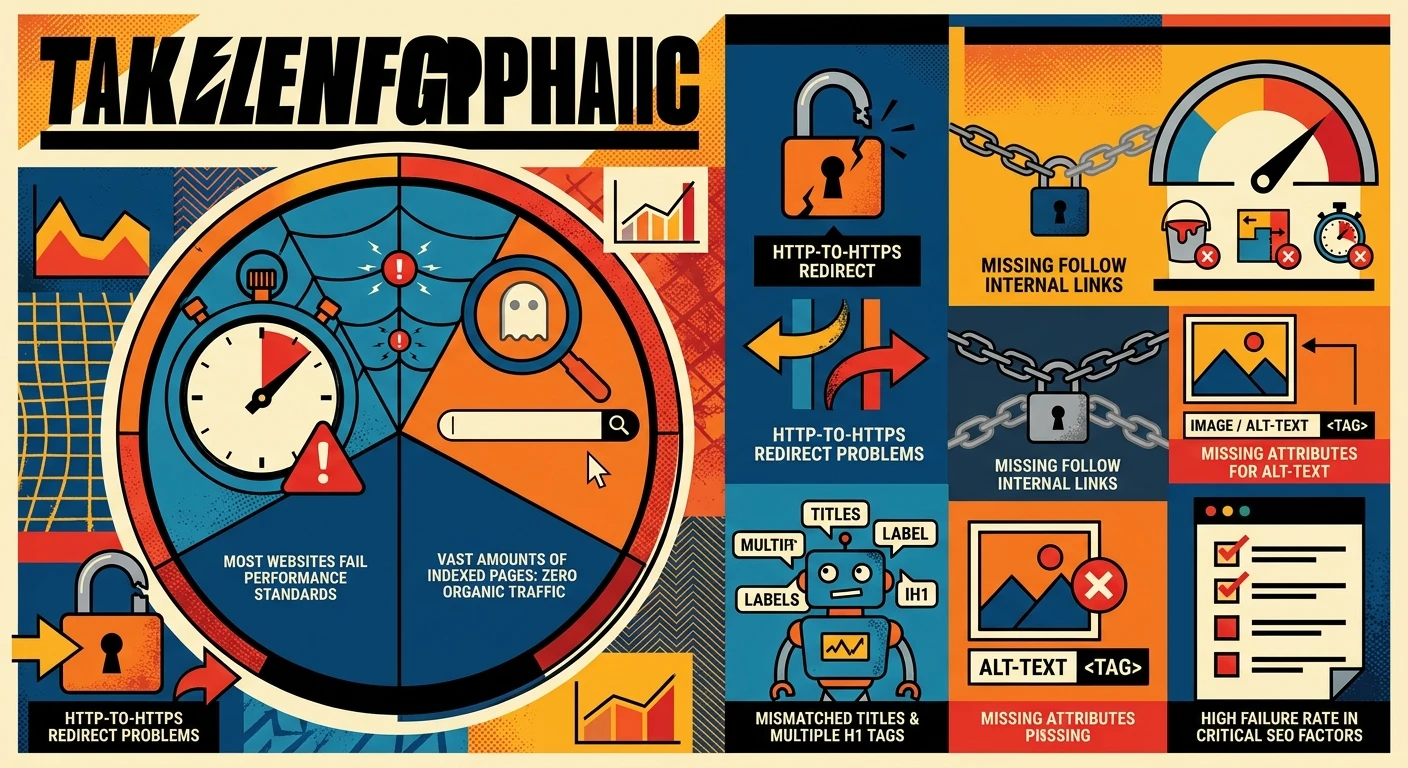
Prima di analizzare categorie specifiche, queste statistiche generali forniscono un quadro d'insieme:
72% di siti Web Le pagine sono lente e non soddisfano gli standard di prestazione di Google.
Il 96.55% di tutte le pagine indicizzate ricevere zero traffico organico da Google
Solo il 33% dei siti web superare la soglia dei Core Web Vitals di Google
72% di siti Web fallire almeno un fattore tecnico SEO critico
95.2% di siti Web Ho problemi di reindirizzamento 3XX
88% di siti Web presentano problemi di reindirizzamento da HTTP a HTTPS
80.4% di siti Web hanno attributi alt mancanti
59.5% dei siti mancano i tag H1
51.3% dei siti avere più tag H1 (un problema in conflitto con quanto sopra)
66.2% dei siti avere almeno una pagina con un solo link interno di tipo "follow"
68.5% dei siti hanno titoli di pagina e SERP non corrispondenti
I dati raccontano una storia coerente: la maggior parte dei siti web su internet presenta problemi tecnici di SEO significativi e risolvibili che limitano direttamente la loro visibilità organica. Per qualsiasi professionista SEO, questo è allo stesso tempo allarmante e chiarificatore: l'analisi tecnica SEO non è un optional, ma un lavoro di correzione essenziale.
Statistiche di crawling e indicizzazione
Googlebot può classificare solo ciò che riesce a scansionare e indicizzare. I problemi di scansione e indicizzazione sono i fallimenti tecnici più elementari della SEO, perché impediscono del tutto che un contenuto venga preso in considerazione per il posizionamento.
Statistiche di indicizzazione:
96.55% nessuna pagina riceve traffico di ricerca da Google: la portata sconcertante dei contenuti sprecati
A soli 1.94% di tutte le pagine ricevono tra 1 e 10 visite organiche mensili
A soli 1.74% di pagine appena pubblicate che raggiungono la top 10 di Google entro un anno
Google mantiene un indice web di circa 400 miliardi di documenti
15% di tutte le ricerche su Google non sono mai state effettuate prima
Problemi di efficienza nello strisciamento:
Problema | Prevalenza |
catene di reindirizzamento 3XX | 95.2% di siti Web |
Problemi di reindirizzamento da HTTP a HTTPS | 88% di siti Web |
Pagine che rimandano a URL di reindirizzamento | 62.7% dei siti |
Pagine orfane (un collegamento interno) | 66.2% dei siti |
Problemi con i tag canonici (eCommerce) | Il 53% dei siti di e-commerce |
I collegamenti interrotti | Il 62.4% dei siti di e-commerce |
Errori di Hreflang (degli utenti) | Oltre il 67% dei siti lo utilizza |
Problemi di contenuti duplicati | Il 38.78% dei siti ad alta visibilità |
Il 92% dei siti con le prestazioni più basse |
Il budget di scansione è una risorsa limitata, soprattutto per i grandi siti di e-commerce. Ogni catena di reindirizzamenti, ogni pagina orfana e ogni link non funzionante spreca budget di scansione che potrebbe essere speso per contenuti che si desidera effettivamente indicizzare. La prevalenza del 95.2% di problemi di reindirizzamento è particolarmente significativa: significa che la pulizia delle catene di reindirizzamenti rappresenta un'opportunità quasi universale di SEO tecnica.
Parametri Web fondamentali: lo standard di prestazione che la maggior parte dei siti non riesce ancora a raggiungere.
I Core Web Vitals (CWV) di Google rappresentano il principale framework tecnico per misurare l'esperienza utente su una pagina. Sono al contempo un segnale di ranking e un indicatore della qualità complessiva del sito, eppure la maggior parte dei siti non riesce ancora a rispettarli.
Tassi di superamento del CWV (2026):
Metrico | Tasso di superamento desktop | Tasso di superamento mobile |
LCP (Buono: <2.5 s) | 58% | 43% |
INP (Buono: <200ms) | 78% | 65% |
CLS (Buono: <0.1) | 78% | 74% |
Tutti e tre insieme | 63% | 42% |
A soli 33% di tutti i siti Web superano la soglia dei Core Web Vitals secondo lo studio di Ahrefs. Secondo il Web Almanac 2025, solo Il 48% delle pagine mobile and 56% delle pagine desktop superare tutti e tre i parametri. Le prestazioni su dispositivi mobili rimangono la sfida principale, ma anche la principale opportunità.
INP (Interazione con la vernice successiva) INP è ora la metrica Core Web Vitals che più frequentemente non supera il test, avendo sostituito FID (First Input Delay) nel marzo 2024. INP misura la velocità con cui una pagina risponde all'interazione dell'utente: una metrica più completa e più esigente rispetto alla precedente. Questa transizione ha di fatto creato una nuova ondata di errori CWV su siti che in precedenza li superavano.
Tassi di superamento CWV per piattaforma CMS (mobile):
CMS | Tasso di superamento CWV (Mobile) |
Shopify: | 64% |
Next.js | 58% |
Squarespace | 56% |
Wix | 49% |
WordPress | 38% |
Joomla | 31% |
Magento | 28% |
WordPress alimenta circa 43% del web eppure solo Il 38% dei siti WordPress Supera tutti e tre i Core Web Vitals su dispositivi mobili. Il tasso di superamento del 28% di Magento è il più basso tra le principali piattaforme di eCommerce, un dato significativo considerando il suo utilizzo da parte di rivenditori di grandi dimensioni. Il divario tra Shopify (64%) e Magento (28%) è di 36 punti percentuali, interamente attribuibile all'architettura della piattaforma e all'ottimizzazione predefinita delle prestazioni.
Problemi tecnici sulla pagina: i problemi più diffusi
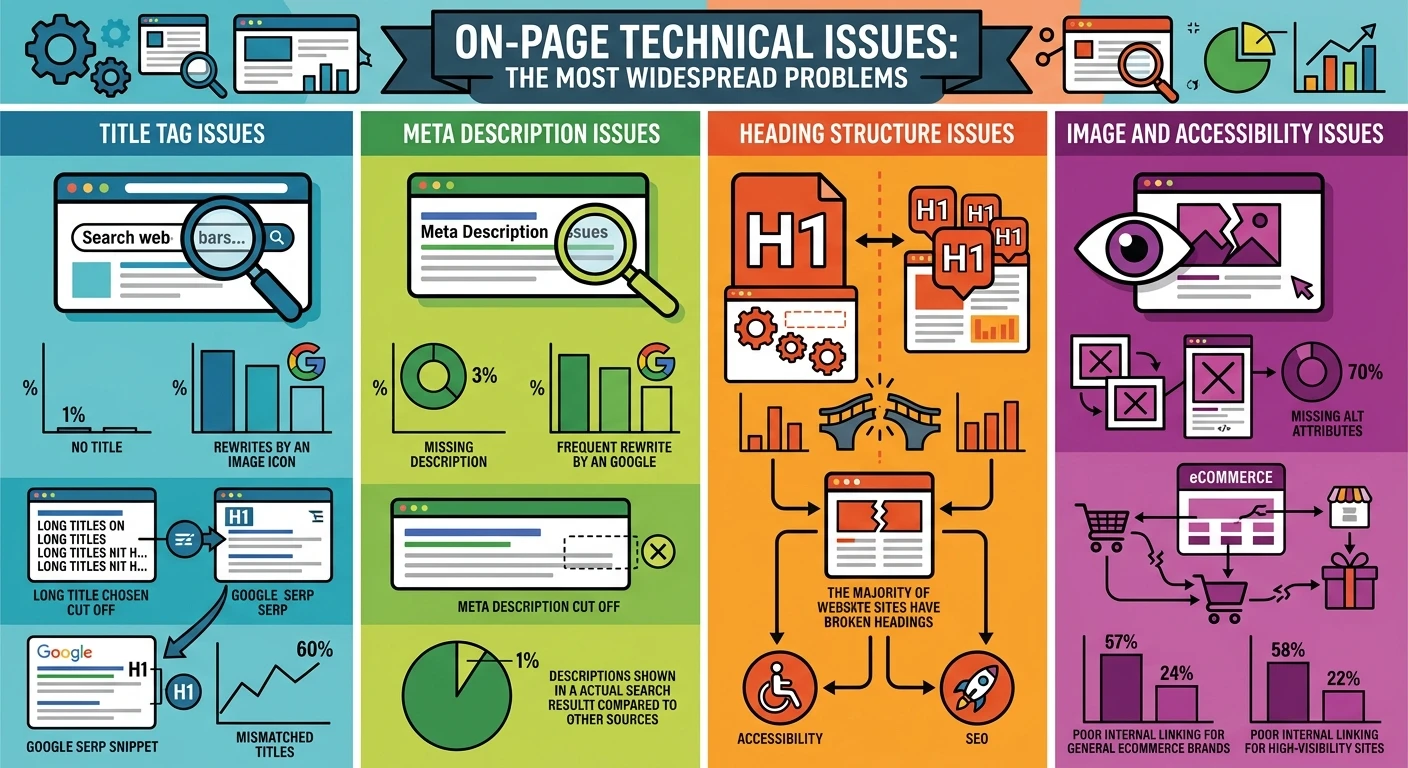
Problemi con il tag del titolo:
7.4% delle pagine di primo livello non hanno alcun tag titolo
Google riscrive i tag del titolo 76% dell'epoca (dati del primo trimestre 2025)
Google è 57% di probabilità riscrivere i tag del titolo troppo lunghi
Quando Google ignora il tuo tag titolo, usa l'H1 50.76% del tempo
68.5% molti siti hanno titoli di pagina non corrispondenti ai titoli SERP
Problemi con la meta descrizione:
25% delle pagine di primo livello non hanno meta descrizione
Google riscrive le meta descrizioni 62.78% del tempo
40.61% delle pagine hanno meta descrizioni che vengono troncate nei risultati di ricerca
Google mostra solo le meta descrizioni nei risultati 37.22% del tempo
Problemi di struttura dei titoli:
59.5% di siti hanno tag H1 mancanti
51.3% dei siti hanno più tag H1
La combinazione di questi due problemi fa sì che la struttura delle intestazioni sia interrotta sulla maggior parte dei siti web, compromettendo sia i segnali SEO che l'accessibilità.
Problemi relativi a immagini e accessibilità:
80.4% di siti web hanno attributi alt mancanti
53.1% nelle pagine iniziali manca il testo alternativo per le immagini
La mancanza dell'attributo alt influisce sia sulla SEO (l'indicizzazione delle immagini di Google) che sull'accessibilità (per gli utenti di screen reader).
86% molti marchi di e-commerce non hanno link interni ottimizzati
Anche 41% dei siti di eCommerce ad alta visibilità hanno una scarsa connettività interna
Statistiche sui collegamenti interni
Il linking interno è una delle pratiche di SEO tecnica più efficaci e al tempo stesso più trascurate:
66.2% dei siti hanno pagine con un solo link interno di follow
86% dei marchi di e-commerce hanno strutture di collegamento interno subottimali
Gli URL con un numero maggiore di varianti del testo di ancoraggio dai collegamenti interni sono altamente correlato a un maggior traffico organico
Pagine con almeno un collegamento interno con testo di ancoraggio corrispondente esatto avevano 5 volte più traffico rispetto alle pagine senza
62.7% dei siti collegano gli URL di reindirizzamento dai link interni, sprecando PageRank
L'analisi dei dati relativi ai link interni rivela un'ampia opportunità mancata. Correggere l'architettura dei link interni, soprattutto per i siti di e-commerce con migliaia di pagine prodotto, è in genere uno degli interventi di SEO tecnica con il più alto ritorno sull'investimento (ROI).
Statistiche sullo stato di salute dei backlink e dei link
66.5% tutti i link creati negli ultimi nove anni sono ora non funzionanti (link rot)
73.6% di domini hanno collegamenti reciproci
43.7% alcune delle pagine di primo livello hanno link reciproci
10.6% tutti i backlink sono nofollow
Le pagine di primo livello ottengono nuovi backlink seguiti da domini di riferimento a un ritmo di +5–14.5% al mese
La maggior parte delle pagine di primo livello si classificano anche tra le prime 10 per quasi 1,000 altre parole chiave
C'è un forte correlazione positiva tra il numero di domini di riferimento e il traffico di ricerca
Statistiche relative a schemi e dati strutturati
Il markup Schema è un'implementazione tecnica di grande impatto che la maggior parte dei siti continua a ignorare o ad implementare in modo errato:
Pagine con schema raggiungono CTR più alto del 20-40%
Risultati eccellenti ottenuti CTR più alto del 82%. rispetto agli snippet standard
I siti web con schema ricevono 4 volte più rich snippet rispetto ai siti senza
Lo schema del prodotto offre prestazioni 4.2 volte superiori Visibilità di Google Shopping
Le panoramiche sull'IA di Google utilizzano dati strutturati come fonte primaria
Schema.org ora include Oltre 800 tipi di schema
I frammenti in primo piano di Google vengono visualizzati per 30.9% di query dalla posizione n. 1
Intelligenza artificiale e SEO tecnica: il punto d'incontro emergente
L'integrazione dell'intelligenza artificiale nei prodotti di ricerca di Google ha creato nuovi requisiti tecnici per la SEO che non esistevano 18 mesi fa:
74% di tutti i nuovi contenuti web pubblicati ora contiene contenuti generati dall'IA
Le panoramiche sull'IA sono associate a un 34.5% riduzione dei clic per le pagine che si posizionano nei risultati di ricerca
YouTube rappresenta il 23.3% di citazioni in Google AI Overviews — il dominio più citato
Wikipedia compare nel 18.4% di citazioni della panoramica sull'IA
48% molti importanti siti di notizie ora bloccano i crawler di OpenAI
24% bloccare il crawler basato sull'intelligenza artificiale di Google
I contenuti citati dall'IA sono il 25.7% più recenti in media rispetto alle pagine che si posizionano organicamente: i segnali di freschezza stanno diventando più importanti
Il blocco dei crawler basati sull'intelligenza artificiale da parte dei principali editori crea un panorama tecnico frammentato in cui diverse decisioni tecniche relative al file robots.txt e alle autorizzazioni dei crawler influiscono simultaneamente sulla visibilità su molteplici piattaforme di ricerca basate sull'IA.
DOMANDE FREQUENTI
Nel 2026, i cinque problemi tecnici di SEO più diffusi sono: velocità di caricamento delle pagine lenta (72.3% dei siti), problemi di reindirizzamento 3XX (95.2%), tag H1 mancanti (59.5%), attributi alt mancanti (80.4%) e link interni di scarsa qualità (66.2%). Risolvere questi problemi principali migliorerebbe significativamente la visibilità organica per la maggior parte dei siti web.
Solo il 33% di tutti i siti web supera la soglia dei Core Web Vitals e, sui dispositivi mobili, appena il 42% delle origini supera tutti e tre i parametri. L'INP è ora il parametro che più frequentemente non supera i test, dopo aver sostituito il FID nel marzo 2024.
I problemi di reindirizzamento interessano il 95.2% dei siti web e ogni reindirizzamento in una catena diluisce la trasmissione del PageRank sprecando al contempo il budget di scansione. Il problema è aggravato dal fatto che il 62.7% dei siti presenta anche link interni che puntano agli URL di reindirizzamento anziché agli URL di destinazione finali.
Sì, anche se lo schema non influenza direttamente il posizionamento, le pagine con markup ottengono tassi di clic (CTR) superiori del 20-40% e i risultati avanzati (rich results) raggiungono un CTR superiore dell'82% rispetto agli snippet standard. Lo schema è inoltre sempre più importante per la visibilità nelle panoramiche AI di Google, che utilizzano i dati strutturati come fonte primaria.
Sì, le pagine con link interni con testo di ancoraggio a corrispondenza esatta ricevono un traffico 5 volte superiore rispetto alle pagine che ne sono prive. Nonostante ciò, l'86% dei brand di e-commerce presenta strutture di link interni non ottimali e il 66.2% dei siti ha pagine con un solo link interno "follow", il che rende il linking interno uno degli interventi di SEO tecnica con il ROI più elevato.