В официальном руководстве Google подтверждается, что оптимизация для поиска с использованием ИИ, включая обзоры ИИ и режим ИИ, по-прежнему является лишь SEO-оптимизацией.
Компания назвала тактики, которые владельцы сайтов могут пропустить, такие как файлы llms.txt, сегментирование контента, переписывание текста с использованием ИИ и специальные схемы.
Главное преимущество осталось неизменным: полезный контент, понятная структура сайта, надежные внутренние ссылки и настоящая экспертность.
Все ищут способы упростить SEO-оптимизацию для ИИ, но Google ясно дал понять, что фундаментальные принципы по-прежнему определяют победителя. В официальном руководстве, опубликованном 15 мая 2026 года в Search Central, Google прямо ответил на главный вопрос: актуальна ли SEO-оптимизация для поиска с использованием ИИ? Коротко говоря, да.
Что на самом деле сказал Google
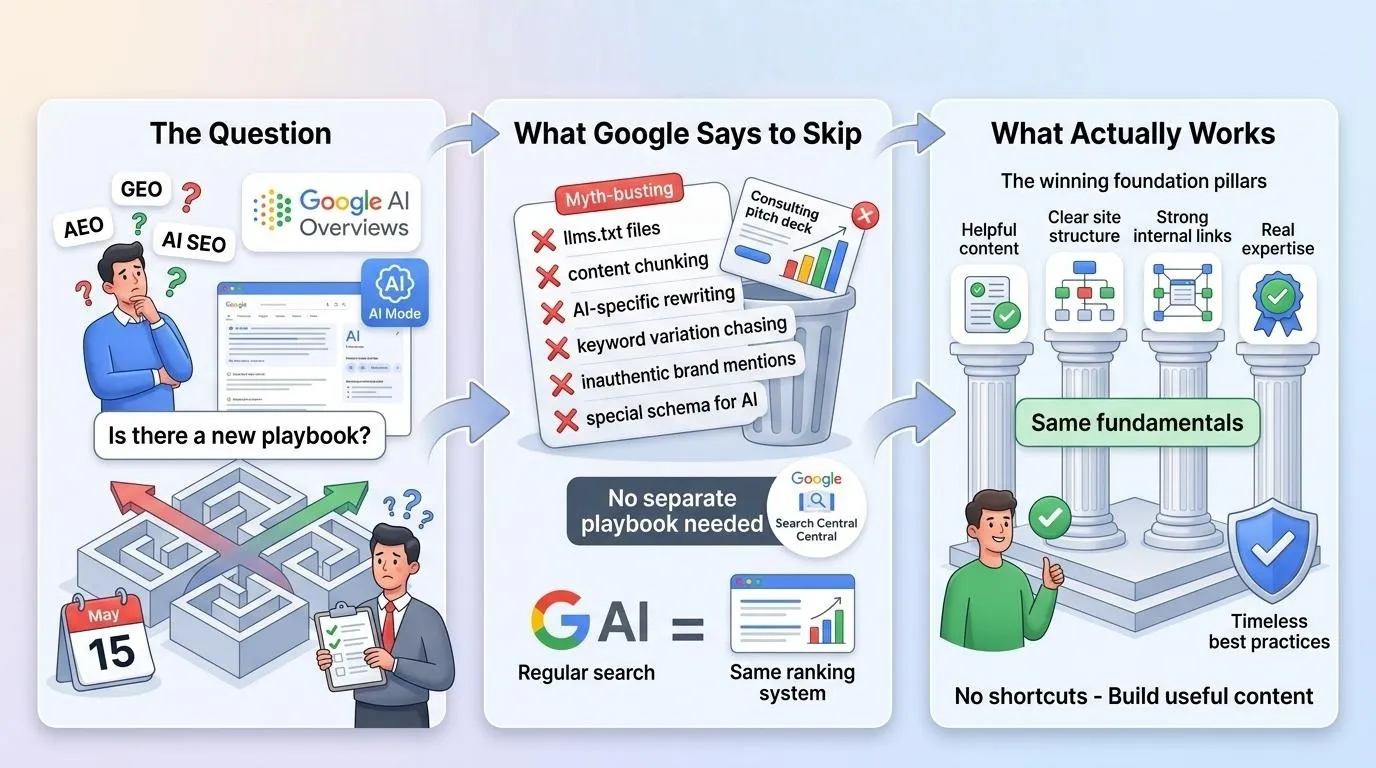
Позиция Google проста. Ее функции искусственного интеллекта, «Обзоры ИИ» и «Режим ИИ», основаны на тех же базовых системах ранжирования и качества, что и обычный поиск. Они используют один и тот же индекс, применяя расширенную генерацию результатов поиска и распределение запросов.
Таким образом, оптимизация для поиска с использованием ИИ — это просто оптимизация для поиска, а это значит, что метки AEO и GEO, по мнению Google, по-прежнему относятся к SEO. Отдельного руководства и секретного контрольного списка не существует.
В этом видеоролике подробно рассматривается руководство:
https://www.youtube.com/watch?v=mwYfX2w3Y_I
Взлом, который вы можете осуществить
В руководстве есть раздел, развенчивающий откровенные мифы, в котором перечислены действия, которые не нужно предпринимать для использования функций искусственного интеллекта Google. В этот список входят создание файлов llms.txt или другой специальной разметки для ИИ, разбиение контента на небольшие фрагменты, переписывание страниц для отслеживания всех вариантов ключевых слов, отслеживание недостоверных упоминаний бренда и добавление специальной схемы только для ИИ. Целая индустрия консалтинга продает эти тактики. Google утверждает, что вы можете их игнорировать.
Ознакомиться с официальным руководством Google можно здесь:
https://developers.google.com/search/docs/fundamentals/ai-optimization-guide
Что по-прежнему побеждает
Единственный действенный совет — это скучный, но всегда работающий вариант. Создавайте уникальный, нестандартный контент с подлинной точкой зрения, которую модель не сможет просто скопировать со страниц других пользователей.
Поддерживайте доступность страниц для индексации поисковыми системами и обеспечивайте их техническую чистоту. Используйте понятные внутренние ссылки, чтобы Google мог найти и связать ваши ключевые страницы. И демонстрируйте подлинную экспертность. Google прежде всего делает акцент на одном: удовлетворит ли это реального посетителя?
Единственное предостережение
Существует предел, о котором стоит знать. Данное руководство охватывает только собственные функции искусственного интеллекта Google. Другие поисковые системы, такие как ChatGPT, Perplexity и Copilot, используют другие системы поиска, поэтому некоторые методы, которые Google игнорирует, могут быть актуальны и в этих системах.
Присоединяйтесь к обсуждению на X:
https://x.com/search?q=Google%20AEO%20GEO%20still%20SEO
Главный вывод прост: всё должно быть стабильно, без показной эффектности. В сфере поиска с использованием ИИ преуспеют те компании, которые создают наиболее полезный контент, а не те, кто гонится за последними хитростями.
Быстрые ссылки: