Исследование ключевых слов в 2026 году принципиально отличается от того, каким оно было в 2022 году. Основная деятельность — определение того, что ищет ваша аудитория, и сопоставление контента с этими запросами — по-прежнему имеет важное значение. Но контекст кардинально изменился: Обзоры ИИ снижают CTR. В целом по категориям поисковых запросов поисковые запросы без кликов теперь составляют 69% всех запросов, 15% ежедневных поисковых запросов в Google никогда ранее не выполнялись, а переход к исследованию, ориентированному на намерения пользователя (понимание того, почему кто-то ищет информацию, а не только того, что он ищет), стал определяющим конкурентным преимуществом.
Бренды, которые будут побеждать в органическом поиске в 2026 году, — это не те, кто нацелен на самые популярные ключевые слова. Это те, кто достаточно глубоко понимает поисковые запросы, чтобы создавать контент, полностью им удовлетворяющий, и кто обладает необходимыми техническими и авторитет в данной области для конкуренции для запросов, которые действительно приводят к конверсиям. Эта статистика служит основой для такого рода стратегического исследования ключевых слов.
Поисковая среда в 2026 году: основополагающие статистические данные.
Отправной точкой является понимание контекста, в котором осуществляется исследование ключевых слов:
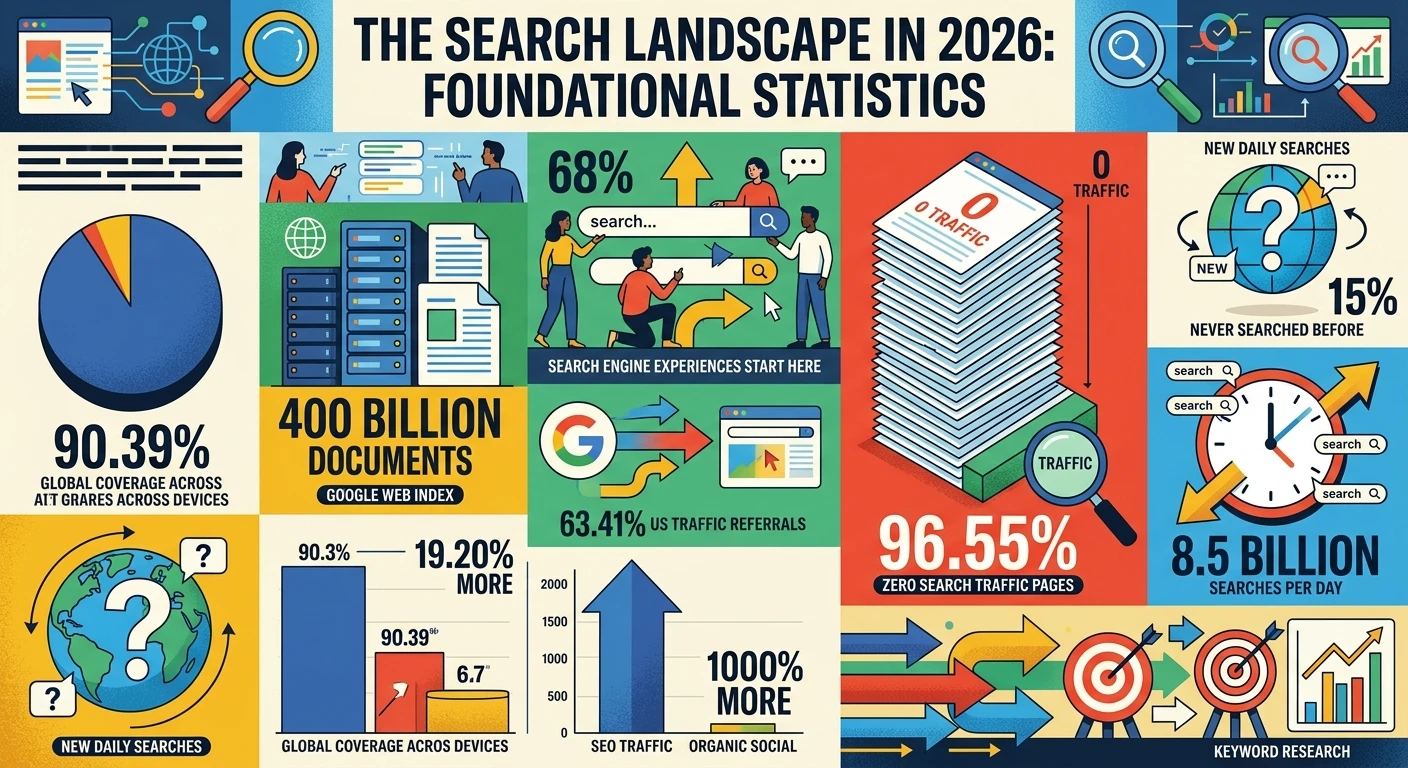
Google владеет 90.39% доля мирового рынка поисковых систем на всех устройствах
Google поддерживает веб-индекс. примерно 400 миллиардов документов
68% онлайн опыта начать с поисковой системы
63.41% Весь веб-трафик в США поступает из Google.
SEO увеличивает трафик более чем на 1,000%. чем органические социальные сети
96.55% всех страниц Отсутствие поискового трафика из Google — важнейший показатель в стратегии ключевых слов.
15% всех поисковых запросов в Google Ранее такие запросы никогда не выполнялись — это подтверждает перспективность долгосрочного тренда.
Google обрабатывает приблизительно 8.5 миллиарда запросов в день
Показатель в 96.55% нулевого трафика — это не призыв к отчаянию, а стратегическое указание. Он говорит о том, что подавляющее большинство контента в интернете не соответствует тому, что на самом деле ищут пользователи. Качественно проведенное исследование ключевых слов — это дисциплина, гарантирующая, что ваш контент не пополнит это большинство.
Объём и распространение ключевых слов: где фактически находятся поисковые запросы.
Распределение объемов ключевых слов сильно искажено, и понимание этого искажения является важнейшим структурным аспектом стратегии ключевых слов:
94.74% всех ключевых слов получить 10 или менее ежемесячных поисков
0.0008% Ключевые слова получают более 100 000 поисковых запросов в месяц.
На длиннохвостые ключевые слова приходится более 91% всех веб-поисков. (Рингли.io / Эмбрион)
Длиннохвостые ключевые слова составляют 65–70% всех поисковых запросов (Здесь сходятся несколько источников)
Ключевые слова (1–2 слова) составляют ничтожно малую долю от общего объема поисковых запросов, но играют решающую роль в SEO-конкуренции.
Топ-3 органических результатов поиска Google Получать 68.7% всех кликов
Первый органический результат имеет средний CTR 2000. 39.8%
Средние показатели на позиции 2 5.82% CTR; Средние показатели по позиции 3 3.11%
Уровень объема ключевых слов | % от всех ключевых слов | CTR на позиции 1 | Уровень конкуренции |
100,000 XNUMX+ ежемесячных поисков | 0.0008% | на 27–35% | Крайний |
10 000–100 000 поисков | ~ 0.5% | на 30–40% | Очень высоко |
10 000–100 000 поисков | ~ 4% | на 35–45% | От высокого до среднего |
10 000–100 000 поисков | ~ 20% | на 40–50% | Средний |
10 000–100 000 поисков | ~ 30% | на 45–55% | Низкий |
10 000–100 000 поисков | ~ 45% | на 50–60% | Очень Низкий |
Эти данные выявляют парадоксальную реальность: ключевые слова с наибольшим потенциалом конверсии (конкретные, насыщенные намерениями длинные термины) часто имеют наименьшую конкуренцию и самый высокий CTR на первой позиции. Ошибка, которую допускает большинство брендов при исследовании ключевых слов, заключается в чрезмерном индексировании высокочастотных ключевых слов, по которым дорого ранжироваться и которые плохо конвертируются.
Статистика поисковых намерений: наиболее важный параметр ключевых слов.
Намерение — причина, побудившая к поиску, — стало основным организующим принципом эффективного исследования ключевых слов в 2026 году. Алгоритмы Google стали достаточно сложными, чтобы точно классифицировать намерения, а это значит, что контент, не соответствующий намерениям (например, информационная статья, ориентированная на транзакционный запрос), не будет ранжироваться независимо от технического качества.
Распределение намерений в электронной коммерции:
70% поисковых запросов в сфере электронной коммерции носят транзакционный характер (явное намерение совершить покупку).
65% всех поисковых запросов являются «длиннохвостыми» — как правило, указывают на более конкретные потребности с более высокими намерениями.
Ключевые слова, имеющие коммерческий характер В 1.8 раз выше CTR чем информационные запросы
Длиннохвостые ключевые слова обеспечивают конверсию по в 2.5 раза больше широких заголовочных терминов
Реферальный трафик ChatGPT конвертируется на 31% чаще. чем в органическом поиске без брендовой рекламы — пользователи, использующие ИИ для поиска, приходят с более сильным намерением.
Четыре основные категории поисковых запросов и их влияние на SEO:
Тип намерения | Характеристики: | Соответствие контента | Потенциал конверсии |
Информационный | Обучение/исследования | Сообщения в блоге, руководства, инструкции | Низкий уровень (стадия осознанности) |
навигационный | Поиск конкретного сайта | Фирменные страницы, главные страницы | Средняя |
Коммерческое расследование | Сравнение вариантов | Обзоры, сравнения, списки лучших | Высокий |
Транзакционные | Готов купить/действовать | Страницы товаров, целевые страницы | Очень высоко |
Самое важное изменение в исследовании ключевых слов в 2026 году — это использование намерения как основного фильтра, прежде чем учитывать объем поиска. Ключевое слово, используемое для транзакций (500 поисковых запросов в месяц), может приносить больше дохода, чем информационное ключевое слово (50 000 поисковых запросов в месяц). Объем поиска без соответствия намерению — это пустая трата времени на таргетинг.
Статистика конкуренции и сложности ключевых слов
96.55% Многие страницы не получают органического трафика — в основном потому, что они нацелены на ключевые слова, по которым у них нет конкуренции.
Только приблизительно 5.7% Количество недавно опубликованных страниц войдет в топ-10 результатов поиска Google в течение года.
Только приблизительно 1.74% количество новых страниц, попавших в топ-10 в течение одного года хотя бы по одному ключевому слову
72.9% количество страниц, входящих в топ-10 результатов поиска Google, превышает 3 лет — Возраст домена и контента является значимым конкурентным фактором.
Страницы, занимающие верхние позиции в поисковой выдаче по конкурентным запросам, как правило, накапливают обратные ссылки с различных сайтов. сотни и тысячи ссылающихся доменов
Большинство страниц, занимающих верхние позиции в поисковой выдаче, получают новые ссылающиеся домены со скоростью... +5–14.5% в месяц — Органическое привлечение ссылок является конкурентным сигналом
Критерии сложности ключевых слов:
Оценка сложности ключевого слова | Типичные характеристики | Реалистичный график достижения ранга |
0–20 (очень низкий) | Длиннохвостые, нишевые запросы, минимальная конкуренция | 1 – 3 месяцев |
20–40 (Низкий) | Умеренная конкуренция, есть некоторый уже существующий контент. | 3 – 6 месяцев |
40–60 (Средний) | Устоявшаяся конкуренция, требуются ссылки. | 6 – 12 месяцев |
60–80 (Высокий) | Сильная конкуренция, необходимы полномочия. | 12 – 24 месяцев |
80–100 (очень высокий) | Доминируют крупные бренды/издатели. | 24+ месяца (если это возможно) |
Планировщик ключевых слов Google и точность определения объема поиска
Понимание ограничений данных об объеме ключевых слов имеет важное значение для методологии исследования:
Планировщик ключевых слов Google Ads переоценивает объемы поисковых запросов в 54.28% случаев.
Это приблизительно точно. 45.22% времени
46.08% кликов В Google Search Console данные переходят по адресу: скрытые/непредоставленные термины
Эти скрытые данные означают, что вы принимаете решения по ключевым словам, не имея представления о почти половине фактических источников кликов.
Практическое следствие: данные об объеме ключевых слов, полученные с помощью любого инструмента, следует рассматривать скорее как сигналы направления, а не как точные измерения. Относительный рейтинг объема (ключевое слово A имеет больший объем, чем ключевое слово B) обычно надежен; абсолютные числа — нет.
Статистика по ключевым словам в поисковой выдаче: помимо стандартных синих ссылок
Современное исследование ключевых слов должно учитывать, как разные типы запросов запускают различные функции поисковой выдачи, многие из которых существенно влияют на органический CTR:
Обзоры ИИ В настоящее время такие запросы появляются примерно в 86.8% коммерческих поисковых запросов.
Обзор ИИ: причина Снижение CTR на 58–61%. для органических результатов по затронутым запросам
Поиск без кликов учитывать 69% всех запросов общий
Избранные фрагменты добиться 42.9% CTR — выше стандартной позиции 1
30.9% Большая часть выделенных фрагментов взята со страниц, занимающих 1-е место в рейтинге.
61.5% поисковых запросов на ПК и 34.4% мобильных поисков Результат – отсутствие кликов
Три лучших органических результата получают 68.7% всех кликов по запросам с ненулевым количеством кликов
Благодаря высоким показателям эффективности достигается увеличение CTR на 82%. чем стандартные фрагменты
Упоминание в обзоре ИИ генерирует На 35% больше органических кликов для этой страницы
На долю YouTube приходится 23.3% из всех цитирований обзора искусственного интеллекта Google
Функции поисковой выдачи (SERP) в зависимости от типа запроса:
Тип запроса | Доминирующая функция в результатах поиска | Влияние на органический CTR |
Информационный | Обзор ИИ + избранный фрагмент | От -58% до -83% |
Местное | Пакет карт | Значительное отклонение от маршрута к картам. |
Коммерческий интерьер | Обзор товарной рекламы и ИИ | Умеренное или значительное снижение |
Транзакционные | Торговая реклама + PLA | Снижение органического CTR для запросов о товарах. |
навигационный | Панель знаний | Обычно это выгодно целевому бренду. |
на основе вопросов | Избранный фрагмент + PAA | От -30% до -50% |
Статистика по ключевым словам с длинным хвостом: недооцененная возможность.
Длиннохвостые ключевые слова остаются наименее используемой возможностью в исследовании ключевых слов для большинства брендов:
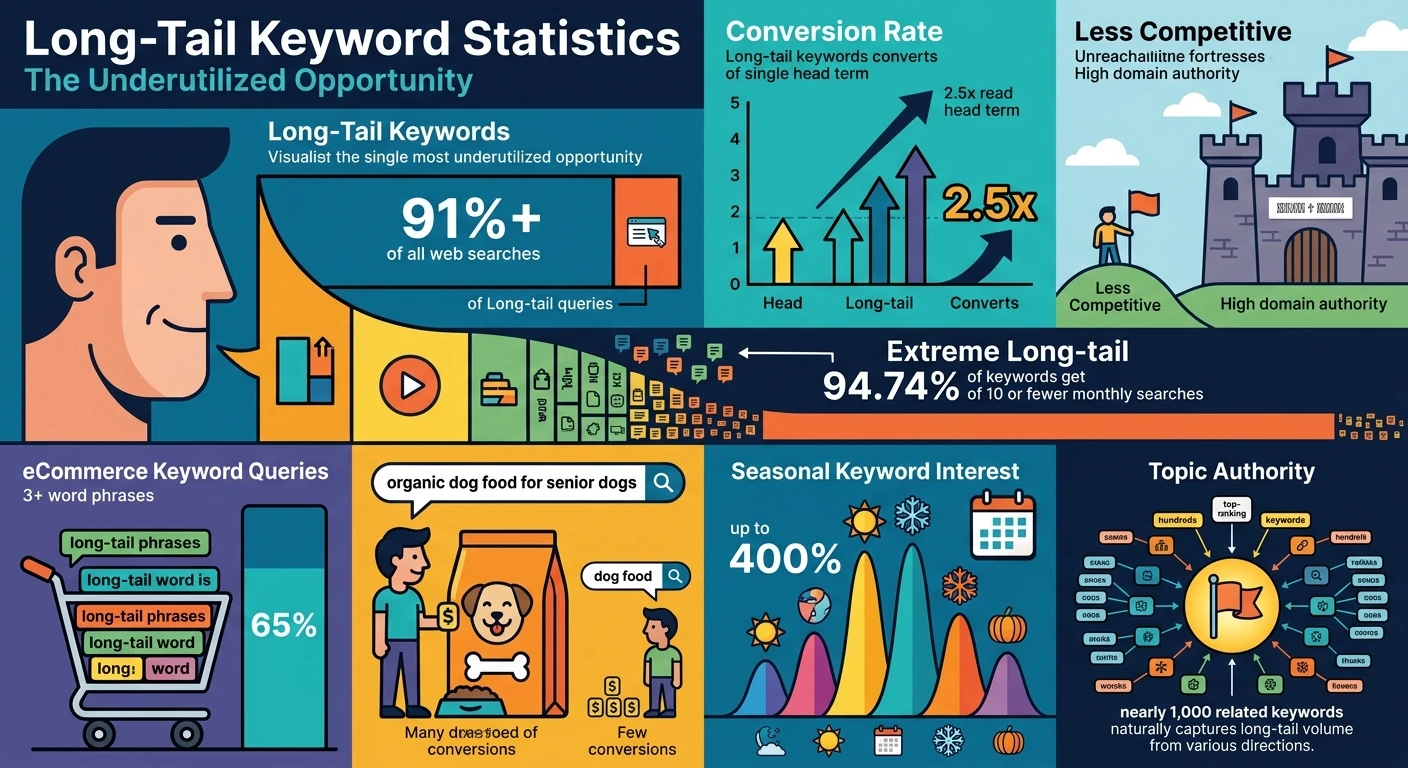
Более 91% всех веб-поисков являются запросами с длинным хвостом
94.74% Ключевые слова, которые получают 10 или менее запросов в месяц (крайне длинные ключевые слова).
Длиннохвостые ключевые слова обеспечивают конверсию по в 2.5 раза больше главных терминов
Длиннохвостые ключевые слова — это значительно менее конкурентоспособный — достижимо без огромного авторитета домена.
65% ключевых запросов в сфере электронной коммерции являются длиннохвостыми (фразами из 3 и более слов)
Вероятность совершения покупки у человека, ищущего «органический корм для пожилых собак», во много раз выше, чем у человека, ищущего «корм для собак».
Сезонные ключевые слова вызывают всплески интереса, достигающие определённой величины. 400% — Умение приурочивать контент к сезонному спросу на товары и услуги, не относящиеся к основной тематике, представляет собой значительную возможность.
В среднем, страница, занимающая верхние позиции в поисковой выдаче, находится примерно на определенном месте. 1,000 связанных ключевых слов — Всестороннее освещение тематической области естественным образом привлекает объемы целевой аудитории, не относящиеся к основной.
Инструменты для исследования ключевых слов: показатели производительности и точности.
Инструмент | Силы | Точность подачи | Для каких задач |
Google Search Console | Реальные данные пользователей | Наибольший (прямые данные) | Мониторинг фактической производительности |
Ahrefs | Полная база данных | Высокий | Исследование конкурентов, сложность |
Semrush | Широкий набор функций | Высокий | Полный рабочий процесс SEO |
Планировщик ключевых слов Google | Оценки объёма | Умеренный (завышение на 54%) | Планирование контекстной рекламы, направленный объем |
Google Trends | Направление тренда | Высокий уровень трендов | Сезонные, актуальные темы |
SparkToro | Исследование аудитории | Высокий рейтинг для зрителей | Понимание профилей пользователей поисковых систем |
Влияние ИИ на стратегию исследования ключевых слов
Развитие инструментов поиска на основе искусственного интеллекта открывает новые возможности для стратегии ключевых слов:
34% от Gen Z Теперь компания использует социальные платформы в качестве основной поисковой системы — это существенное отступление от стратегии Google.
60% покупателей в США используйте инструменты искусственного интеллекта для исследования рынка.
Google по-прежнему отправляет в 345 раз больше трафика. чем ChatGPT, Gemini и Perplexity вместе взятые — традиционный поиск по-прежнему доминирует.
На долю ChatGPT приходится 77.97% весь глобальный реферальный трафик ИИ.
Растерянность является причиной 15.10% реферального трафика ИИ
Контент, на который ссылается ИИ, на 25.7% актуальнее. В среднем, сигналы свежести играют все более важную роль, чем сигналы органического ранжирования контента.
74% всего нового веб-контента Теперь контент содержит материалы, сгенерированные искусственным интеллектом, что усиливает конкуренцию по каждому ключевому слову.
Практический подход к исследованию ключевых слов в условиях поиска с использованием ИИ: расставляйте приоритеты по сигналам EEAT (опыт, экспертность, авторитетность, надежность) при создании контента, оптимизируйте контент для получения расширенных сниппетов, создавайте всестороннее тематическое освещение, которое позиционирует вас как авторитетный источник информации, на который можно ссылаться, и поддерживайте актуальность контента — особенно для запросов, актуальных на данный момент.
Часто задаваемые вопросы (FAQ)
В 2026 году длиннохвостые ключевые слова важны как никогда, составляя более 91% всех поисковых запросов и обеспечивая в 2.5 раза более высокую конверсию, чем основные ключевые слова. Обзоры на основе ИИ в основном заменяют информационные основные ключевые слова, оставляя транзакционные и коммерческие запросы с длинным хвостом практически без изменений, что делает их более безопасной и прибыльной стратегией таргетинга.
Google Keyword Planner переоценивает объемы поиска в 54.28% случаев, поэтому рассматривайте показатели объема как ориентировочные сигналы, а не как точные прогнозы. Для получения наиболее надежных данных сопоставьте оценки инструмента с Google Search Console, которая предоставляет реальные данные о кликах и показах по ключевым словам, по которым вы уже занимаете позиции.
Поисковое намерение — это самый важный фактор при выборе ключевых слов в 2026 году. Ключевое слово, используемое для транзакций (500 поисковых запросов), которое точно соответствует намерениям покупателя, как правило, принесет гораздо больше дохода, чем информационное ключевое слово (50 000 поисковых запросов), которое редко приводит к конверсии.
В настоящее время 69% всех поисковых запросов заканчиваются без клика, поэтому информационные запросы имеют значительно меньшую ценность для трафика, чем показывают их объемы поиска. Опытные SEO-специалисты смещают акцент на ключевые слова, ориентированные на коммерческую и транзакционную аудиторию, где пользователям необходимо перейти по ссылке, чтобы достичь своей цели, и оптимизируют поиск для расширенных сниппетов, которые обеспечивают CTR в 42.9%.
Только 1.74% новых страниц попадают в топ-10 Google в течение года, а 72.9% страниц, занимающих в настоящее время места в топ-10, старше трех лет. Нацеливание на низкоконкурентные длиннохвостые ключевые слова обеспечивает самый быстрый путь к ранжированию, с реалистичными сроками от одного до трех месяцев по сравнению с 12–24 и более месяцами для высококонкурентных ключевых слов.