Исследователь в области SEO Лили Рэй задокументировала закономерность резкого падения видимости сайтов SaaS и B2B, которые ставят свой продукт на первое место в списках «лучших», и теперь подтверждено, что этот ущерб распространяется и на поисковые системы, использующие искусственный интеллект.
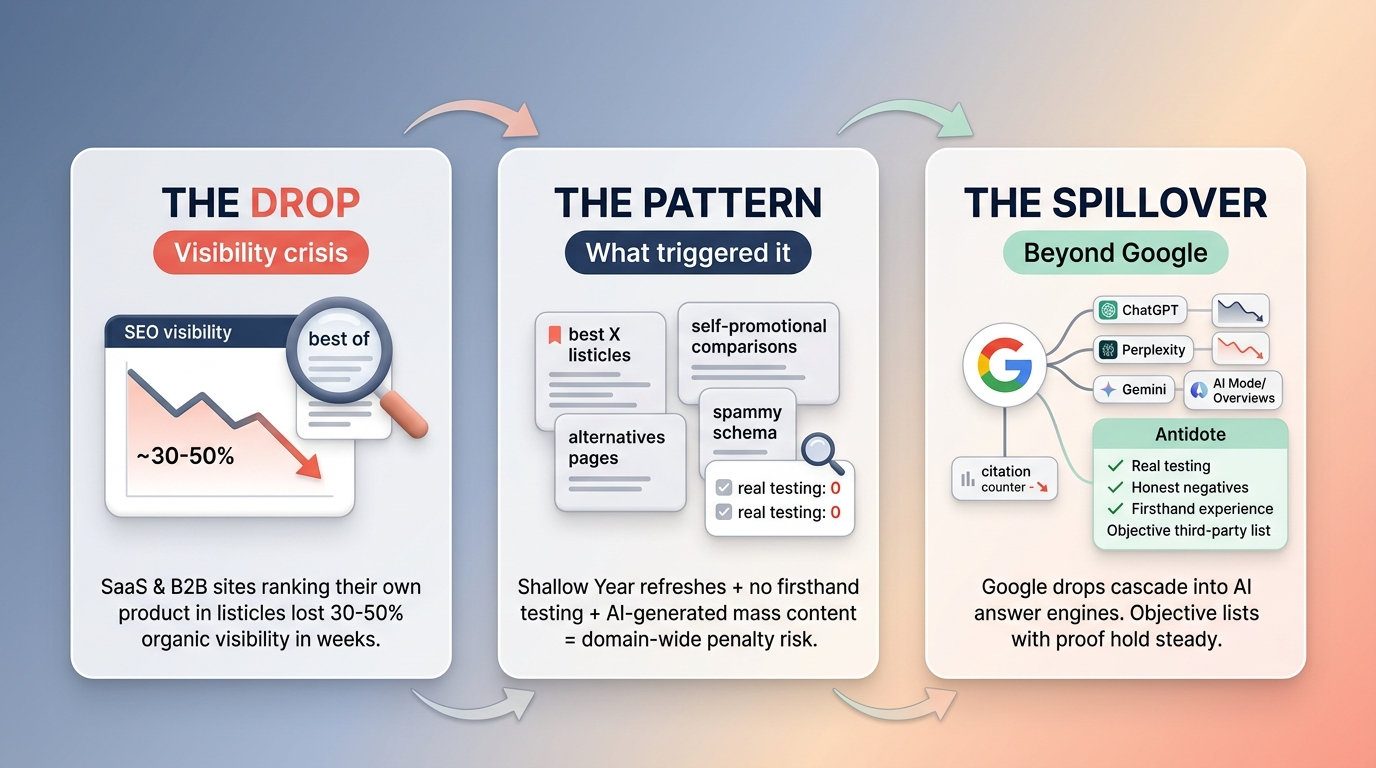
На затронутых сайтах органическая видимость упала на 30-50% в течение нескольких недель, причем это снижение наблюдалось в основном в подпапках блога и на страницах сравнения, а не на главных страницах или страницах товаров.
Закономерность указывает на то, что в списках издатель ставит свой собственный продукт на первое место, часто с поверхностными обновлениями названий «2026 года» и без реального тестирования, лежащего в основе рейтинга.
Рэй предупреждает, что этот эффект не ограничивается Google. Потеря видимости может отразиться на ChatGPT, Perplexity и других системах искусственного интеллекта, которые используют индекс Google для поиска информации.
Что вызвало эти падения?
Google пока не подтвердила название какого-либо нового обновления, но сроки совпадают с нестабильностью, последовавшей за обновлением ядра в декабре 2025 года.
Исследование Рэя показало, что наиболее пострадавшие сайты имели специфическую структуру контента: массово создаваемые списки «лучшее X», страницы с саморекламой и сравнениями, уменьшенные страницы с «альтернативами» конкурентов и спамные структурированные данные. В нескольких случаях контент, сгенерированный ИИ, находился в одной подпапке, но снижение видимости затронуло весь домен.
В своем анализе Рэй также подняла острый вопрос: сколько из этих компаний на самом деле использовали продукты конкурентов, которые они сравнивали со своими собственными? В большинстве случаев ответ был равен нулю. Списки, составленные без реального тестирования или личного использования, теряют свои позиции.
Почему это важно не только для Google
Поскольку AI Overviews, AI Mode и Gemini напрямую используют индекс Google, падение позиций в поисковой выдаче может означать меньшее количество упоминаний в ответах, сгенерированных ИИ. ChatGPT, который в значительной степени полагается на Bing наряду с некоторыми сигналами Google, и Perplexity, который получает данные из нескольких индексов в режиме реального времени, подвержены тому же негативному эффекту. Бренд, теряющий видимость в Google, рискует одновременно потерять и видимость в результатах поиска ИИ, а не как отдельную проблему, которую нужно решать позже.
Что по-прежнему работает
Не все списки находятся под угрозой. Объективные списки, составленные сторонними экспертами, без очевидной саморекламы, оставались стабильными в течение того же периода. Аналитики, отслеживающие последствия, говорят, что решающим фактором является доказательство: реальные тесты, честные негативные отзывы и личный опыт превосходят шаблонные рейтинги, которые каждый раз возводят в ранг хвалы собственный продукт издателя.
Быстрые ссылки: