
Best For | Best for Indian educators and businesses looking for a cost-effective, white-labeled course platform with strong security features. | Best for course creators and educators who want a flexible and user-friendly platform to build and sell online courses without transaction fees. |
Pricing | Starts at $48/month | Starts at $36/month (Free plan available) |
Features | White-label branding |
|
Pros | Affordable pricing for Indian users |
|
Cons | Limited international presence | Basic marketing tools on lower-tier plans |


Are you confused about which platform to choose for your online courses? Spayee is perfect for Indian creators, offering flexible pricing and local support, while Thinkific is known for its easy-to-use interface and global reach.
Both have strong features like customizable designs and course management tools, but which one fits your needs best?
I’ve tested both to give you a clear comparison. Let’s get in and find out!
Spayee vs Thinkific: Which One To Choose in 2026?
Spayee & Thikific are created with the same objective of helping course creators to launch branded course platforms.
Though these two platforms are similar in their capabilities, they do differ with respect to their specific features. In this detailed analysis, that’s the focus of the discussion. Let’s get in..
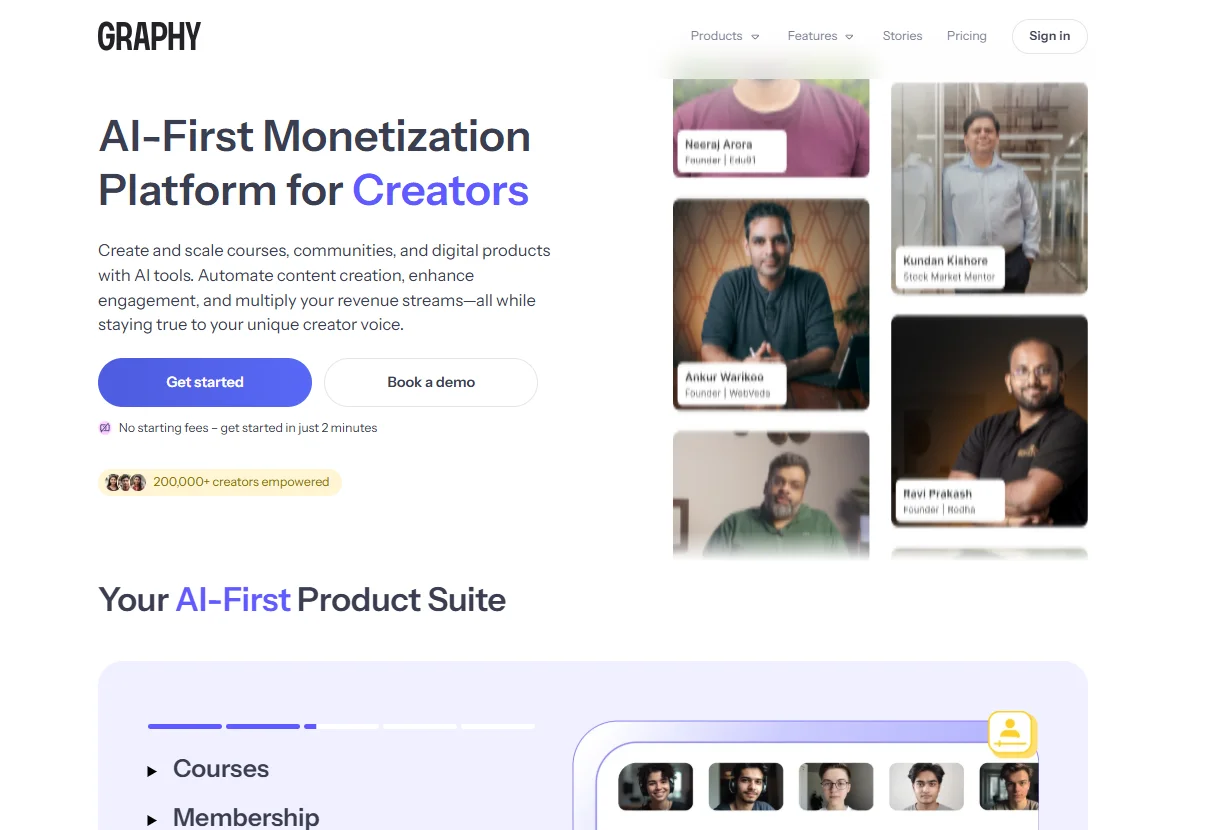
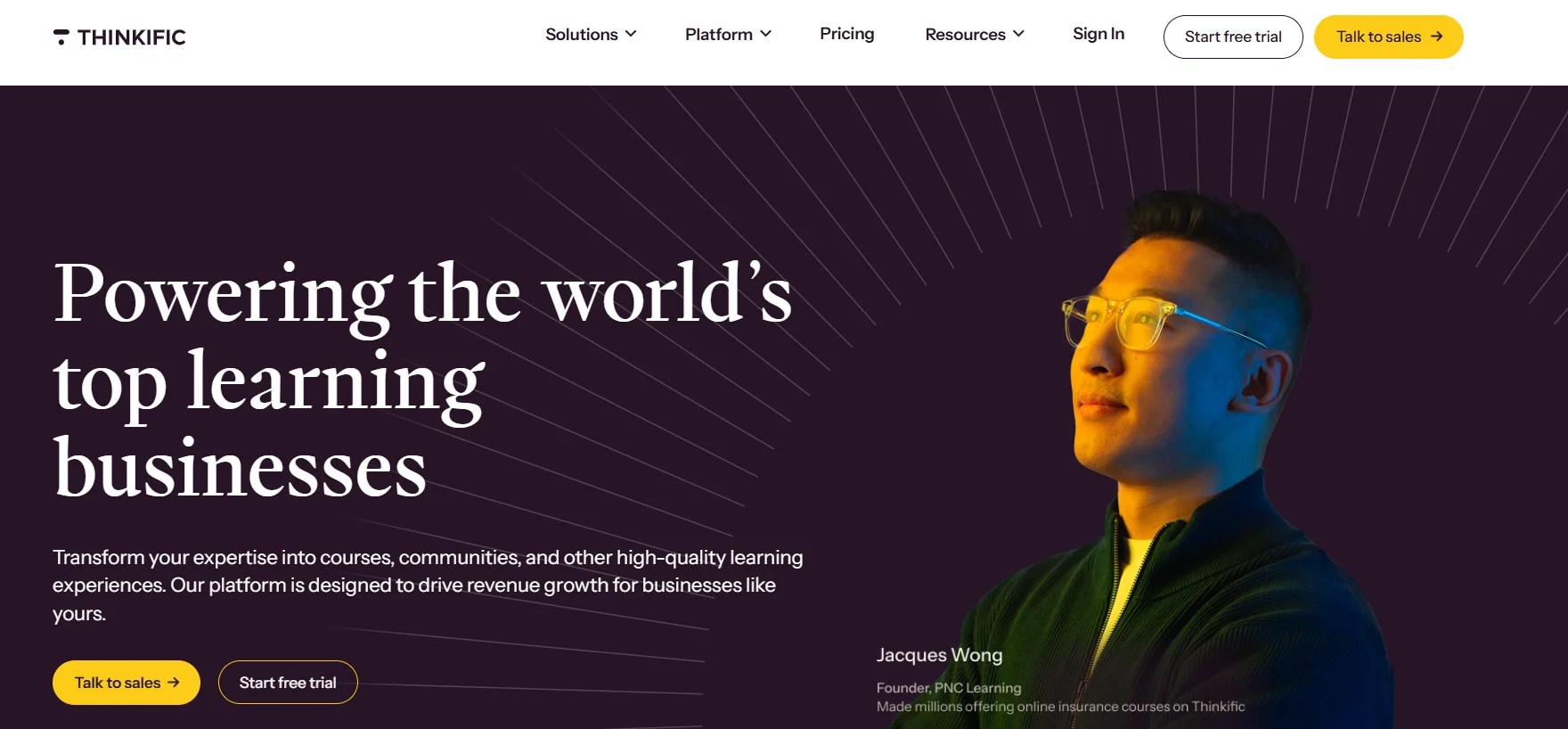
Graphy Vs Thinkific: Ultimate Features Comparison
Course Creation Tools
Thinkific:
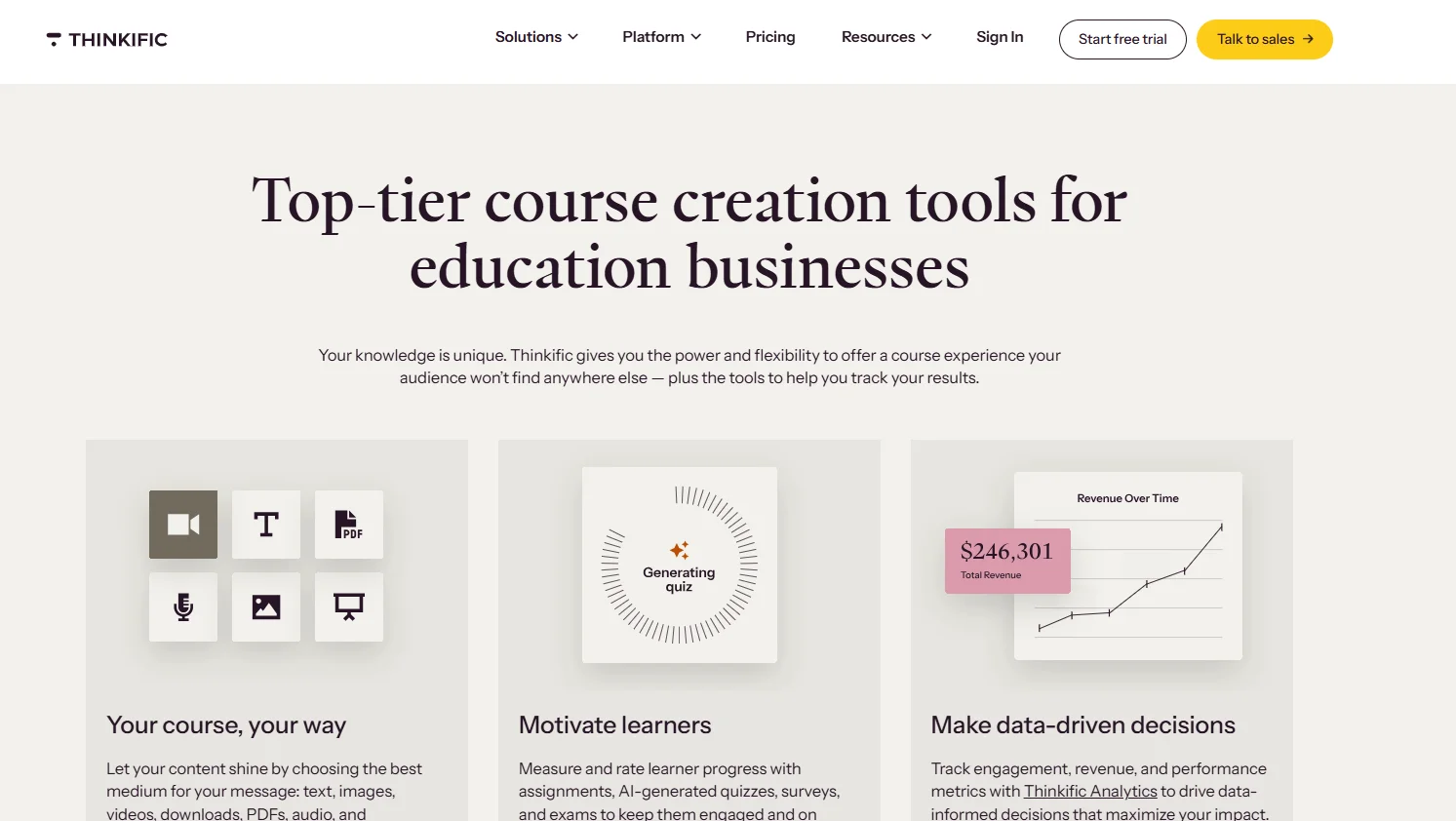
When it comes to creating courses, Thinkific is as straightforward as it gets. You get an intuitive drag-and-drop course builder that allows you to easily organize and structure your content.
You can upload videos, add text, quizzes, assignments, and even create surveys. Thinkific’s strength lies in its simplicity and flexibility. The platform lets you create both self-paced and cohort-based courses with minimal effort.
The user interface is clean, which makes course creation fast and hassle-free. Plus, you can preview your content in real-time to make sure everything looks just right.
Graphy:
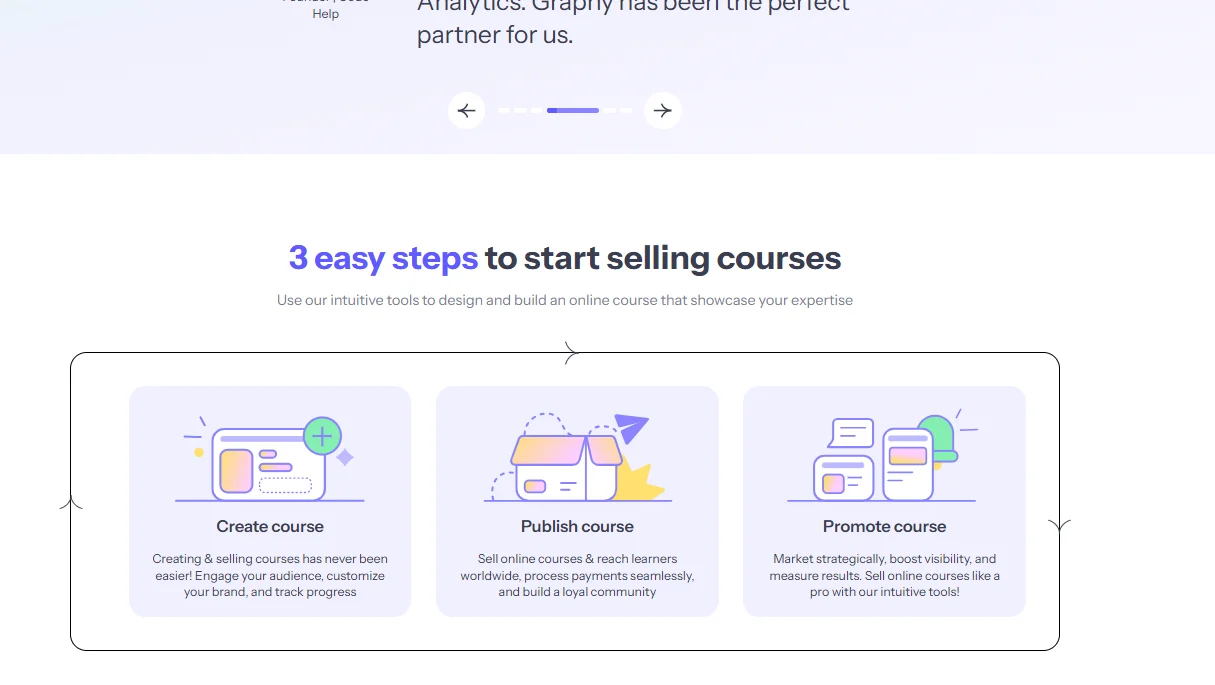
On the other hand, Graphy takes course creation a step further by integrating community features directly into the platform. While Graphy offers similar tools for creating courses like video, text, quizzes, and assignments, it adds live sessions and interactive community spaces.
This feature is perfect if you’re looking to make your course feel more engaging and connected.
Graphy shines with its community-building tools. You can create private groups, run live Q&A sessions, and host discussions directly on the platform.
This makes it a great choice for creators who want to not just deliver content, but build an entire community around it.
Verdict:
If you want a straightforward course-building experience with flexibility, Thinkific is the way to go. But if you want more interaction, engagement, and community-driven learning, Graphy offers a more integrated solution.
Community Engagement Features
Thinkific:
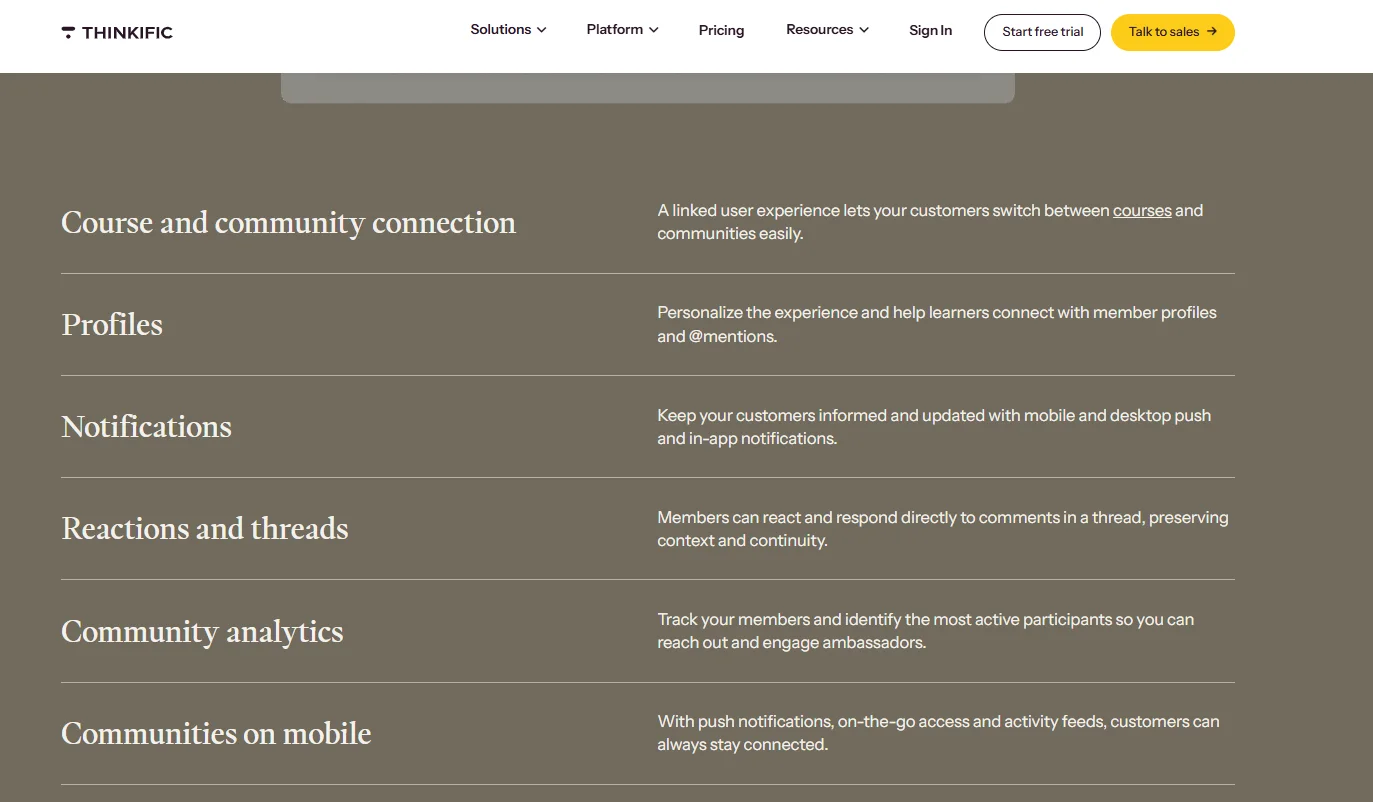
Thinkific does provide basic community features, but they’re fairly limited. You can set up student discussion forums under each course, but the platform doesn’t have built-in social features beyond that.
For a more connected experience, you’d need to rely on third-party integrations, such as linking to a Facebook group or Slack channel.
While these integrations work fine, they take away from the seamless, all-in-one experience you get with a platform that has community tools built in.
So, if you’re looking to build deep, interactive relationships with your students, Thinkific doesn’t quite cut it on its own.
Graphy:
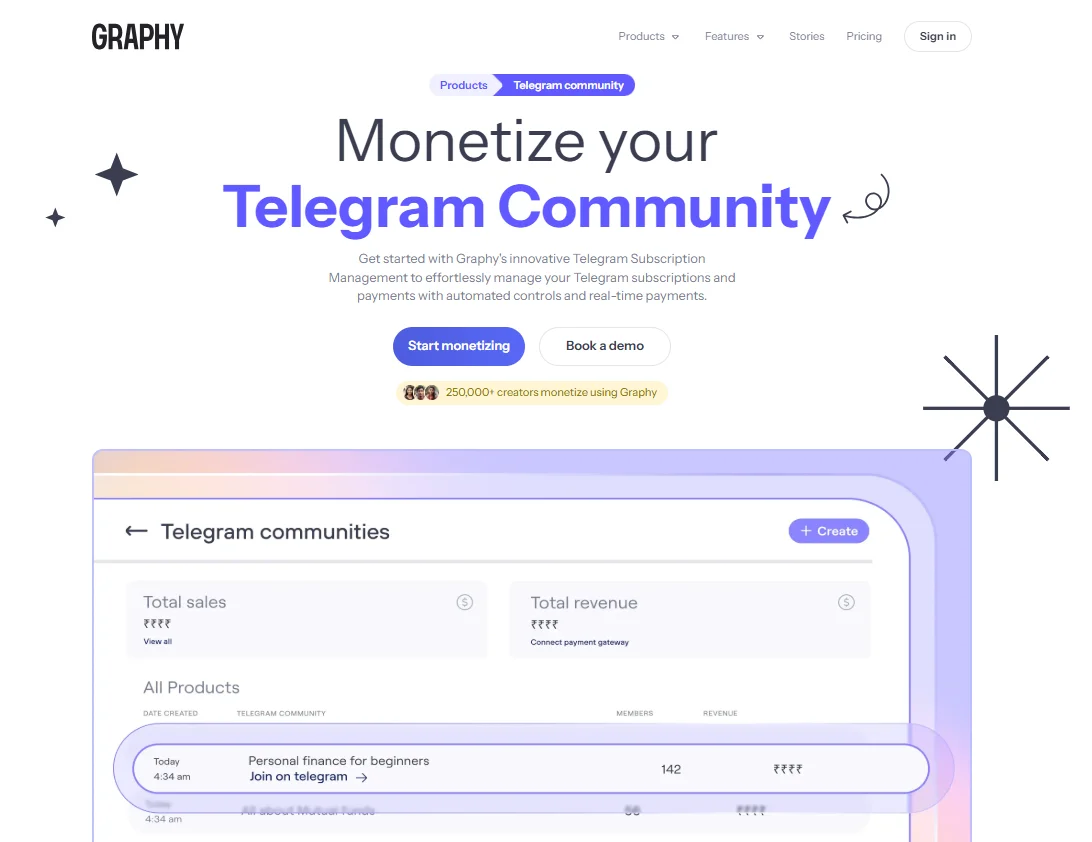
Where Graphy truly shines is in its community-building capabilities. Not only can you create and sell courses, but you can also run community forums, create discussion threads, and host live webinars or Q&A sessions.
Graphy is designed to help you build a thriving community where students can connect with each other, share ideas, and learn interactively.
The platform offers live chat, member-to-member messaging, and live video sessions, which is crucial for creators who want their students to feel connected and engaged.
Verdict:
If building a strong, interactive community around your courses is a top priority, Graphy is the better option. It’s designed with community at its core, unlike Thinkific, which requires third-party integrations for more advanced community features.
Customization & Branding
Thinkific:
Thinkific offers good customization options, allowing you to customize the look and feel of your course site with ease. You can change colors, upload a logo, and create a custom domain.
The platform provides several themes, but it’s worth noting that customization beyond the basic design options might require some technical expertise.
You also get the ability to embed content like HTML and JavaScript for more advanced customizations. However, Thinkific’s customization options can feel a bit basic compared to more flexible platforms.
Graphy:
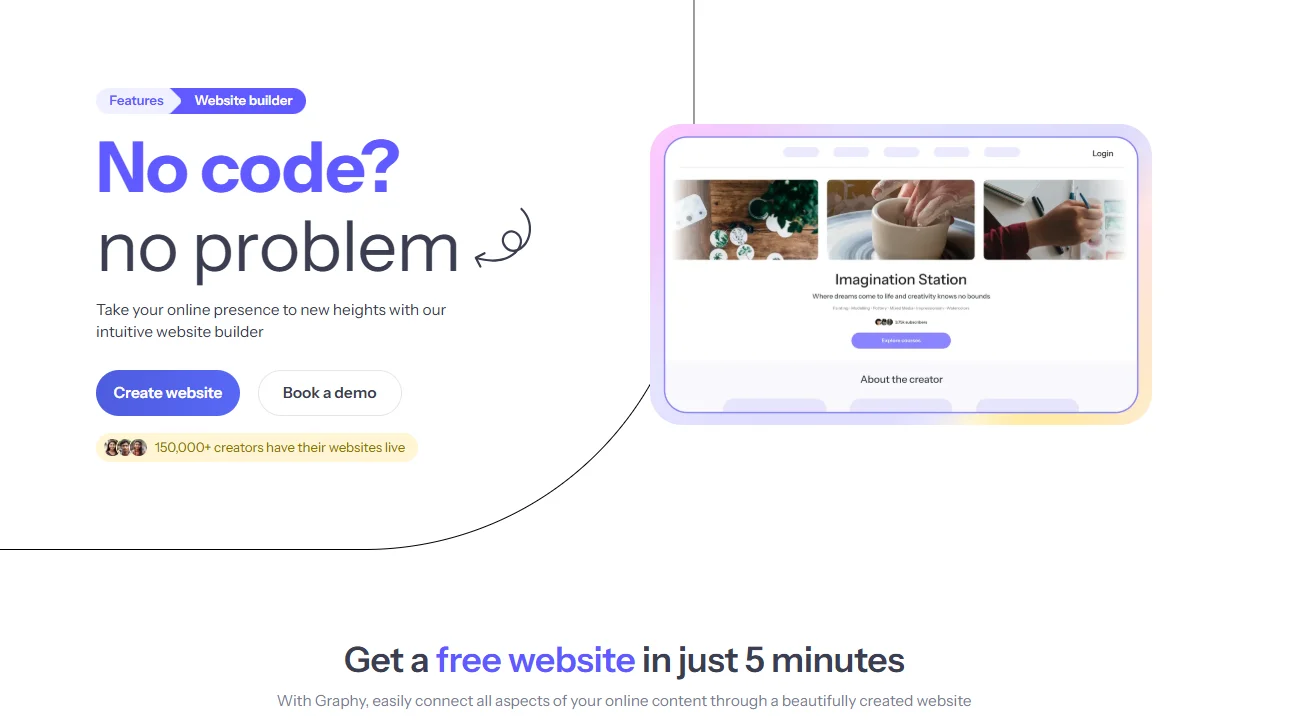
Graphy provides similar branding and customization features, but with a more cohesive approach. You can customize your course site’s design and layout, and you can also add custom logos and adjust color schemes.
The major advantage of Graphy, though, is its ability to customize not only the course pages but also your community spaces.
If you’re serious about personal branding, Graphy offers a more unified experience, letting you create a personalized platform that blends courses, memberships, and community spaces seamlessly.
Verdict:
Both platforms allow for solid customization, but if your goal is to create a highly personalized, branded learning environment that integrates community features, Graphy is more flexible.
Integrations
Thinkific:
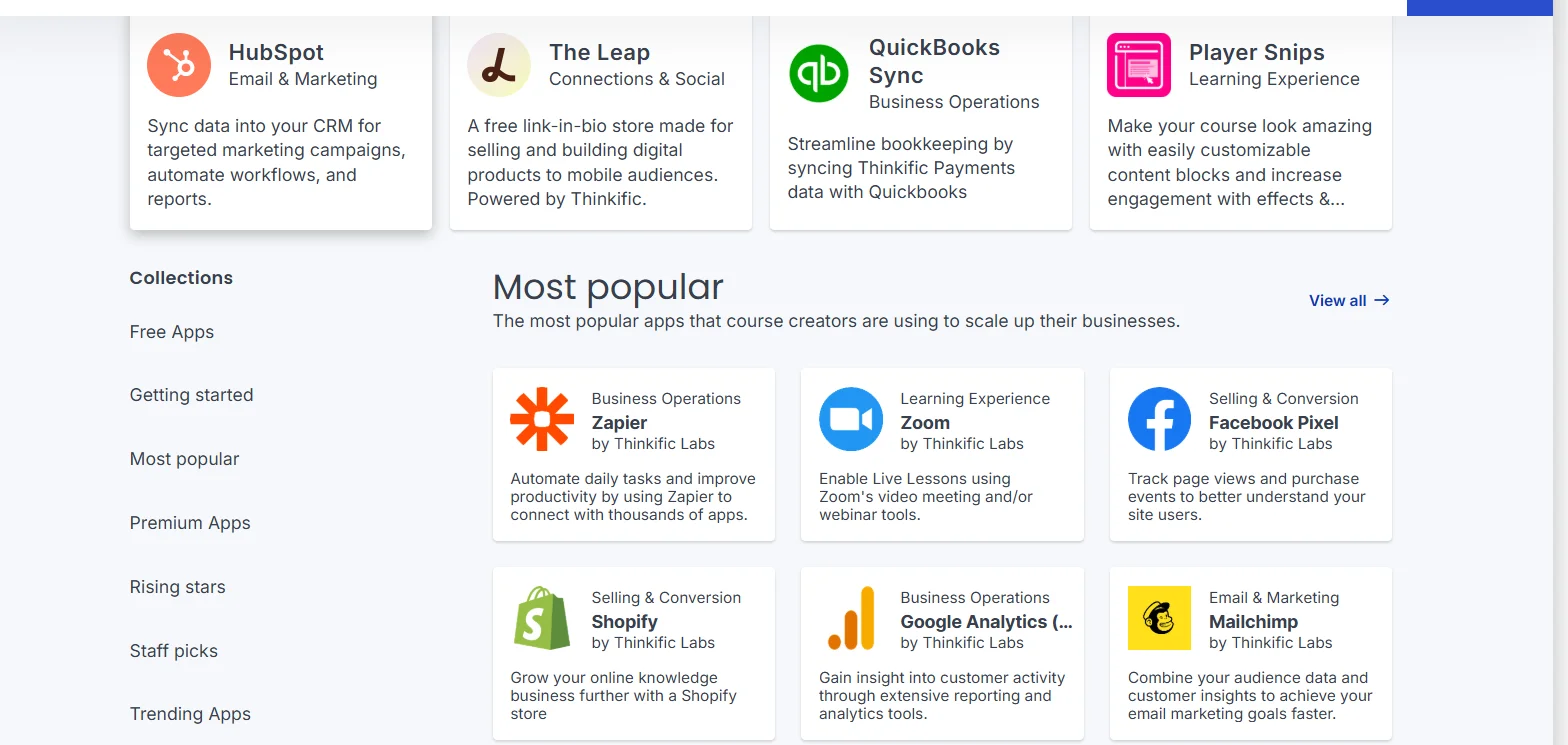
Thinkific integrates seamlessly with many popular third-party tools, including email marketing platforms like MailChimp and ConvertKit, as well as CRM tools and payment processors like Stripe and PayPal.
It also supports Zapier for automation, letting you connect Thinkific with other apps and systems.
Graphy:
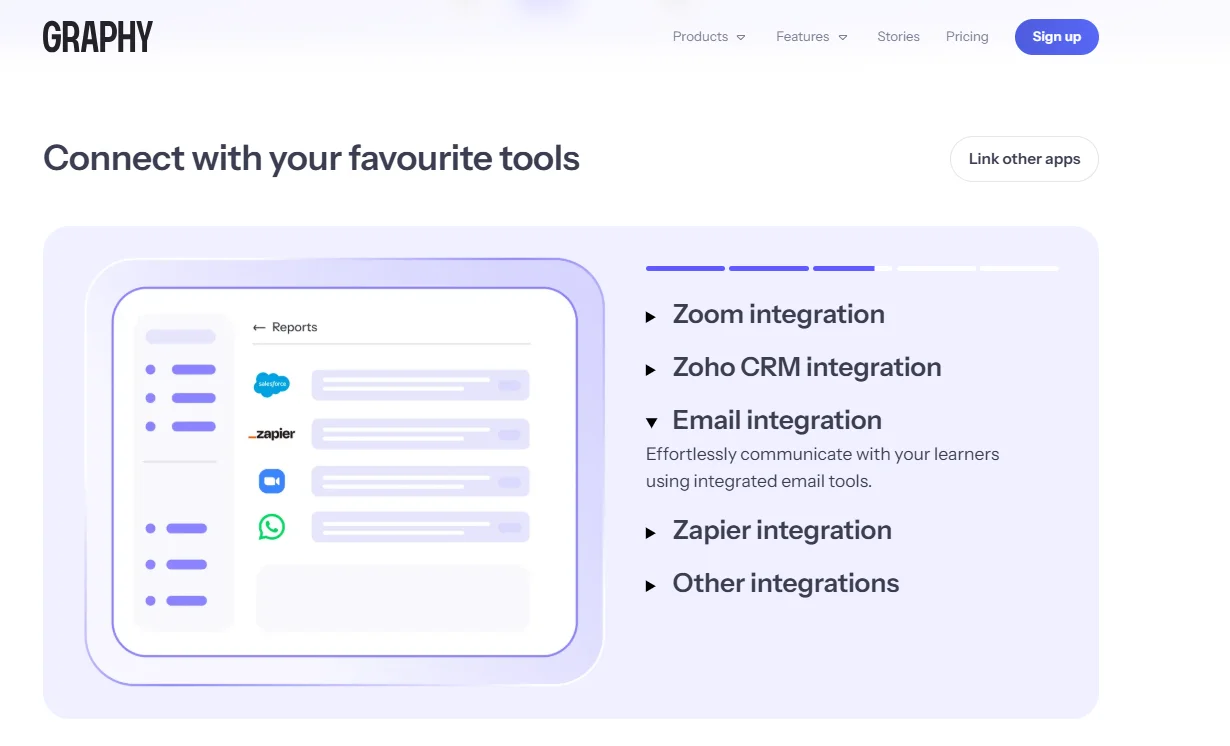
Graphy offers integrations with popular email marketing tools, analytics platforms, and payment gateways.
While the number of integrations might be fewer than Thinkific’s, it covers all the essential tools you’ll need to run your course business.
Verdict:
Thinkific has a broader selection of integrations, which is ideal for users looking to connect with a wide range of third-party tools. Graphy, however, has all the essentials covered and focuses more on offering an all-in-one experience without the need for external tools.
Analytics and Reporting
Thinkific:
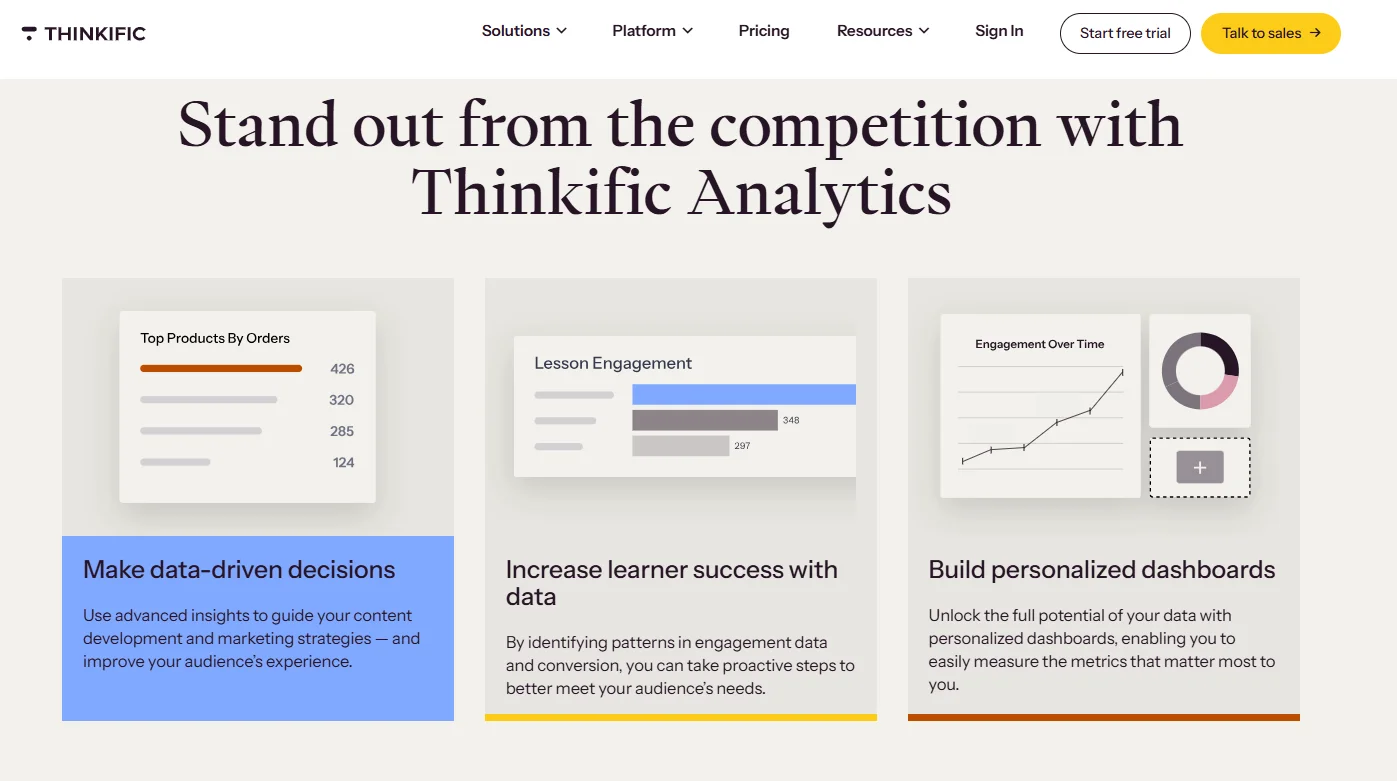
Thinkific provides solid analytics and reporting tools that help you track student progress, course completion rates, and overall performance. You can view detailed reports about student engagement, sales data, and traffic sources.
These insights can help you adjust your marketing strategy, improve your courses, and provide better support to your learners.
One of Thinkific’s key strengths is its advanced reporting for sales and student data, which helps you monitor your business’s growth over time.
Graphy:
Graphy also offers detailed analytics for tracking student progress, engagement, and sales. The platform gives you insights into how well your courses are performing, what content your learners are engaging with the most, and where they might be dropping off.
However, where Graphy truly stands out is in its community engagement metrics. The platform allows you to track interactions within your community, such as comments, discussions, and event participation.
This is incredibly helpful for measuring engagement in real-time and understanding what your students care about most.
Verdict:
Both platforms offer solid analytics, but Graphy wins if you’re looking for more community-driven insights. Thinkific, on the other hand, excels with sales and course performance reports, making it a better choice for creators focusing on the business side.
Marketing and Sales Tools
Thinkific:
Thinkific excels in marketing and sales tools, offering a range of features to help you promote your courses effectively. You can integrate with email marketing platforms like MailChimp, ConvertKit, or ActiveCampaign to run email campaigns.
The platform also has built-in affiliate marketing options, allowing you to recruit others to promote your courses for a commission.
Additionally, Thinkific allows you to create sales pages with customizable templates, run promo codes, and offer upsells to increase revenue. The integration with Zapier further enhances automation options for your marketing campaigns.
Graphy:
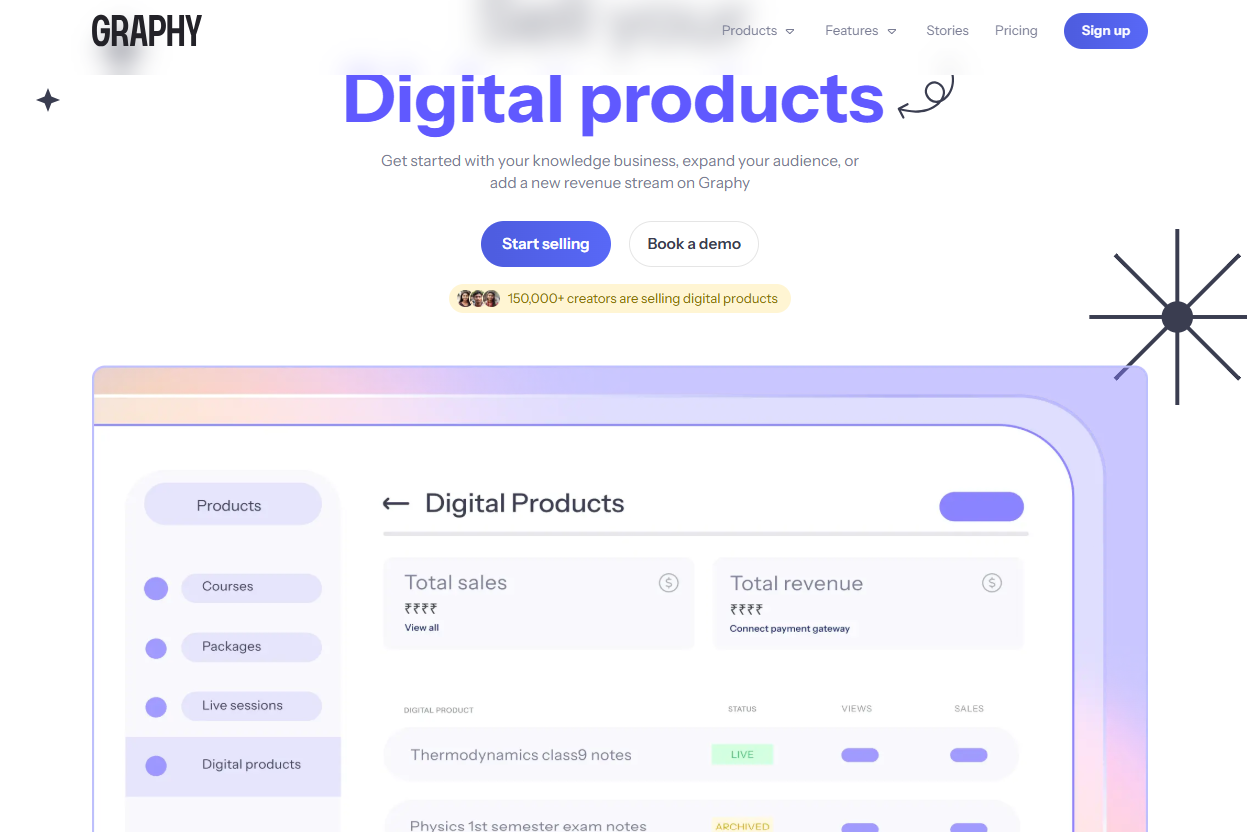
Graphy also offers a solid set of sales and marketing tools, including payment gateways like Stripe and PayPal, discount codes, and custom landing pages for your courses.
However, its marketing features are less comprehensive compared to Thinkific, especially when it comes to advanced tools like email marketing integrations or affiliate management.
That said, Graphy focuses heavily on helping creators build a community-driven approach to marketing. Its community engagement features can be a powerful tool to drive organic growth through word-of-mouth marketing, as engaged members are more likely to recommend your courses to others.
Verdict:
If you’re looking for a platform with advanced marketing tools and a focus on sales, Thinkific offers more options. Graphy, however, is a great choice if you prefer a more organic approach to marketing by leveraging community relationships and engagement.
Mobile Experience
Thinkific:
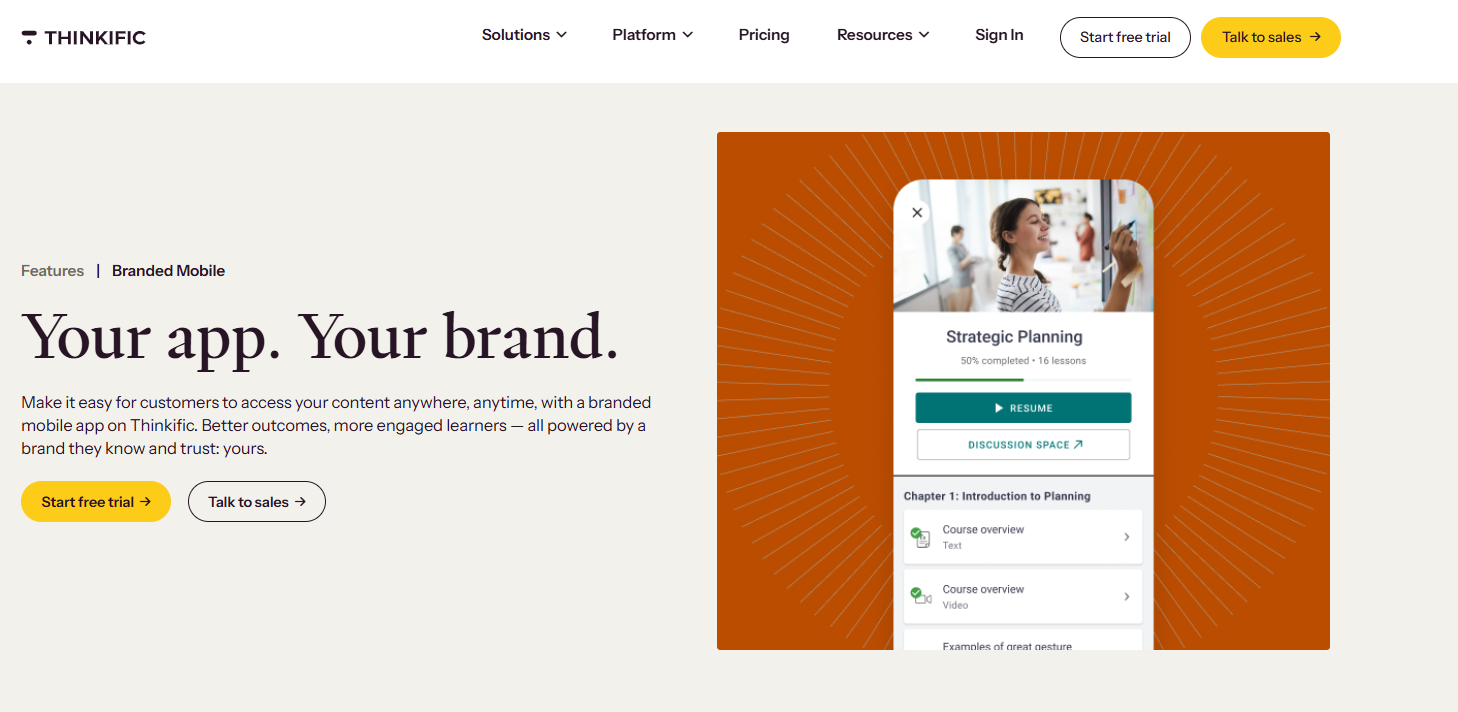
Thinkific’s platform is mobile-friendly but does not offer a dedicated mobile app for students. This means students can access the platform through a web browser on their smartphones and tablets, but the experience may not always be as smooth or optimized as on a desktop.
Since the learning experience relies heavily on videos, quizzes, and assignments, having a mobile-optimized site is essential, and Thinkific provides a basic mobile-responsive design.
Graphy:
In comparison, Graphy offers a more seamless mobile experience for both creators and students. The platform has a dedicated mobile app available on both iOS and Android.
Students can access courses, attend live sessions, and engage in community discussions directly through the app, making learning and interaction on the go much easier.
As a creator, you can also manage your courses, communicate with your community, and keep an eye on performance through the app, which adds a level of convenience.
Verdict:
If mobile accessibility is important to you and your students, Graphy’s dedicated mobile app provides a more streamlined and interactive experience. Thinkific, while mobile-responsive, doesn’t offer the same depth in mobile features.
Graphy vs Thinkific Pricing
Being a course creator, choosing a perfect LMS for your online academy can be one of the most difficult decisions.
As beginners, our main focus is on making cost-effective decisions. Hence, choosing an affordable course platform is one of them. However, if you already are a top-notch creator & don’t mind spending a bit more, you can choose as per that.
So, let’s find out which one is right for you.
Graphy Pricing
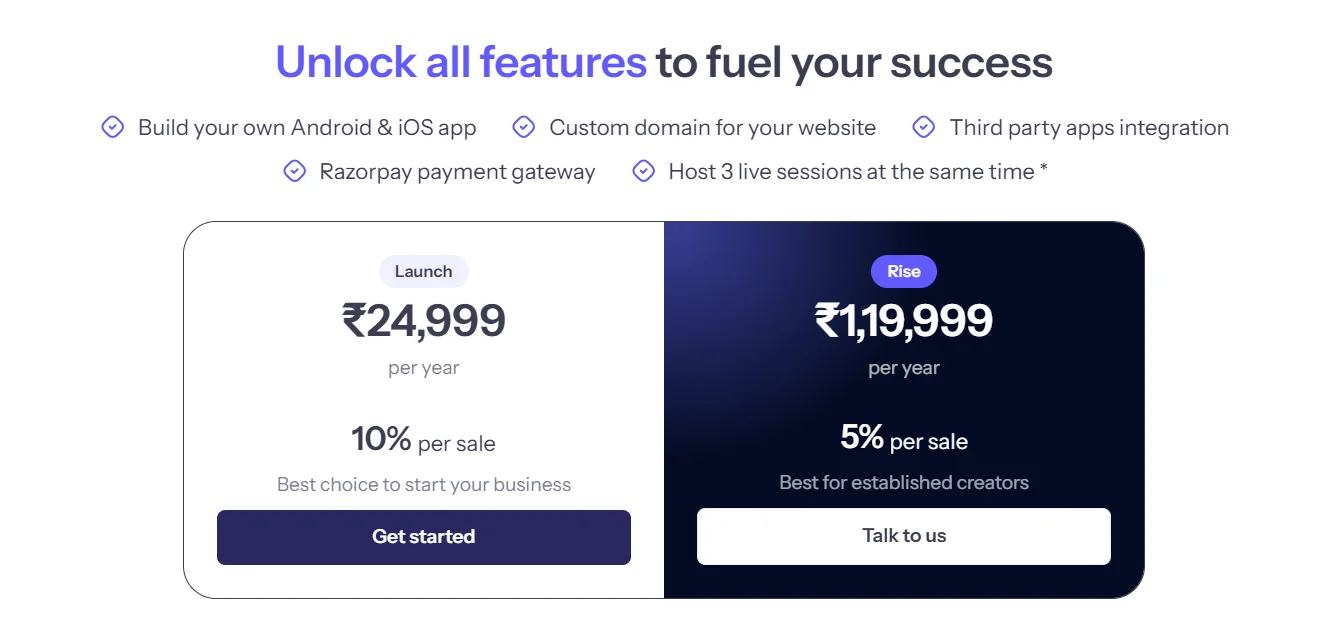
Launch Plan – $49/month
Perfect for beginners starting their online course journey. This plan includes unlimited products, supports up to 300 webinar participants, and allows 10,000 active learners. You’ll also get one admin account to easily manage your business.
Rise Plan – $99/month
Designed for growing businesses ready to scale. This plan offers unlimited products, supports up to 500 webinar participants, and allows 25,000 active learners. Plus, you’ll get Android and iOS apps and 10 admin accounts for better team collaboration.
You can start with a free trial, and Graphy’s customer support team is there to help every step of the way.
Thinkific Pricing
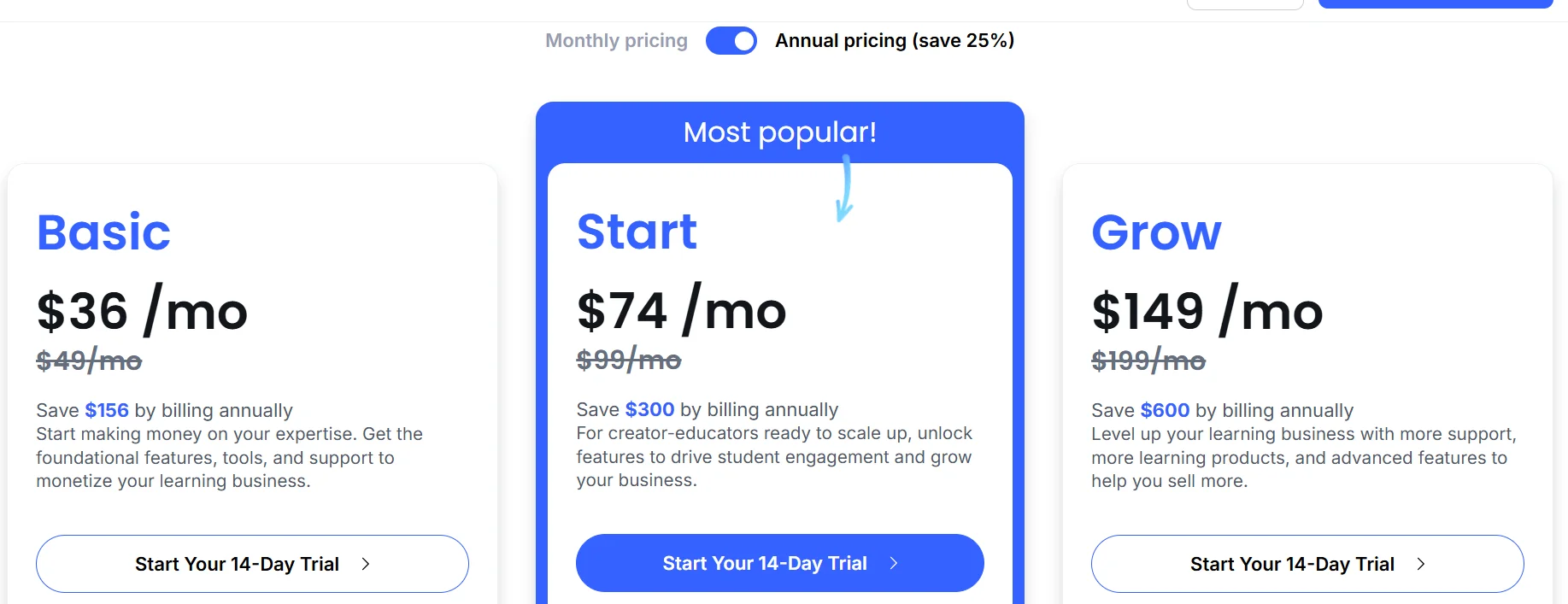
Thinkific offers three plans to match where you are in your online course journey—whether you’re just starting out or ready to scale big.
Basic – $36/month (or $49 monthly)
Perfect for beginners looking to turn their expertise into income. It includes essentials like unlimited courses, a community, up to five digital downloads, and coaching sessions. You’ll also get AI-powered landing pages, email automation, and tools like coupons, affiliate sales, and flexible payment options. Save $156 with annual billing!
Start – $74/month (or $99 monthly)
Ready to grow? This plan builds on Basic, removing limits on downloads and coaching, while adding live lessons, memberships, and advanced website customization (think CSS and HTML). You’ll also get tools to boost revenue, like bundles and add-ons. Save $300 annually!
Grow – $149/month (or $199 monthly)
For businesses ready to scale. It includes everything in Start plus advanced analytics, up to three communities, group orders, and the ability to remove Thinkific branding. Save $600 with annual billing!
All plans come with a 14-day free trial no strings attached. Find the plan that fits your goals and start building your course business today! 🚀
Support & Customer Service
Thinkific:
Thinkific offers excellent customer support through a combination of email support, live chat, and a detailed knowledge base. They also have a community forum where users can share advice and troubleshoot issues.
Thinkific’s customer service is known for being responsive and helpful, and they offer a great onboarding process for new users.
Graphy:
Graphy’s customer support is equally strong. In addition to standard support channels like live chat and email, Graphy also provides access to a creator community, which can be a valuable resource for learning and troubleshooting.
The support team is known for being quick to resolve issues, and there are plenty of tutorials to guide you through different features.
Verdict:
Both platforms provide reliable customer support, but Thinkific might have a slight edge in terms of its larger community and more extensive knowledge base. That said, Graphy’s creator community provides unique value when it comes to support and peer-to-peer learning.
Pros and Cons of Graphy Vs Thinkific
Which Platform Should You Choose?
| Criteria | Graphy | Thinkific |
|---|---|---|
| Best for Community | Yes, great for building interactive communities with live sessions | Limited, needs third-party tools for better engagement |
| Mobile App | Yes, has a dedicated mobile app | No dedicated app, mobile-friendly website |
| Ease of Use | Easy, but a bit of a learning curve for beginners | Very easy to use, beginner-friendly |
| Customization | Good customization for branding and community | Custom themes, but limited design flexibility |
| Pricing | More affordable, starts at $29/month | Starts at $49/month, a bit higher for more features |
| Monetization Options | One-time payments, memberships, live events | One-time payments, subscriptions, affiliates |
| Integrations | Fewer integrations with third-party tools | Many integrations (email tools, CRMs, Zapier) |
| Support | 24/7 support + creator community for help | 24/7 email support + knowledge base |
| Sales & Marketing Tools | Basic, more focused on community-driven growth | Advanced marketing tools (sales pages, affiliate programs) |
| Scalability | Good for growing communities, but a bit less on large-scale sales | Highly scalable, suitable for small or large businesses |
Choose Graphy if:
- You want to build a strong, interactive community with live sessions.
- You need a mobile app for easy access to courses on the go.
- You’re looking for an affordable platform with a focus on student engagement.
- You prefer custom branding without complex design.
Choose Thinkific if:
- You need a simple, easy-to-use platform to create and sell courses.
- You want advanced monetization options like subscriptions and affiliate marketing.
- You need strong sales and marketing tools for growth.
- You want easy integrations with third-party tools.
User Reviews: Graphy Vs Thinkific
Graphy Customer Reviews
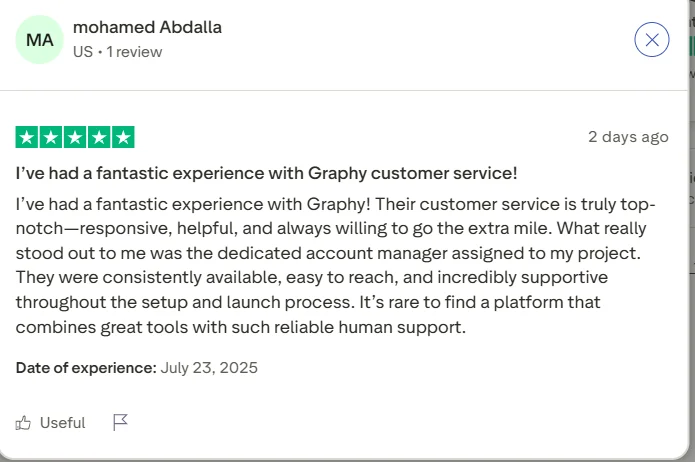
Source: Trustpilot
Thinkific Customer Reviews
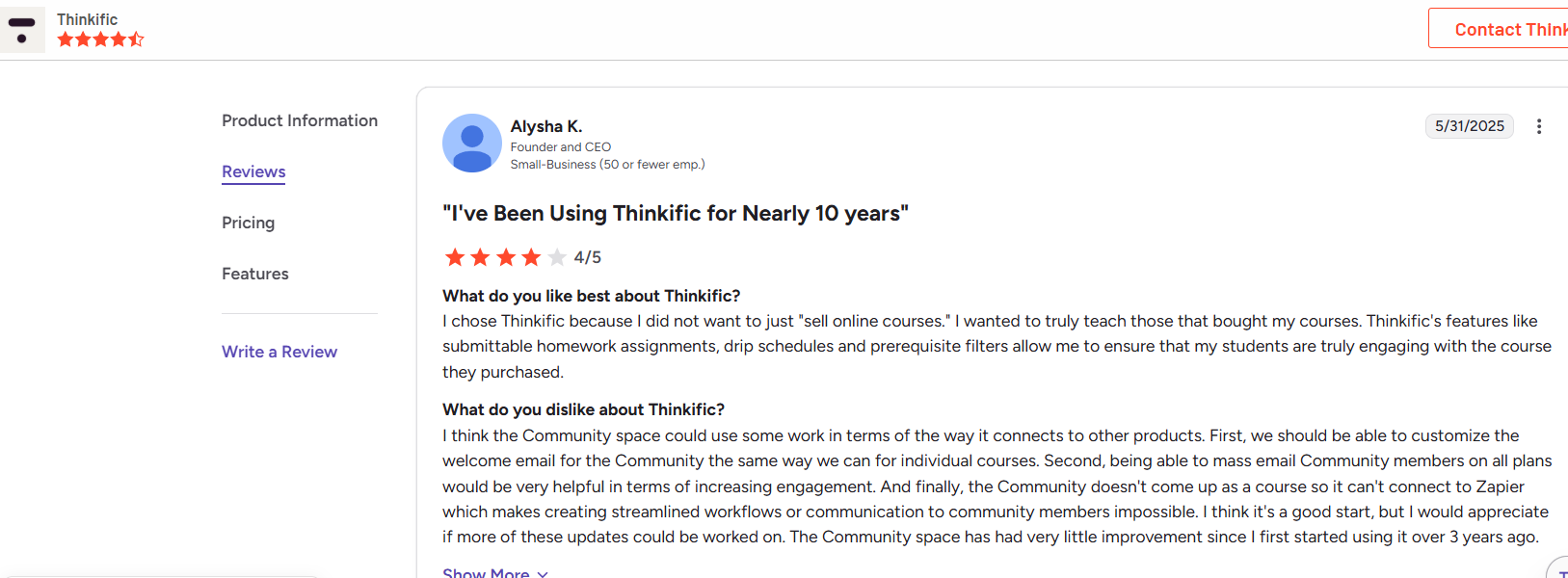
Source: G2 Reviews
FAQs On Spayee vs Thinkific
🔥Is my content secured on SPAYEE?
Yes, your content on SPAYEE is as secure as it gets. All the online course lectures that you upload are transmitted over a secured and encrypted channel. They also provide multi-layer content security under which you can also have device limits.
✔ Can I sell my Courses?
Yes. Spayee allows the support of all the Indian payment gateway along with Paypal or Stripe.
💥 Can I give certifications for completed courses?
Yes, you sure can. You can share certificates as per the criteria set by you. You can either use the existing format or customize it as per your own. Users also have the option to go ahead & share their certificates directly on LinkedIn.
👉 Can I use my own domain?
Absolutely! You can map your own domain on the basic plan & above.
👀 Can I create Tests and Surveys?
Yes! You can create a combination of tests, surveys, assignments, forms & much more.
✌ Can I communicate with my users?
Yes. It has one of the most effective communication features. You can leverage mobile push notifications, web push notifications & even drip email sequence. You also have public forums where you & users can interact with each other!
Quick Links:
- Ruzuku Vs Teachable
- Spayee Vs Teachable
- Thinkific Vs Teachable
- Xperiencify Vs Podia
- Xperiencify Vs Kajabi
Conclusion: Which One To Pick?
To Sum it up, Both Thinkific and Graphy are excellent platforms, but they cater to slightly different needs.
Thinkific is a well-established global platform that offers a premium experience, making it a great choice if budget isn’t a concern and you’re looking for a polished, professional setup.
Graphy, on the other hand, is newer but quickly gaining traction, especially among Indian creators. It’s designed to be budget-friendly, packed with features, and ideal for those targeting the Indian market.
So, if you want premium and global, go with Thinkific. But if affordability and local reach are your priorities, Graphy is the way to go!
