Google released the August 2026 spam update on August 18, and it’s already stirring up the SEO community. The company confirmed the news through its Search Status Dashboard and a LinkedIn post from the Google Search Central team, saying the rollout should wrap up in a few days.
This is a global update. It touches every language and every region, so no site is technically exempt just because it publishes in a smaller market.
What This Update Actually Targets
Google was clear about scope here, and it’s narrower than people might assume. This spam update goes after sites that violate Google’s search spam policies, things like cloaking, scaled content abuse, and other manipulative tactics the company has flagged before.
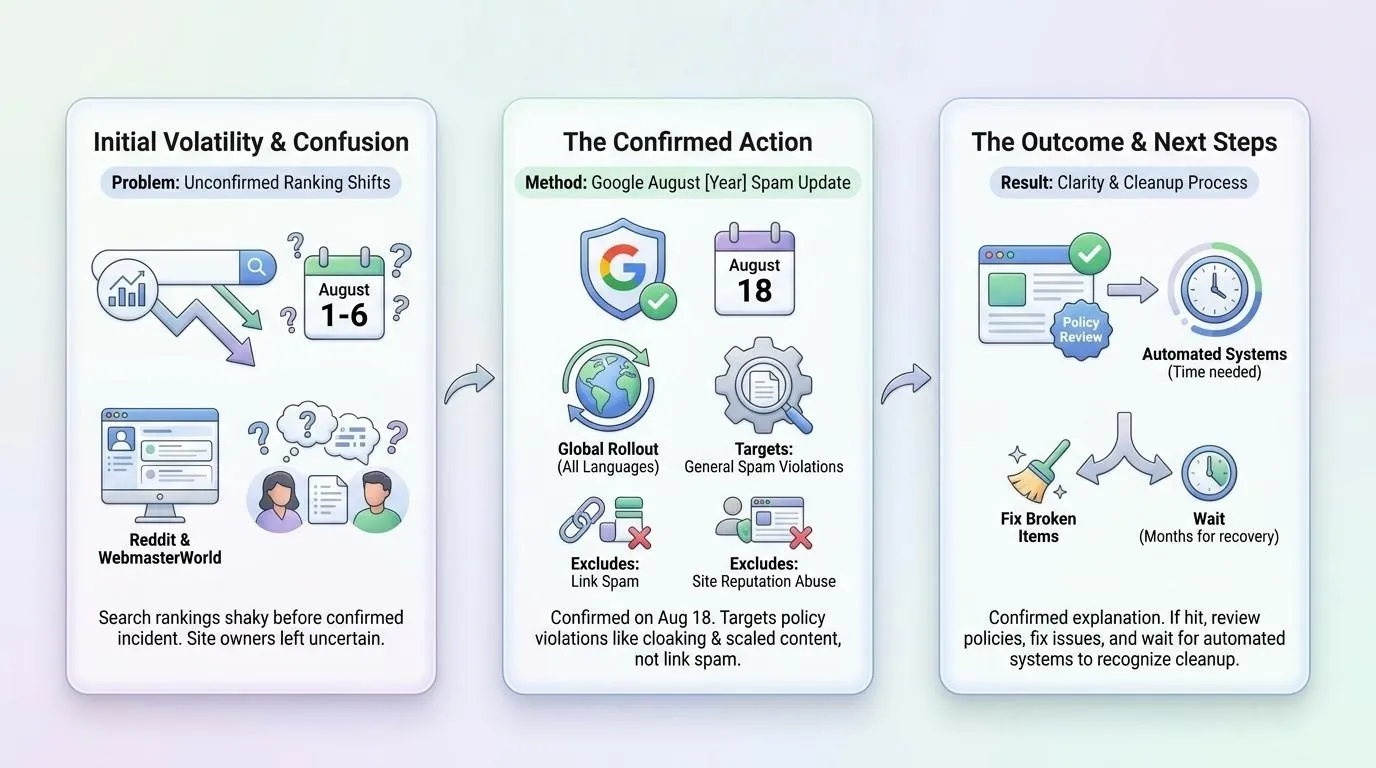
What it does NOT touch: link spam and site reputation abuse. Google explicitly ruled those out this time. If your site got hit and you’re chasing link-related fixes, you’re probably solving the wrong problem.
Google didn’t share what percentage of search queries this update affects. That’s fairly standard, the company rarely gives hard numbers on spam updates, but it does make it harder for publishers to gauge how big a deal this really is.
Quick Facts
Name: Google August 2026 Spam Update
Launched: August 18, 2026, around 12:30 pm ET
Rollout time: A few days
Scope: Global, all languages
Targets: General spam policy violations
Excludes: Link spam, site reputation abuse
If You Get Hit, Here’s the Reality
Google’s advice hasn’t changed much over the years, and it’s worth repeating because it’s still true: review the spam policies, fix what’s broken, and wait. Google’s own automated systems need time, sometimes months, to recognize that a site has cleaned up its act.
One caveat worth flagging. If this were a link spam update, fixing things wouldn’t necessarily bring back lost rankings, since any benefit those spammy links gave you is gone for good once Google’s systems discount them.
But since this August update explicitly excludes link spam, that particular dead end doesn’t apply here. Small silver lining.
Google will also run periodic refreshes to this update down the line, so a site that’s clean today but slips later could still see a hit in a future pass.
Context: This Follows a Volatile Few Weeks
The timing here is worth noting. Search rankings had already been unusually shaky since around August 1, according to reports from Search Engine Roundtable and other trade outlets, but Google’s own status dashboard showed no confirmed incident between August 1 and August 6.
Site owners were left comparing notes on Reddit and WebmasterWorld, unable to agree on what was even happening.
So this spam update gives a real, confirmed explanation for at least part of that unrest, though it’s worth remembering it only started rolling out on August 18. Anything that happened in the first half of the month wasn’t this.
What to Do Right Now
Don’t panic-edit your site based on volatility alone. Wait for the rollout to finish (Google says a few days), then give it at least a week before drawing conclusions from Search Console data. Compare your rankings and traffic against the pre-rollout baseline, not against last week’s numbers, since the picture can shift while things settle.
If you’ve been engaging in scaled content abuse or cloaking, this is your sign to clean house. If you haven’t, this update likely won’t touch you much, though “collateral damage” is a phrase Google itself used, so nothing’s guaranteed.
Quick Links: