A volunteer group on Wikipedia has built a public guide documenting the recurring patterns of AI-written text, giving editors and readers a shared reference for spotting undisclosed AI content.
The page, called “Signs of AI Writing,” is maintained by WikiProject AI Cleanup and runs close to 15,000 words, cataloging habits observed across thousands of AI-generated drafts.
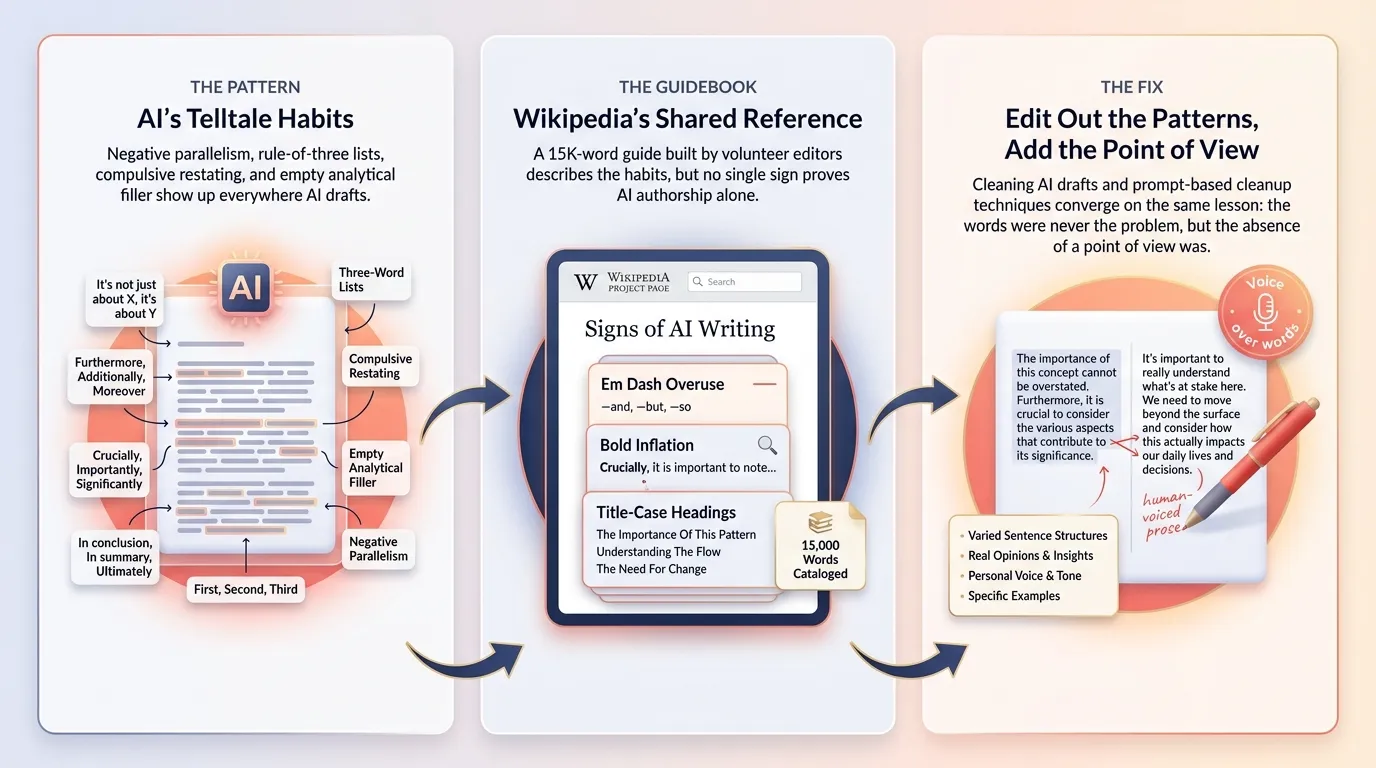
The guide is descriptive, not a rulebook. Wikipedia’s own editors are explicit that no single sign proves AI authorship, since language models are trained on human writing and some patterns show up in ordinary human text too.
The value comes from spotting several signs stacked together, not from one flagged phrase alone.
The Recurring Patterns
Several tells appear again and again. Negative parallelism is one of the most common: sentences built as “It’s not just about X, it’s about Y,” a contrast-reframe structure that shows up constantly in AI output and rarely in natural speech.
Rule-of-three lists are another giveaway, with AI defaulting to triplets like “innovative, transformative, and groundbreaking” almost every time it lists anything.
Other patterns include compulsive summarizing, where AI restates what it just explained as if the reader can’t retain a point for three paragraphs, and empty analytical tags tacked onto plain facts, phrases like “highlighting its lasting influence” that add no real information.
Editorializing asides such as “it’s important to note” and leftover collaborative phrases like “let me know if you need anything else” round out the list, alongside heavy em-dash use, excessive bolding, and inconsistent title-case headings.
Why This Matters for Content Creators
This lines up with prompt techniques already circulating for cleaning AI drafts before publishing.
One recent set of prompts shared online instructs the model to review text for these exact habits, varying sentence structure, replacing stiff wording, and rewriting so opinions and natural tone shifts come through, rather than settling for the tone of a neutral observer trying to please everyone.
The overlap isn’t a coincidence. Wikipedia’s list and the prompt-based cleanup techniques are converging on the same conclusion: AI text becomes usable the moment someone edits out the patterns that make it read like AI in the first place. The words were never the real problem. The absence of a point of view was.
Quick Links: