
Hreflang in international SEO hits a major snag as experts uncover widespread implementation flaws that sabotage global websites, leading to lost traffic and mismatched content. A deep-dive report exposes how these tags—meant to guide Google to the right language or regional pages—often backfire. A study reveals 31% of international sites carry conflicting directives, while 16% skip self-referencing tags, invalidating setups and wasting localisation budgets. As companies pour cash into translations and local teams, faulty hreflang in international SEO risks hiding content from target audiences, turning potential wins into costly failures. This “hidden crisis” demands urgent fixes to secure visibility in multilingual markets.
Mastering Hreflang in International SEO: Common Pitfalls and Fixes
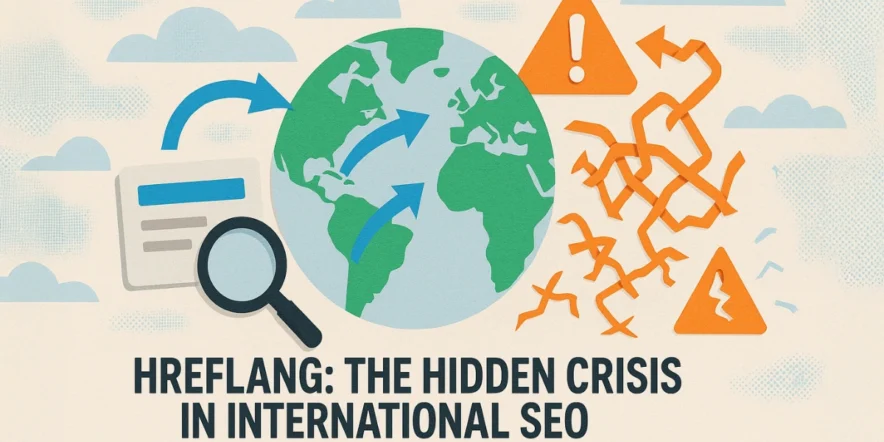
Teams often fail hreflang in international SEO by misunderstanding its role as a relational map, not a simple switcher. Incomplete maps trigger breakdowns, forcing search engines to guess page versions. The report outlines key mistakes and strategies to build robust systems.
Top pitfalls in hreflang in international SEO include:
- Missing Return Links: Pages must reciprocate tags—English pointing to Spanish requires Spanish pointing back—or Google ignores the pair, destabilizing clusters.
- Incorrect ISO Codes: Teams mess up codes like using “en-UK” instead of “en-GB,” invalidating signals and blocking proper matching.
- Self-Referencing Errors: Every page needs a tag to itself; without it, tools like Semrush flag issues, and engines may drop the setup.
- Canonical Conflicts: When canonicals point to mismatched versions, they override hreflang, confusing Google on authoritative pages.
- Broken URLs: Hreflang linking to 404s or redirects wastes crawl budget and nullifies signals, per Index Rusher’s guide.
To troubleshoot and scale hreflang in international SEO:
Also Read: 10 Top SEO Digital Marketing Experts In India
- Audit Systematically: Check for bidirectional links, valid codes, and self-references to spot breakdowns.
- Focus on Expertise: Use fresh insights and tools to ensure clean relationships.
- Build Scalable Systems: Structure sites for easy navigation, avoiding mixed signals at scale.
Experts urge turning hreflang in international SEO from a burden into an edge—fix these now to boost global rankings and ROI. As AI search evolves, solid fundamentals like this secure your spot.
More News To Read: E-E-A-T Gap Struggle: Why Authority Fails Abroad?
From SEO to GEO: Marketers Pivot to AI-Powered Search in 2025
