
The video game industry continues to captivate millions worldwide by offering immersive entertainment, fostering social connections, and even providing educational benefits through interactive experiences.
From simple mobile puzzles to complex virtual worlds, games allow players to escape reality, compete with friends, or explore creative stories.
This dynamic sector provides opportunities for businesses, entrepreneurs, content creators, and educators to benefit from the growing market.
In this article, we delve into video game industry statistics for 2025, offering key insights on market size, revenue projections, and emerging trends.
Key Video Game Industry Statistics 2026
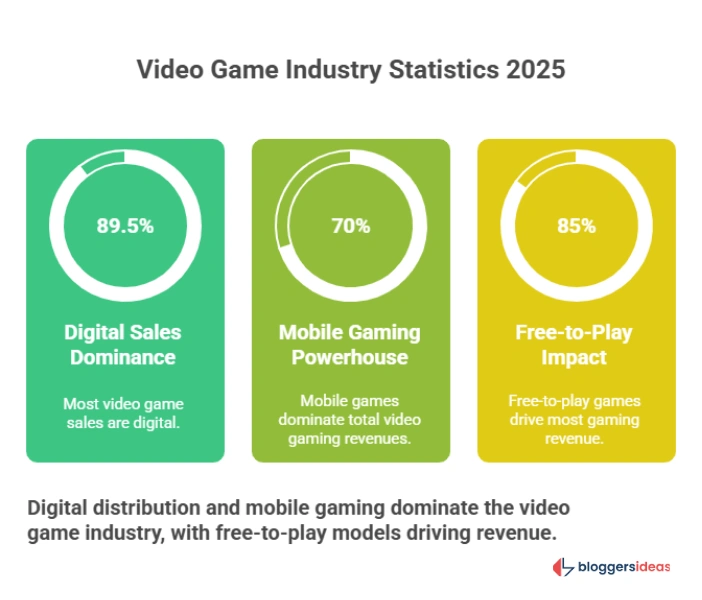
The video game industry is poised for robust growth driven by increasing player numbers, evolving monetization models, and technological innovations. Here are the key statistics for 2025:
- Global Gamers in 2023: 3.26 billion
- Projected Global Revenue in 2025: $317.91 billion
- Mobile Game Revenue Projection for 2025: $138 billion
- Percentage of Revenue from Free-to-Play Games: 85%
- Digital Sales Percentage: 89.5%
- Projected PC Gaming Revenue in 2025: $46.7 billion
- U.S. Gaming Spend in 2022: $55.5 billion
These statistics reveal the accessibility and explosive growth of the video game industry.
With a significant portion of revenue generated through free-to-play models and digital sales, mobile gaming continues to dominate as the leading platform for game downloads.
Video Game Industry Revenue Statistics

The video game industry generates substantial revenue, surpassing music and movies combined. In 2022, the global revenue reached $220.79 billion, with continued growth in the following years:
- 2023 Revenue: $249.32 billion
- 2024 Revenue: $281.53 billion
- 2025 Projected Revenue: $317.91 billion
- 2026 Projected Revenue: $358.99 billion
- 2030 Projected Revenue: $583.96 billion
Regional Shares
- Asia-Pacific: 49%
- Americas: 30%
- Europe: 17%
- Middle East/Africa: 4%
By 2025, the revenue shares are expected to increase across these regions, particularly in North America, Far East, and Western Europe, with countries like China, the U.S., and Brazil continuing to dominate in gaming spend.
Player Growth in the Video Game Industry

The number of players in the video game industry is growing at a rapid pace, with over 3.26 billion gamers globally as of 2023. Projections suggest the total number of players will continue to rise:
- 2025: 3.57 billion
- 2026: 3.69 billion
- 2027: 3.8 billion
In the U.S., 227 million Americans engage in gaming, making up 66% of the population. Key markets like China (742 million players), Brazil (100 million), and Japan (78 million) continue to drive gaming participation.
Video Game Industry Demographics

The demographics of gamers have become more diverse in recent years. Globally, 59% of gamers are male, while 41% are female, with women making up 45% of gamers in the U.S. The breakdown by age shows:
- 18-34: 38%
- 35-54: 26%
- 55+: 15%
This diversity in age, gender, and ethnicity has significant implications for game developers and marketers, who must tailor campaigns to appeal to these various demographics. For example, older players enjoy nostalgic content, while younger gamers are drawn to new, innovative experiences.
Device Usage in Video Gaming
In 2022, gaming across multiple devices became more prominent. Here are the preferences by device:
- Mobile Gaming: 70% of players
- Console Gaming: 52% of players
- PC Gaming: 43% of players
- Tablet Gaming: 26% of players
- VR Gaming: 7% of players
Mobile gaming continues to dominate, with Google Play accounting for 12.1 billion downloads, far outpacing Apple’s 2.3 billion in Q1 2022. Players now prefer to switch between devices for convenience, benefiting developers who optimize their games for cross-platform play.
Most Played Video Games by Type
Casual gaming continues to be the top category in terms of player engagement, with 74.2% of players engaging with single-player casual games. Other popular types include:
- First-Person Shooters: 73.6%
- Casual Multiplayer Games: 73.6%
Popular titles like Candy Crush, PUBG, and Fortnite dominate the global market, with Mario Kart 8 Deluxe selling over 45.33 million units.
Community Building Through Games
Video games are more than just entertainment; they are also platforms for social connection. Here’s how gaming fosters relationships:
- 83% of players make new friendships
- 46% meet spouses or partners through gaming
- 78% experience deeper connections through games
Streaming platforms like Twitch allow creators to monetize their gameplay and build communities through subscriptions, fostering a global fan base.
Video Game Industry Trends 2025
The future of the video game industry is shaped by several key trends:
- Remakes and Reboots: Nostalgia-driven content like Final Fantasy VII and Resident Evil 2/3 continues to dominate, with updates bringing modern graphics and mechanics.
- Cloud Gaming: Cloud gaming grows by 975% in searches, with 295 million users enjoying the freedom to play high-end games without the need for expensive hardware.
- Esports: The rise of esports creates new career opportunities in professional gaming, coaching, broadcasting, and sponsorship management.
- Indie Games and Platforms: Platforms like Roblox enable indie creators to prototype and release successful games like Among Us and Stardew Valley.
Emerging technologies like AI, blockchain, and VR also play a growing role, enhancing player experiences and creating new opportunities for developers.
FAQs About Video Game Industry Statistics
1. What opportunities does the growth in mobile gaming present for developers in 2025?
Mobile gaming presents opportunities for developers to create free-to-play games that monetize through ads and in-app purchases, particularly in emerging markets like India and Southeast Asia.
2. How can players benefit from cloud gaming services in the video game industry?
Players benefit from cloud gaming by playing high-quality games on any device, with instant access and reduced download times, offering a seamless experience.
3. Why are remakes and reboots becoming more prevalent in the video game industry in 2025?
Remakes and reboots leverage nostalgia and established fan bases, providing updated graphics and mechanics to attract both new and returning players.
4. What impact does the rise of esports have on career possibilities within the industry?
The rise of esports creates job opportunities in professional gaming, coaching, broadcasting, and sponsorship management, enabling gamers to turn their passion into a full-time career.
5. How do demographic shifts influence marketing strategies for video games in 2025?
Demographic shifts require inclusive marketing campaigns targeting diverse ages, genders, and ethnicities, such as featuring strong female characters or family-friendly content to broaden appeal.
Also Read:
- Pinterest Statistics
- Android Usage Statistics
- Email Marketing Statistics
- Mobile Marketing Statistics
- Live Streaming Statistics
Conclusion
The video game industry continues to thrive with 3.26 billion players globally, projected to reach $317.91 billion in revenue by 2025.
With growing participation, technological innovations, and diverse revenue models, the sector offers numerous opportunities for developers, investors, and marketers.
Whether you are a game developer, content creator, or business looking to tap into the gaming market, understanding these video game industry statistics for 2025 will help you make informed decisions and capitalize on the ongoing growth and trends.
Source: Statista, Fortune Business Insights
