
Virtual reality (VR) is changing the way we interact with the digital world.
In 2026, VR is no longer just for gamers, it has evolved into a powerful tool for education, healthcare, career growth, and entertainment.
With over 171 million VR users worldwide and the global VR market expected to reach $44.4 billion, VR is growing rapidly, offering countless opportunities for businesses and individuals alike.
This guide will explore VR adoption, trends, and how you can leverage VR to improve your life, from learning new skills to enhancing your well-being.
VR Adoption and Growth in 2026
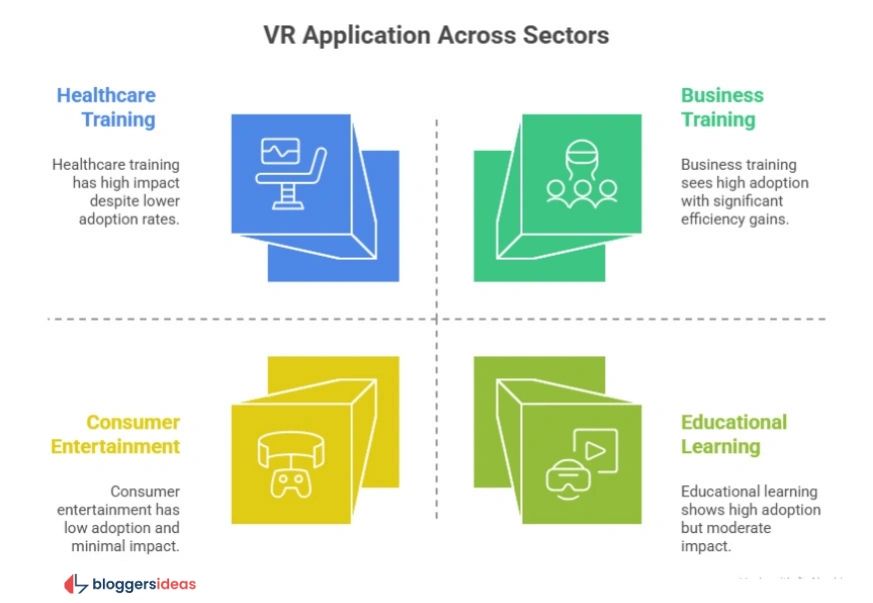
Virtual reality statistics for 2026 reveal explosive growth and widespread adoption across the globe:
- 171+ million people worldwide are using VR technology.
- 77 million of those users live in the United States.
- By the end of 2026, active VR users are expected to reach 216 million globally.
- The AR/VR penetration rate is expected to hit 52.8% in 2026, with projections to reach 55.9% by 2028.
- The global VR market size is estimated at $44.4 billion in 2026, and it’s expected to grow to $284.04 billion by 2034 at a 22.9% annual growth rate.
These figures demonstrate that VR is no longer a niche technology but a rapidly expanding market with vast potential. Whether you’re a student, a professional, or someone interested in new experiences, VR has something to offer.
Also read about: Video Game Industry Statistics
VR User Growth in the United States
The number of VR users in the United States is steadily increasing, with projections for future growth:
| Year | Number of VR Users (millions) |
|---|---|
| 2019 | 43.4 |
| 2020 | 50.7 |
| 2021 | 61.5 |
| 2022 | 67.9 |
| 2023 | 73.3 |
| 2024 | 77.0 |
| 2025 | 80.6 |
| 2026 | 84.3 |
| 2027 | 87.8 |
| 2028 | 91.3 |
Regional VR Market Growth
Different regions around the world are seeing varied rates of VR adoption:
- Asia Pacific generated over 41% of global VR revenue in 2024, with the market size reaching $14.81 billion. By 2034, the market is projected to grow to $117.88 billion at a 23.05% CAGR.
- North America remains the largest VR market, with businesses and individuals leading adoption in various sectors, including entertainment, healthcare, and education.
- China is a key player in the VR industry, driving down hardware costs and increasing accessibility through local manufacturing.
Also read about: eLearning Statistics
VR in Business and Industry
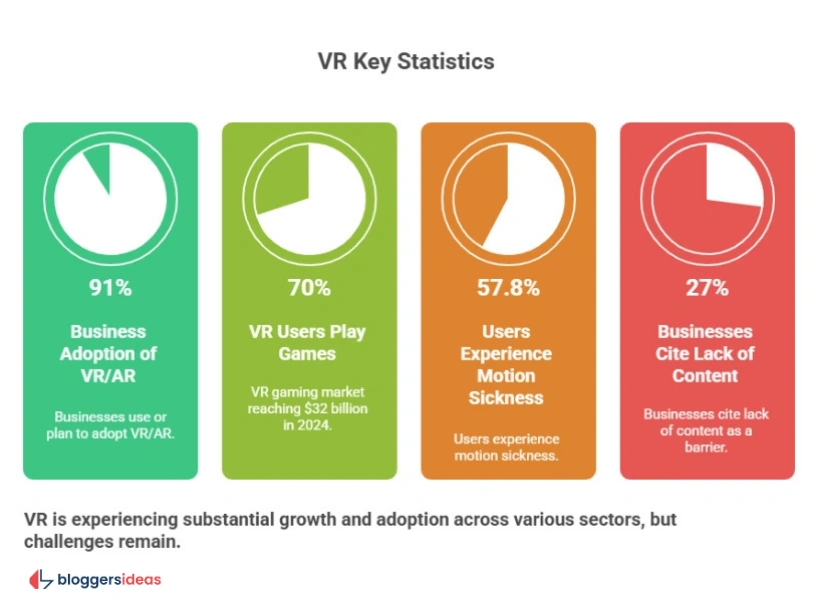
Businesses are adopting VR for various purposes, and this trend is creating new job opportunities. Here are some statistics on VR adoption in the corporate world:
- 91% of businesses either use or plan to adopt VR/AR technologies.
- 51% of companies have integrated VR into at least one part of their business operations.
- 34% of businesses see VR as a key tool for employee training and skill development.
The most common VR use cases in business include:
- Training employees (26%)
- Design and product engineering (53%)
- Virtual customer visits (53%)
- Supplementing labor on production floors (60%)
Individuals can benefit by using VR for personal development, such as learning new skills or practicing public speaking in virtual environments.
Also read about: Live Streaming Statistics
VR Hardware and Device Market
The VR hardware market is growing fast, with increased affordability and access for users. Here are key statistics:
- 97.7 million people used VR hardware in 2023.
- The number of VR hardware users is expected to exceed 130 million by 2027.
- Head-mounted displays (HMDs) made up 60.4% of the market share in 2024.
- Standalone headsets like Meta Quest are growing in popularity due to their portability and ease of use.
VR Headset Market Revenue
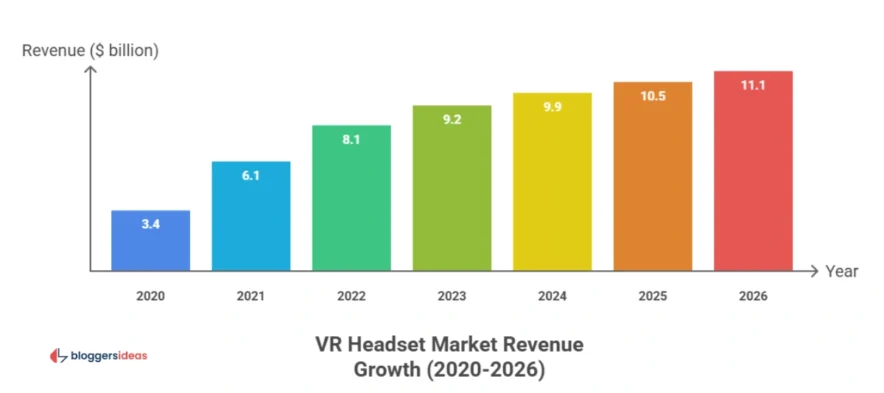
The revenue from VR headsets is steadily increasing, making VR more affordable and accessible for consumers:
| Year | Revenue (in billions) |
|---|---|
| 2018 | $1.7 |
| 2019 | $2.3 |
| 2020 | $3.4 |
| 2021 | $6.1 |
| 2022 | $8.1 |
| 2023 | $9.2 |
| 2024 | $9.9 |
| 2025 | $10.5 |
| 2026 | $11.1 |
| 2027 | $11.2 |
| 2028 | $11.4 |
VR in Gaming and Entertainment
Gaming continues to be the biggest driver of VR adoption, with a growing market:
- 70% of VR users engage in gaming.
- The VR gaming market is expected to reach $39.3 billion in 2026, and grow to $109.59 billion by 2030 at a 22.7% CAGR.
In addition to gaming, many VR users also enjoy watching movies and TV shows on their VR devices:
- 42% of VR users watch films or TV through VR headsets.
VR is also enhancing social and entertainment experiences, allowing users to host virtual events or enjoy virtual travel.
VR for Education and Training
Virtual reality is transforming how we learn and train. Studies show VR can greatly improve learning outcomes:
- 75% retention rate with VR, compared to just 5% for lectures.
- Memory recall improves by 8.8% in VR environments.
- VR training enables employees to learn 4 times faster than traditional methods.
In healthcare, VR is used to train medical professionals and improve patient outcomes. For example, orthopedic residents reduce critical errors by 50% with VR training.
The Future of VR: Market Projections
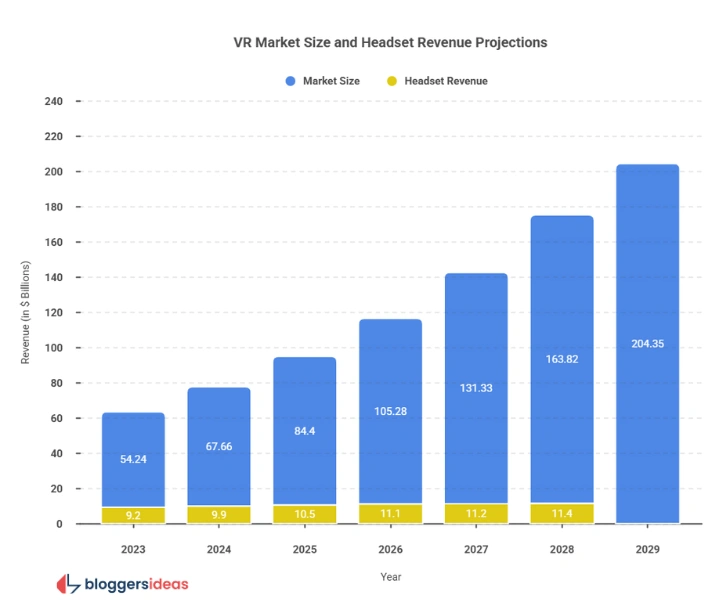
The overall global VR market is set to grow rapidly:
| Year | Market Size (in billions) |
|---|---|
| 2023 | $54.24 |
| 2024 | $67.66 |
| 2025 | $84.40 |
| 2026 | $105.28 |
| 2027 | $131.33 |
| 2028 | $163.82 |
| 2029 | $204.35 |
- The VR market is projected to reach $284.04 billion by 2034.
VR’s Impact on Jobs and the Economy
Virtual reality is expected to create new opportunities in the workforce:
- By 2030, 23.36 million jobs will be impacted by VR and AR technologies.
- VR is expected to boost the global economy by $138.3 billion in 2026 and reach $450.5 billion by 2030.
Technological advancements such as 5G for seamless experiences, AI for personalized content, and lighter headsets are expected to drive growth.
What Users Are Asking About VR
Common questions from users highlight their growing interest in VR:
- “How can VR help me in everyday life?”
→ VR offers benefits like fitness, learning new skills, reducing stress, and building social connections. - “Which VR headset is best for beginners?”
→ Affordable options like Meta Quest or Pico 4 make it easy to start using VR without breaking the bank. - “Can VR be used for mental health?”
→ Yes, VR is being used for therapy, including reducing anxiety, managing chronic pain, and improving mental health through social VR apps.
FAQs About Virtual Reality Statistics
1. How many people are using VR in 2026?
Over 171 million people globally are using VR, with more expected to adopt the technology in the coming years.
2. What is the expected market size for VR in 2026?
The global VR market is expected to reach $44.4 billion in 2026.
3. How does VR improve training and education?
VR offers higher retention rates (75%) and helps employees learn faster, cutting training time by up to 4 times.
4. Which region leads in VR adoption?
Asia Pacific generates over 41% of global VR revenue, thanks to manufacturing hubs like China.
5. How can beginners get started with VR?
Beginners can start with affordable standalone headsets like Meta Quest, and explore free apps for fitness, travel, or social interactions.
Also Read:
- Android Usage Statistics
- Coupon Statistics
- Email Marketing Statistics
- Online Advertising Statistics
- Podcast Statistics
Conclusion
The future of virtual reality is bright and rapidly growing.
With over 171 million users globally and a market set to reach $44.4 billion in 2026, VR is becoming an essential tool for learning, entertainment, healthcare, and personal development.
Whether you’re a gamer, professional, or someone seeking a new way to learn, VR has the potential to enrich your life in numerous ways.
Start exploring VR today to take advantage of its many benefits.
Source: Statista, Fortune Business Insight
