
Webinars have solidified their place as one of the most powerful tools for businesses, educators, and marketers in 2025.
With over 60 million webinars expected to be hosted globally, this format continues to evolve rapidly, offering a unique blend of engagement, lead generation, and content distribution.
If you’re looking to leverage webinars in 2025, understanding the latest statistics and trends is crucial to hosting successful virtual events.
The Importance of Webinars in 2026
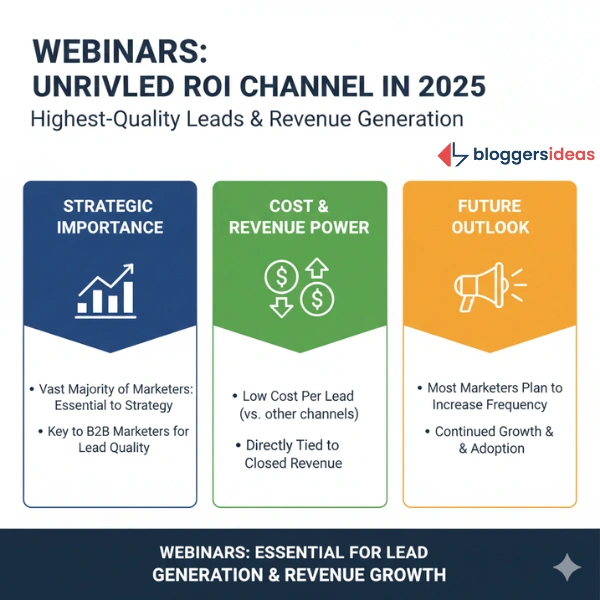
Webinars bridge the gap between in-person events and online convenience.
They offer real-time interaction, making the audience feel engaged and heard, while also enabling content repurposing, global reach, and cost-effective lead generation.
These factors make webinars an essential tool for modern communication strategies.
Here are key reasons why webinars are vital in 2025:
- High Engagement: Webinars allow for direct interaction with attendees, making them highly engaging.
- Cost-Effective Lead Generation: Webinars are more affordable than traditional events and offer a significantly lower cost per lead.
- Global Reach: Webinars enable you to connect with audiences anywhere in the world, increasing your potential impact.
- Content Repurposing: Webinar content can be transformed into blogs, social media clips, and other valuable assets.
- Revenue Impact: Many businesses directly attribute a significant portion of their revenue to webinar efforts.
With these benefits, it’s no surprise that webinars are becoming a cornerstone of digital marketing strategies.
In this guide, we’ll take a deep dive into the statistics of webinars in 2025 to help you optimize your approach for maximum impact.
Also read about: Discord Statistics
Key Webinar Statistics 2026
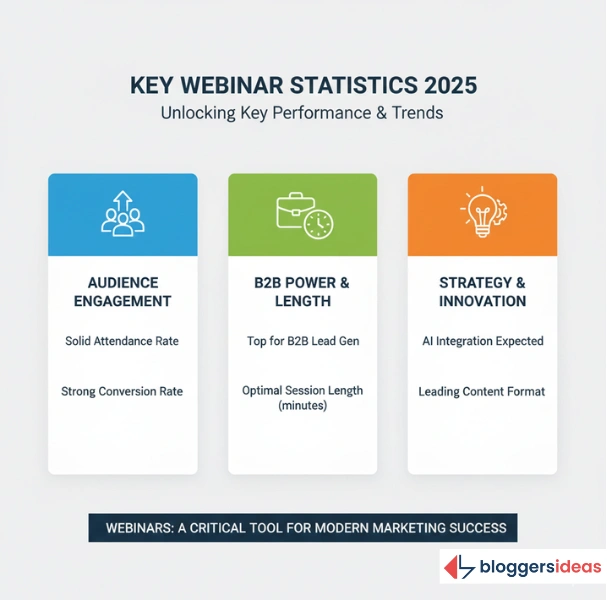
To kick things off, here are some of the most important webinar statistics for 2025:
- Average Attendance Rate: 35%–45%
- Average Conversion Rate: Approximately 56%
- B2B Lead Generation: 73% of B2B webinar attendees become leads
- Ideal Webinar Length: 30 to 45 minutes
- AI Integration: 98% of marketers plan to incorporate AI into their webinars
- Marketing Strategy Essential: 85% of businesses consider webinars vital to their marketing strategy
- Top Content Format: 51% of content marketers report webinars provide the best results
These numbers clearly show the immense potential webinars hold in 2025. However, it’s crucial to dive deeper into specific areas like attendance rates, conversion rates, and engagement strategies to fully understand how to make webinars work for you.
Also read about: Zoom Statistics
Webinar Attendance Rates: Getting People to Show Up
One of the biggest challenges in hosting a successful webinar is ensuring high attendance. The average attendance rate for webinars in 2025 ranges from 35% to 45%.
This means that for every 100 people who register, around 35 to 45 will show up live. However, with the right strategies, it’s possible to achieve attendance rates as high as 90%.
Strategies to Boost Webinar Attendance:
- Offer Incentives: Provide exclusive content, discounts, or free access to valuable resources for attendees.
- Send Reminder Emails: Timely reminders increase the likelihood of attendees showing up.
- Choose Optimal Timing: Hosting your webinar at a time that works for your target audience will improve attendance.
- Promote Across Multiple Channels: Use email lists, social media, and your website to spread the word.
Industry-Specific Attendance Rates
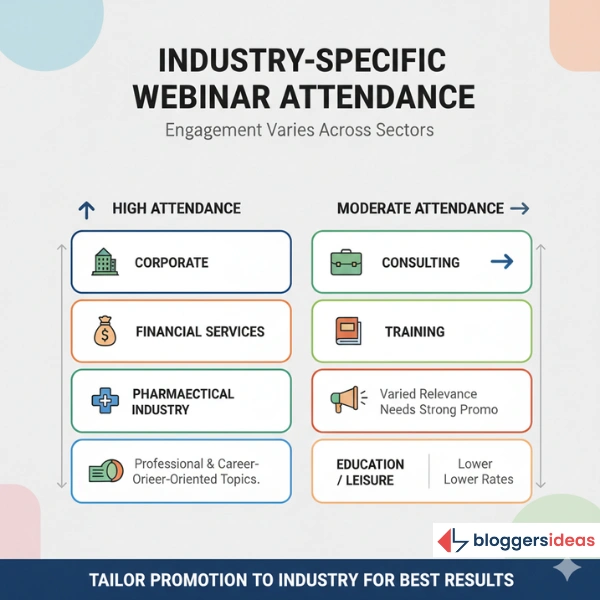
Certain industries tend to have higher attendance rates due to the relevance of the topics. Here are the average attendance rates across different industries:
- Corporate: 65%
- Financial Services: 61%
- Pharmaceutical Industry: 61%
- Consulting: 50%
- Training: 45%
- Marketing: 44%
- Education: 31%
- Leisure/Hobby: 15%
Corporate and financial services webinars tend to see higher attendance rates, likely due to their professional and career-oriented nature.
On the other hand, marketing webinars often have lower attendance, which underscores the importance of strong promotional strategies.
Also read about: GoToWebinar Promo Code
Webinar Conversion Rates: Turning Attendees into Leads
Once people attend your webinar, the next challenge is converting them into qualified leads or customers. In 2025, the average conversion rate for webinars is about 56%.
This means that over half of your attendees are likely to take a desired action, such as filling out a form, requesting a demo, or making a purchase.
Live vs. On-Demand Conversion Rates
- Live Webinars: 33% conversion rate
- On-Demand Webinars: 25% conversion rate
While live webinars offer real-time engagement, on-demand webinars provide ongoing value and continue to generate leads after the event has ended. Combining both live and on-demand formats is an effective way to maximize reach and conversion potential.
Conversion Rates Based on Audience Size
Interestingly, the size of your webinar audience can influence your conversion rate. Here’s how the number of attendees impacts conversions:
- 100 to 199 attendees: 50% conversion rate
- 200 to 299 attendees: 19% conversion rate
- 300 to 499 attendees: 15% conversion rate
- 500 to 599 attendees: 10% conversion rate
- 1,000+ attendees: 6% conversion rate
Smaller webinars (under 200 attendees) tend to have higher conversion rates. This suggests that a more intimate setting allows for deeper engagement and better lead quality. Larger webinars, while offering a wider reach, may not convert as effectively.
Webinar Engagement: Keeping Your Audience Hooked
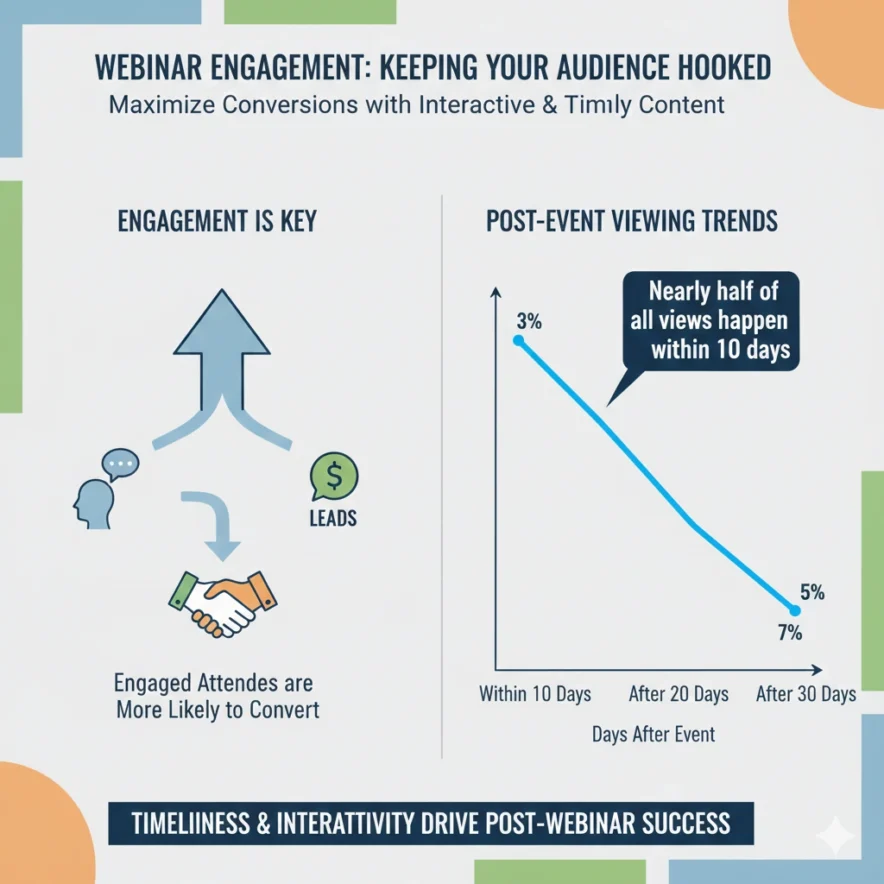
Engagement is key to turning attendees into leads. If attendees are engaged, they are more likely to convert. Here are some important insights into webinar engagement:
Post-Event Viewing Trends
- Within 10 days after the event: 47% of views
- After 20 days: 24% of views
- After 30 days: 10% of views
Nearly half of all webinar views happen within 10 days after the event, which highlights the importance of making your webinar available on-demand for continued engagement.
Best Days and Times to Host Webinars
The timing of your webinar can significantly affect attendance. The best days to host a webinar in 2025 are:
- Wednesday: 26%
- Thursday: 28%
These two days account for more than half of all webinars hosted, indicating that they see the highest attendance rates. Mondays and Fridays, on the other hand, are less ideal as people are either too busy to attend or not engaged enough.
In terms of time of day, 11 AM local time is the most common start time, while 2 PM often yields the highest attendance rates.
Webinar Length: How Long Is Just Right?
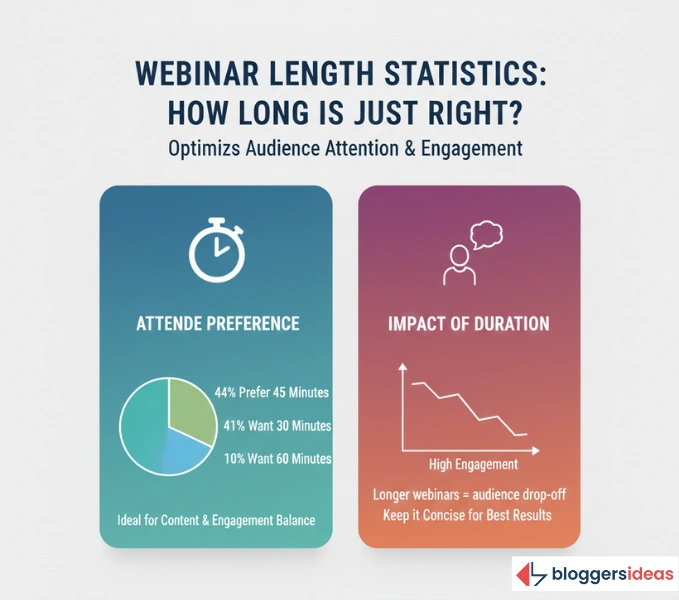
Webinar length plays a significant role in attendee engagement. Based on attendee preferences, most people prefer webinars that last between 30 to 45 minutes. While the average webinar is typically 60 minutes long, the actual viewing time tends to be much shorter.
Here’s a breakdown of webinar length preferences:
- 44% of attendees prefer a 45-minute webinar
- 41% prefer 30 minutes
- 10% prefer 60 minutes
On average, attendees watch about 42 minutes of a 60-minute webinar. This suggests that shorter, more concise webinars are more effective for keeping the audience engaged.
Webinar Registration: When Do People Sign Up?
Webinar registrations follow distinct patterns, and understanding these patterns can help you optimize your promotional efforts.
Sources of Webinar Registration
- Website: 80% of marketers drive registrations through their websites
- Email: 76% of people register via email campaigns
- Social Media: 60% use social media to drive registrations
Most registrations happen less than a week before the webinar, highlighting the importance of sending multiple reminders and promotions leading up to the event.
Webinar Content: Engaging Your Audience
The content of your webinar directly impacts engagement and conversion rates. To keep your audience engaged, incorporate interactive elements:
- 81% of webinars include Q&A sessions, which 92% of attendees find crucial.
- 69% of webinars offer downloadable resources, enhancing the learning experience.
- 44% of webinar hosts use live polls to engage attendees.
Webinars that offer interactive elements like Q&A sessions, downloadable resources, and polls tend to have higher engagement and conversion rates.
Webinar ROI: Measuring Success
Webinars continue to offer a strong return on investment (ROI). In 2025:
- 73% of B2B marketers rank webinars as their #1 source of high-quality leads.
- 20% to 40% of webinar attendees convert into qualified leads.
- 68% of marketers attribute webinars to actual revenue generation.
The cost per lead (CPL) for webinars is around $72, which is significantly lower than other channels, like in-person trade shows.
New Trends and Insights for [year]: What Users Are Asking
Emerging trends in webinars are influenced by AI integration, the growing importance of on-demand content, and more interactive tools.
- AI Integration: Marketers are using AI to automate content repurposing, follow-ups, and audience analytics.
- On-Demand Content: Nearly 45% of attendees watch webinars on-demand, suggesting that replay distribution is critical for extending the life of your webinars.
- Interactive Tools: Polls, group chats, and virtual whiteboards are gaining traction, providing more dynamic and engaging experiences.
Also Read:
- YouTube Creator Statistics
- Email Marketing Statistics
- Content Marketing Statistics
- CRM Statistics
- Google Ads Statistics
Conclusion
Webinars are essential tools in 2025 for lead generation, education, and brand building. With an average conversion rate of 56% and attendance rates of 35%–45%, webinars are one of the highest-converting strategies available.
By focusing on optimal timing, engaging content, AI tools, and interactive elements, you can host highly successful webinars that drive business growth and lead generation.
Whether you are a business owner, educator, or marketer, the key to success lies in understanding your audience’s needs, delivering concise and engaging content, and leveraging the latest trends and technologies to enhance your webinar strategy.
Source: WebinarNinja, LiveWebinar
