If you have searched for cheap web hosting, Hostinger is impossible to miss. Its ads promise full hosting for less than the price of a coffee, and the reviews are full of words like unbeatable and beginner friendly.

Hostinger is an AI first platform for building, running, and growing an online business with website hosting, domains, AI website builder, e-commerce, business email, and AI automation tools all in one account.
Pros
- Ultra affordable pricing from $2.99/month with free domain included for first year
- AI Builder creates websites in minutes without coding knowledge required
- All in one platform combining hosting, domains, email, and AI automation
- Unlimited websites and storage on higher tier plans for scalability
- Free SSL certificate, daily backups, and CDN included on all plans
Cons
- Intro pricing requires 48 month commitment; renewal rates jump 260 270% higher
- Performance can lag compared to dedicated hosting providers
Starting at $29/mo
Get Started with HostingerBut you have probably also heard the warnings. Renewal prices jump 300 to 400 percent. There is no phone support. And the cheapest rates require a four year commitment.
So which story is true? Both, actually. I tested the platform, dug into the 2026 pricing, the performance data, and what SiteGround, Bluehost, GoDaddy, and Cloudways offer. This Hostinger review gives you the full honest picture.
Hostinger at a Glance: Quick Hostinger Review Overview
Get a quick snapshot of Hostinger’s core features, pricing tiers, and platform strengths in this Hostinger review for fast understanding.
Item | Details |
What it is | Budget web hosting company |
Founded | 2004, Kaunas, Lithuania |
Starting price | $2.69 per month (48 month term) |
Hosting types | Shared, WordPress, WooCommerce, cloud, VPS, email |
Data centers | 11 locations worldwide |
Uptime guarantee | 99.9 percent |
Free extras | SSL, domain (first year), email, migration, CDN on higher plans |
Control panel | hPanel, custom built |
Support | 24/7 live chat and email, no phone |
Money back guarantee | 30 days |
Active hosted domains | Around 1 million plus |
Best known for | Ultra low intro pricing and AI tools |
What Is Hostinger and Who Is It For?
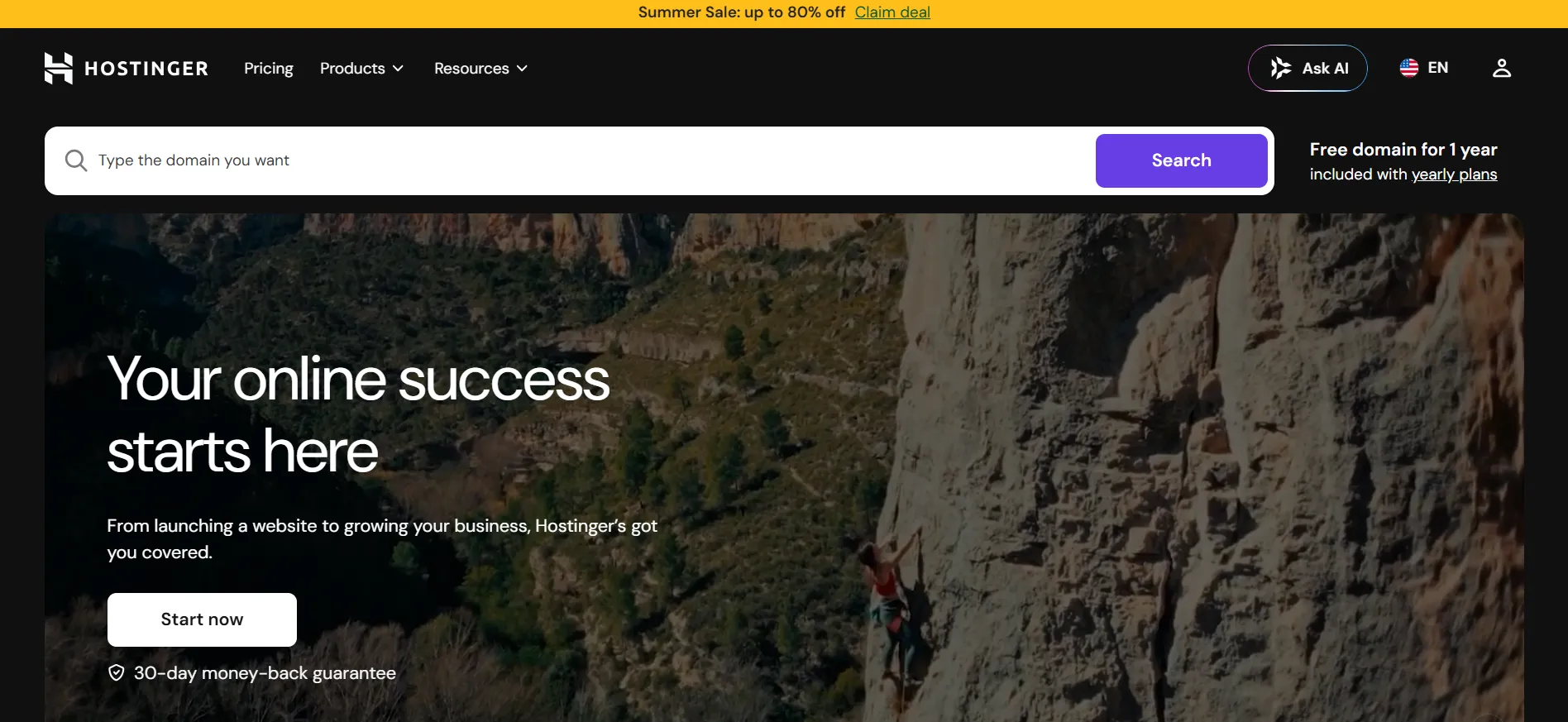
Hostinger is a Lithuanian web hosting company founded in 2004. It grew from a tiny local host into one of the largest budget hosting providers on the planet, now serving well over a million active domains with data centers across the US, UK, Europe, Asia, and South America.
The pitch is simple. Premium grade infrastructure, LiteSpeed servers, NVMe storage, and a modern control panel, at prices that undercut almost everyone.
On top of that, Hostinger has gone all in on AI, with an AI website builder that generates a complete site in about a minute, an AI assistant called Kodee that now handles most support interactions, and AI content tools.
Hostinger is best for beginners, bloggers, small businesses, and anyone launching their first website on a tight budget. It is less suited for enterprises needing dedicated servers, HIPAA compliant hosting, or phone based support.
The Big News: Hostinger in 2026
Hostinger has been on a serious growth run. Data from technology usage crawls shows its active domain count roughly doubling between late 2024 and 2025, from around 334,000 to over 660,000, and reaching past 1.1 million domains by mid 2026 according to crawler coverage.
Migration data tells an even more interesting story: over five years, about 13,700 companies moved from GoDaddy to Hostinger, versus only around 1,300 going the other way. That is a 10 to 1 win ratio against the legacy budget host.
On the product side, 2026 has been busy. The July 2026 update added Stripe Express Checkout for ecommerce stores, appointment booking products with full scheduling flows, product reviews with star ratings, and transactional emails sent from your own domain.
Hostinger also connected its ecommerce platform directly to Reach, its email marketing tool, which passed 300,000 customers just four months after crossing 200,000.
The AI story deepened too. Kodee, Hostinger’s AI assistant, now resolves around 83 percent of support interactions automatically, handling things like backups, server health checks, and migrations through chat.
Here is my honest take. Hostinger is clearly winning the budget hosting war against GoDaddy and Bluehost.
The risk is the opposite direction: more sophisticated users are migrating to Cloudflare’s edge network for performance, with roughly 12,000 companies leaving Hostinger for Cloudflare over five years.
Hostinger keeps you happily until you outgrow shared hosting, then the upgrades get more expensive.
Hostinger by the Numbers: Stats That Matter in 2026
Active domains: over 1.1 million by mid 2026 crawler data, up from roughly 334,000 in late 2024.
Migration ratio versus GoDaddy: about 10.5 to 1 in Hostinger’s favor over five years.
Customer profile: over 80 percent of Hostinger customer businesses were founded after 2010, and 84 percent have 1 to 10 employees. This is a platform for small, young, budget conscious businesses.
Data centers: 11 global locations, including the US, UK, France, Germany, Netherlands, Lithuania, India, Singapore, Indonesia, Malaysia, and Brazil.
Infrastructure: LiteSpeed web server on 78.8 percent of Hostinger sites, NVMe SSD storage across plans.
WordPress dominance: about 78 percent of Hostinger sites run PHP, 39.8 percent use Elementor, and 23.6 percent use Contact Form 7. This is a heavily WordPress weighted user base.
Support automation: Kodee AI handles 83 percent of support interactions.
Uptime: long term independent tests average 99.95 to 100 percent, and one UK focused review recorded 99.99 percent against a 99.9 percent guarantee.
Reach email marketing: 300,000 customers within months of launch.
Hostinger Pricing in 2026: The Full Picture Including Renewals
This is the section most Hostinger reviews blur, so let me be precise. The headline prices are real, but they require long commitments and they expire.
1. Shared Web Hosting
Premium: 2.69permonthona48monthterm(2.69 per month on a 48 month term (3.49 on a 12 month term). Renews at $11.99 per month. Hosts up to 25 websites, 25 GB NVMe storage, weekly backups, free SSL, free domain for the first year, free email accounts.
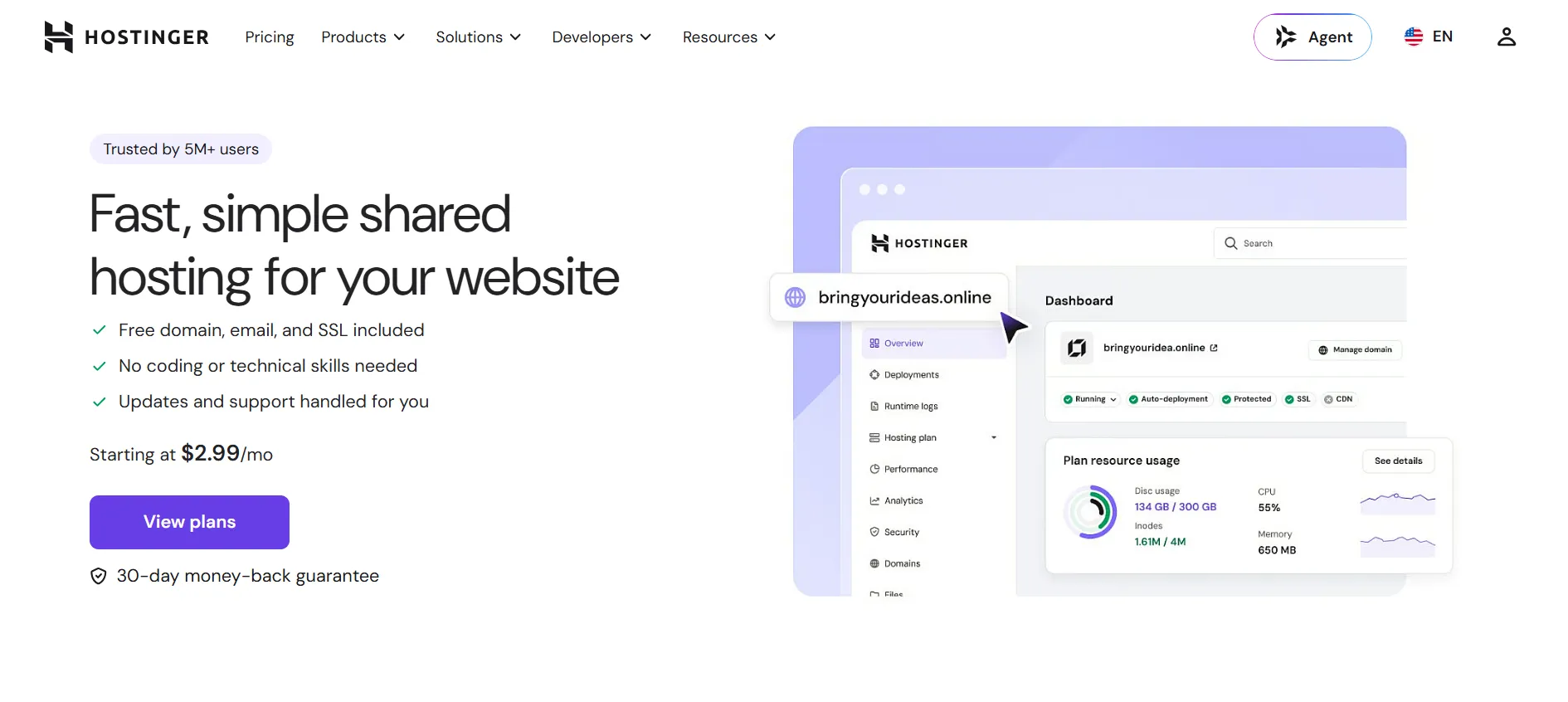
Business: 3.49permonthona48monthterm(3.49 per month on a 48 month term (4.99 on 12 months). Renews at $16.99 per month. Up to 50 websites, 50 GB NVMe storage, daily backups, free CDN, malware scanner, WordPress staging, and roughly 4x the processing power of Premium. This is the plan I recommend to most people.
Cloud Startup: 7.49permonthon48months(7.49 per month on 48 months (9.99 on 12 months). Renews at $24.99. Up to 100 websites, dedicated CPU and RAM, dedicated IP, 200 GB NVMe storage, priority support.
Cloud Professional: $14.99 per month on 48 months. Renews at $34.99. For agencies and high traffic stores.
2. VPS Hosting
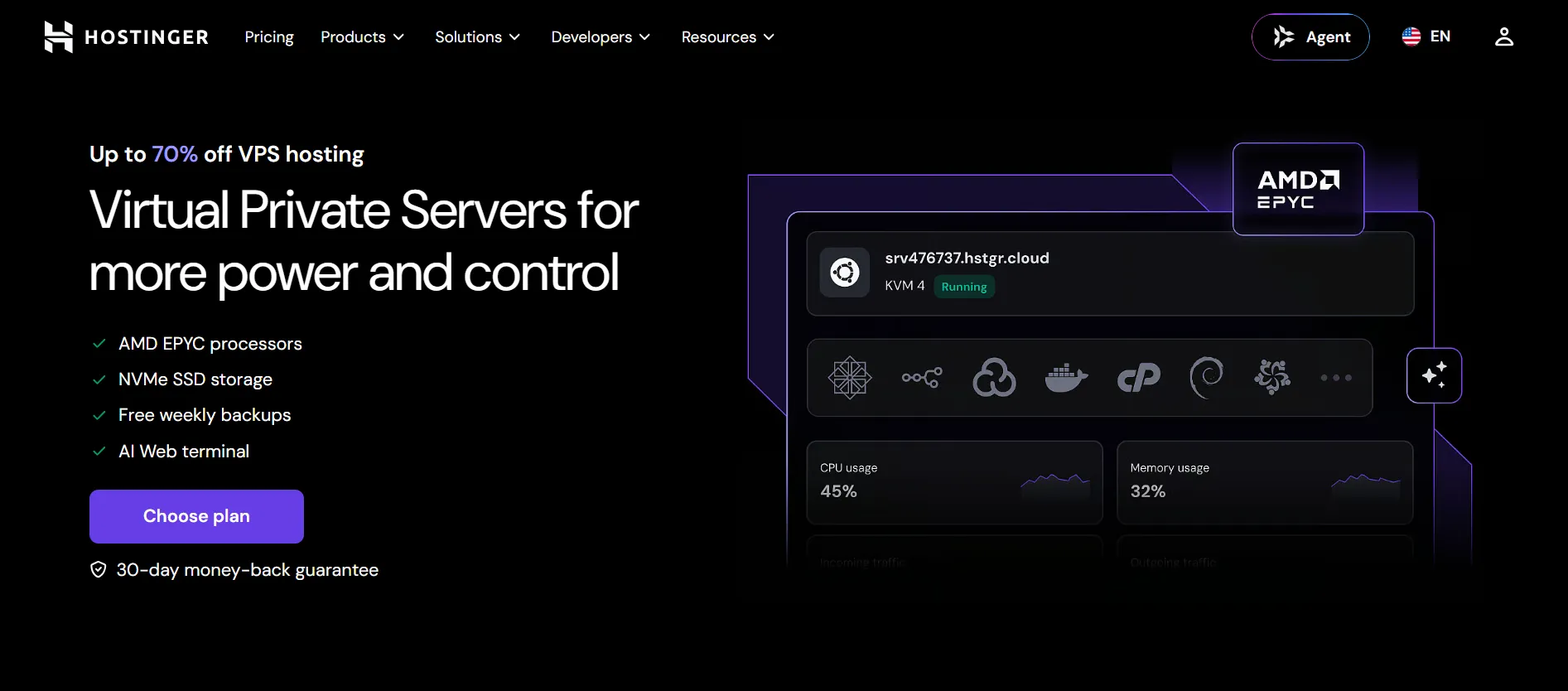
KVM 1 starts at 4.99permonth(4.99 per month (5.99 on 12 months), renewing at $10.99. You get 1 vCPU, 4 GB RAM, 50 GB NVMe storage, full root access, weekly backups, and the Kodee AI assistant for server tasks. Plans scale up to KVM 8 with 8 vCPUs and 32 GB RAM.
3. Website Builder
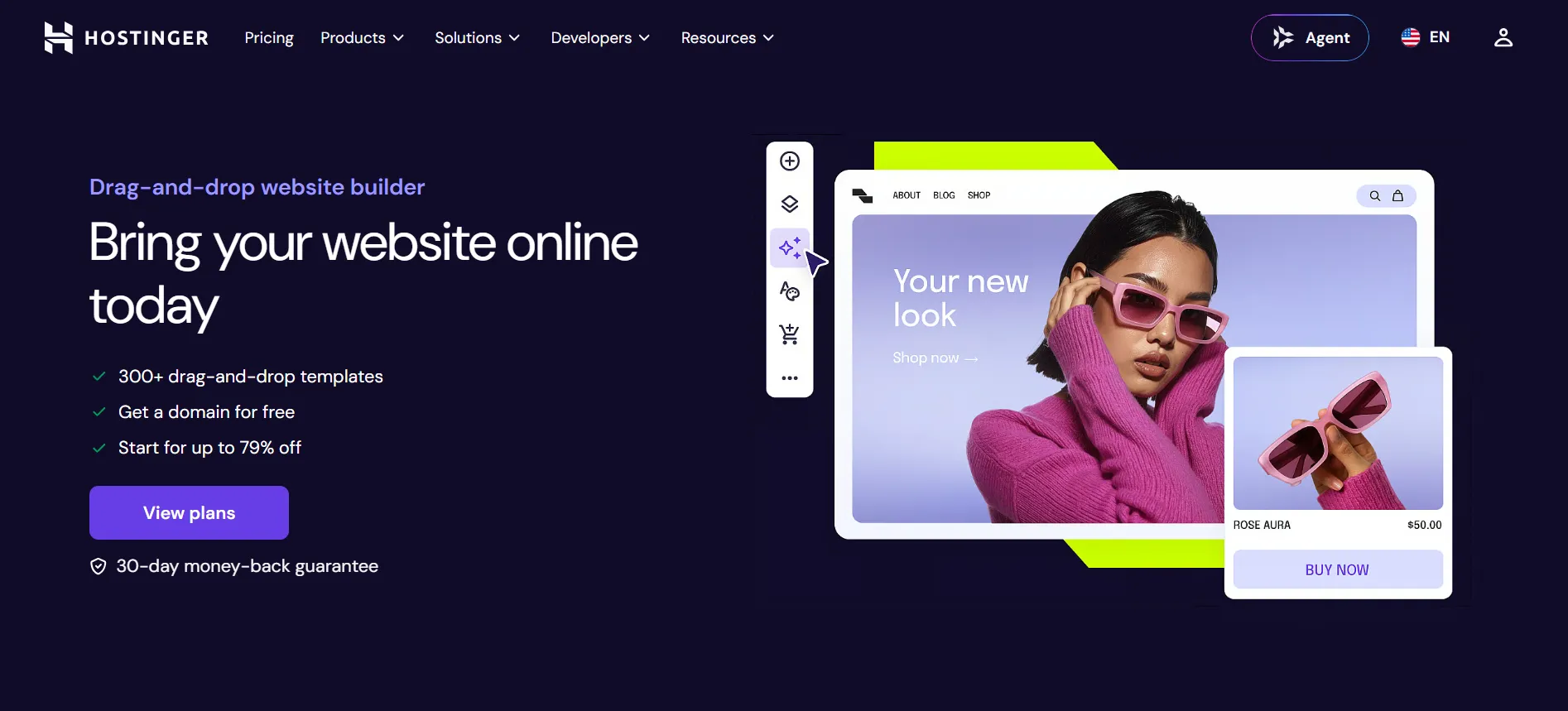
$2.99 per month, bundled with hosting, a free domain, SSL, and email. The AI generates a full multi page site from a few questions in under a minute.
Hidden Costs to Watch Before You Buy Hostinger
The intro price is only the start. Renewals often cost much more. Plan for the full bill from day one.
1. Renewal Prices Can Jump Sharply
Renewal is the biggest surprise. The Premium plan rises from $2.69 to $11.99 a month when it renews. That is an increase of about 346 percent. The Business plan goes from $3.49 to $16.99. Budget for the renewal price, not the promotional rate. Check the renewal figure on the checkout page before you pay.
2. Domain Renewals Cost Extra Each Year
Your domain is free for the first year on annual plans. After that, a .com domain costs about $17 to $18 a year. Some earlier drafts used a different figure, so confirm the current price on Hostinger’s domain page. Set a yearly reminder so the domain does not lapse.
3. Backups Depend on Your Plan
Daily backups come only with Business and higher plans. Premium includes weekly backups. On demand backups are paid extras on lower tiers. If your site changes every day, such as a store with new orders, weekly backups may not protect enough of your work. Pick the plan that matches how often your content changes.
4. Refunds Exclude Some Products
The 30 day money back guarantee does not cover everything. Domain registrations, privacy protection, and some other add ons are excluded. Read the exclusions before you add extras to your cart. Those items may cost you money even if you cancel within the window.
5. Downtime Compensation Is Limited
If your site goes down, compensation is only 5 percent of the monthly fee. That is less generous than some competitors offer. Do not rely on compensation to cover losses from an outage. Build your own backup plan for any site that earns money.
6. Verify Before You Publish
I have not confirmed these figures on Hostinger’s own pages. Earlier drafts also listed different renewal prices and domain costs. Check the renewal rates, domain fees, backup schedules, refund exclusions, and the 5 percent downtime policy before you publish.
Hostinger Features Explained in Detail: Complete Hostinger Review Breakdown
Explore every core feature included in Hostinger with detailed explanations covering AI website builder, hosting infrastructure, email management, and automation tools in this comprehensive Hostinger review.
1. hPanel Control Panel
Hostinger ditched cPanel for its own hPanel, and it is genuinely good. Clean navigation, one click WordPress installs, automatic SSL setup, and guided onboarding mean a first website can be live in under 30 minutes. The learning curve exists if you are coming from cPanel, but it is shallow.
2. Performance
LiteSpeed servers with LiteSpeed Cache plus NVMe SSD storage deliver fast cached response times. Independent June 2026 tests showed excellent results, and the 11 global data centers let you host close to your audience. Add the free CDN on Business and above, and global visitors get snappy load times. One UK review measured 251ms response times. For a budget host, this performance is remarkable.
3. AI Website Builder
Answer a few questions about your business and the AI produces a complete multi page website with copy, images, and layout in about a minute. You can then edit everything with drag and drop.
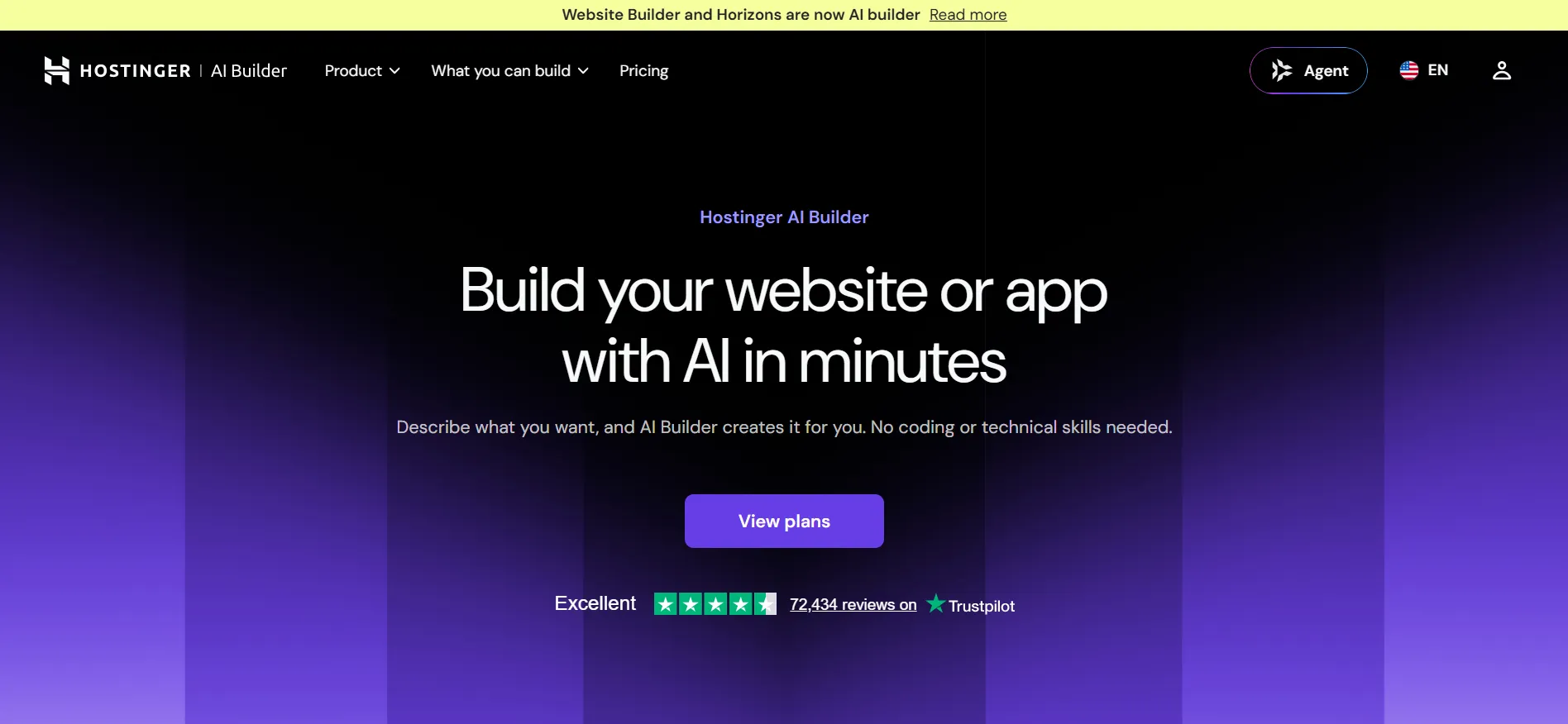
The 2026 update added conversational onboarding, AI generated color palettes, and deeper Elementor integration. It will not beat WordPress for complex sites, but for non coders it is the fastest way online.
4. WordPress Tools
Hostinger is a WordPress powerhouse. One click installs, automatic updates, pre installed LiteSpeed Cache, staging environments on Business and above, and object caching for WooCommerce stores. About 40 percent of its users build with Elementor, and the ecosystem is well supported.
5. Kodee AI Assistant
The AI assistant handles 83 percent of support conversations, performing backups, health checks, and migrations through chat. For non technical users, this removes the fear of breaking something. For server management on VPS plans, it helps with command line tasks too.
6. Ecommerce
The 2026 updates made Hostinger a more serious store platform. Stripe Express Checkout lets customers pay directly from product pages, appointment products have complete booking flows with rescheduling, and stores can send transactional emails from your own domain.
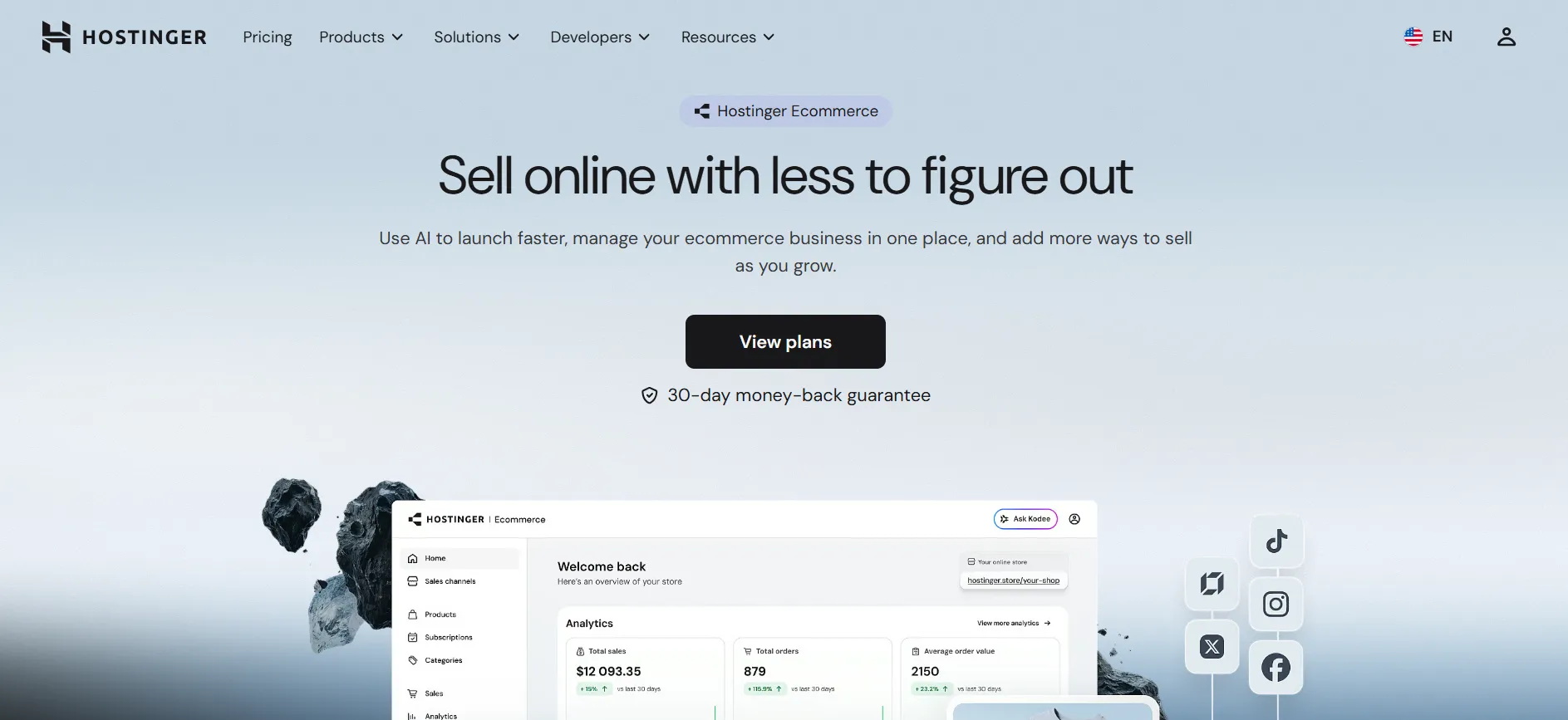
Ecommerce plans include 0 percent transaction fees from Hostinger itself, which is a genuine advantage over some builders.
7. Security
Free SSL on every plan, DDoS protection at the infrastructure level, malware scanning, a web application firewall on managed plans, Monarx protection, and two factor authentication on accounts. For this price point, the security stack is complete with no glaring gaps.
8. Free Migrations
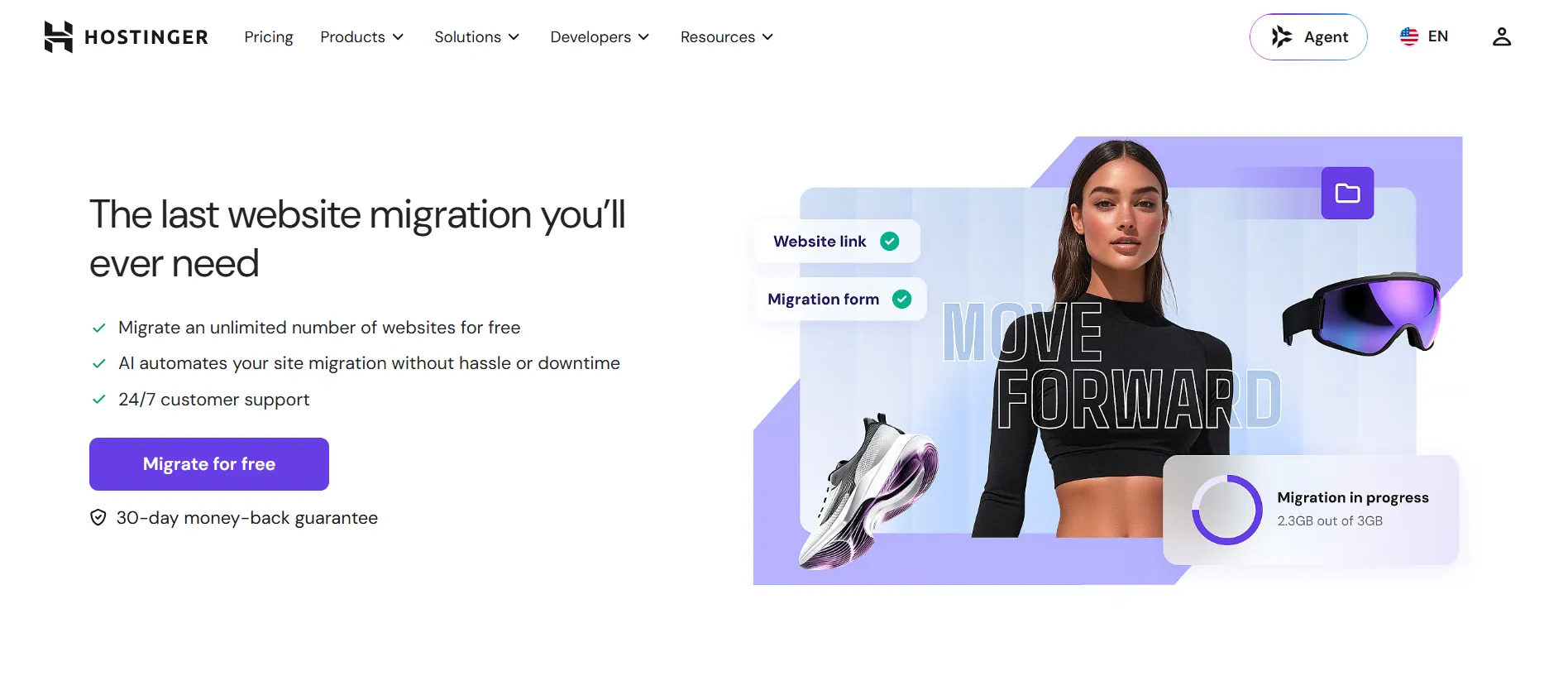
Hostinger migrates your existing websites for free, with no limit on the number of sites. If you are fleeing GoDaddy or Bluehost, this is the easiest on ramp in the industry.
Pros and Cons: Hostinger Review
Pros
- Industry leading intro pricing from $2.69 per month.
- LiteSpeed servers with NVMe storage across every plan, not just premium tiers.
- 11 global data centers plus free CDN on higher plans.
- One of the best AI website builders included free.
- Free domain, SSL, email, CDN, and unlimited migrations.
Cons
- Renewal prices jump 300 to 400 percent after the first term.
- No dedicated server hosting for enterprise needs.
Hostinger vs Competitors: Complete 2026 Hostinger Review Comparison
See how Hostinger stacks up against Bluehost, SiteGround, GoDaddy, and other web hosting providers in this Hostinger review, comparing features, pricing, and overall value.
1. Hostinger vs SiteGround
SiteGround is the premium budget alternative. It offers better support, daily backups on all plans, and a strong reputation with agencies. What SiteGround’s fans leave out: it costs 3 to 4 times more after renewals, storage limits are tight, and it lacks Hostinger’s AI tooling.
If support quality and backups are your priority, pay for SiteGround. If price to performance matters more, Hostinger wins decisively.
2. Hostinger vs Bluehost
Bluehost is the legacy name, officially recommended by WordPress.orgfor years. What Bluehost comparisons leave out: migration data shows it losing users to Hostinger steadily, its dashboard is more cluttered, renewal pricing is similarly aggressive, and its performance in recent independent tests trails Hostinger’s LiteSpeed stack.
In 2026, Hostinger beats Bluehost on almost every objective measure.
3. Hostinger vs GoDaddy
GoDaddy owns the domain registration market and bundles hosting aggressively. What GoDaddy’s marketing leaves out: the 10 to 1 migration ratio in Hostinger’s favor, constant upsells during checkout, and weaker price to performance on equivalent plans.
Only choose GoDaddy if you want everything, domains, email, hosting, in one legacy account.
4. Hostinger vs Cloudways
Cloudways is managed cloud hosting on AWS, Google Cloud, and DigitalOcean. What Cloudways comparisons leave out: it costs far more, has no bundled email or domain, and requires more technical confidence.
Cloudways is where Hostinger users go when they outgrow shared hosting. They are different products for different stages.
Quick Comparison Table: Hostinger Review vs Competitors
Compare Hostinger against Bluehost, SiteGround, GoDaddy, and other hosting providers in this Hostinger review table showing pricing, features, and key differences at a glance.
Factor | Hostinger | SiteGround | Bluehost | Cloudways |
Entry price | $2.69/mo | ~$2.99/mo intro | ~$2.95/mo intro | ~$14/mo |
Renewal price | $11.99/mo | ~$17.99/mo | ~$11.99/mo | Pay as you go |
Performance stack | LiteSpeed plus NVMe | NGINX plus custom | Standard Apache based | Cloud VMs |
Free domain | Yes, first year | No | Yes, first year | No |
Daily backups | Business and above | All plans | Varies by plan | Yes |
AI tools | Extensive | Limited | Limited | None |
Phone support | No | No | Yes | No |
Best for | Beginners on a budget | Quality focused small biz | WordPress legacy users | Growing dev teams |
Who Should Use Hostinger in 2026?
Hostinger is worth it if:
- You are launching your first website and want the lowest possible entry cost.
- You run a WordPress site or small online store.
- You want AI tools included instead of paying for separate builders.
- You are migrating from GoDaddy or Bluehost and want free, painless transfers.
Hostinger is probably not for you if:
- You need dedicated servers or HIPAA compliant hosting.
- You refuse multi year commitments. The headline prices demand them.
- Phone support is a must.
- Your site is mission critical with zero tolerance for backup gaps, in which case get daily backups and stronger SLAs elsewhere.
Hostinger Email, Domains, and Extras
Beyond hosting, Hostinger sells the full small business stack. Email hosting is free on most web hosting plans with limits, or standalone through Hostinger Mail at under $1 per month per inbox, with Google Workspace integration for power users.
Domain registration is aggressively priced on first year promos, sometimes under $1 for a .com, renewing at standard rates around $14.99 per year with free WHOIS privacy.
Hostinger Academy, the company’s tutorial site and YouTube channel, offers hundreds of step by step guides. For a beginner trying to connect a domain, install WordPress, or set up email for the first time, this free education removes most of the friction that makes hosting intimidating.
The Setup Experience, Step by Step
Since most Hostinger review readers are beginners, here is what actually happens after you pay.
You pick a data center, claim your free domain or connect an existing one, and the guided onboarding walks you through everything. WordPress installs with one click, SSL activates automatically, and LiteSpeed Cache comes pre configured.
From a blank account to a live website with HTTPS, most users report under 30 minutes. If you are migrating, you submit a request and Hostinger’s team moves your sites for free, then Kodee verifies everything works.
It is the smoothest first hosting experience I have seen at this price point, and it explains the platform’s explosive growth among new businesses.
Hostinger Alternatives Summary
If this review left you unsure, here is the short version of where else to look. SiteGround for better support and daily backups on all plans. Bluehost only if a legacy WordPress.org recommendation matters to you. GoDaddy only for bundled domain convenience.
Cloudways for managed cloud performance when you outgrow shared hosting. DreamHost for monthly billing without long commitments. And A2 Hosting if developer features and speed tweaks matter more than AI tooling.
Each of these does at least one thing better than Hostinger, but none matches its combination of price, performance, and features for a first website.
Pros & Cons: Hostinger Review
Pros
- Email marketing: Hostinger Reach helps you send AI assisted email campaigns.
- Scaling path: You can move to VPS or higher capacity email as your business grows.
- Developer tools: The Connector works with editors like VS Code and Cursor to manage hosting from your IDE.
- One click apps: AI automation apps, including self hosted n8n, deploy with one click.
- Security certification: The page says Hostinger is ISO/IEC 27001:2022 certified and follows GDPR.
Cons
- AI content responsibility: You must make sure AI generated content follows copyright law.
- Data consent for some features: Tools like Web2Agent need your consent, so read the settings before you enable them.
FAQs: Hostinger Review
Yes for most users. At $2.69 per month with free SSL, domain, email, and migrations, the value is unmatched. Just understand the renewal prices before committing.
Premium renews at $11.99 per month and Business at $16.99 per month, regardless of what you paid upfront.
Yes, annual plans (except VPS) include a free domain for the first year. After that, .com renewals run about $17 to $18 per year.
Very. One click installs, automatic updates, LiteSpeed caching, staging on Business and above, and about 78 percent of its sites run WordPress related stacks.
No. Support is 24/7 live chat and email only, though the Kodee AI assistant resolves most issues instantly.
Premium plans get weekly backups. Business and Cloud plans get daily backups. On demand backups are available as paid extras on lower plans.
Yes, a 30 day money back guarantee applies to most hosting plans, excluding domain registrations and certain add ons.
Quick Links:
One Last Warning About Long Terms
The single biggest mistake new Hostinger customers make is choosing the 48 month term without thinking, simply because the monthly math looks irresistible. Only do it if you are confident about your project.
A 12 month Business plan at $4.99 per month is still excellent value, and it gives you an escape hatch a year earlier.
Lock in the long term only after your site has proven itself. Hosting is cheap to start and expensive to leave if you prepaid four years for a project that died in four months.
Is Hostinger Worth It? My Final Verdict
Hostinger in 2026 is the best value in budget web hosting, full stop. The combination of LiteSpeed performance, NVMe storage, global data centers, genuinely useful AI tools, and free everything, SSL, domain, email, migrations, at $2.69 to $3.49 per month is unmatched. Migration data proves the market agrees.
The catch is real but manageable. Renewal prices triple or quadruple, and you only get the cheap rates by committing to four years. My advice: choose the Business plan on the longest term you can stomach, enjoy daily backups and the free CDN, and set a calendar reminder for 11 months before renewal to renegotiate or reevaluate.
If you outgrow it, Cloudways or a VPS is your next stop, and Hostinger’s own VPS lineup makes that transition painless.
Rating: 4.6 out of 5. Deducting points for renewal economics and phone support, but for year one value, nothing else comes close.