Bright Data

- Large proxy pool
- Precise targeting
- Advanced scraping capabilities
- Mobile & data center proxies available
Storm Proxies

- Rotating residential proxies
- Unlimited bandwidth usage
- Simple and fast setup
- Cost-effective solutions
Oxylabs

- Large proxy network
- AI-driven scraping tools
- Enterprise-grade performance
- Reliable and secure connections
In this article, we’ll look at several Decodo Alternatives 2026 so you can choose the best proxy server solution for your business needs.
Decodo has become a popular choice for businesses that need to manage their web proxy servers. However, many other solutions offer similar features and performance.
We’ll cover their features, pricing, and performance to help you decide which solution is best for your organization.
After reading this article, you should better understand the available options and be able to make an informed decision when selecting the best proxy server solution for your business.

7 Decodo Alternatives 2026: Explore The Best Options
1) Bright Data (Formerly Luminati.io)
Bright Data is a proxy service behemoth with over 72 million residential and other IP addresses (mobile, data center) across nations and towns worldwide.
Businesses can collect data from the web as it is seen by consumers worldwide by gaining access to these IPs.
Monitoring competitor prices on websites across all your target countries is a common use for this type of service.
Still, Bright Data also provides examples of how to scrape data, verify ad and affiliate link compliance, and track international search engine results from Google, Bing, and Yahoo.
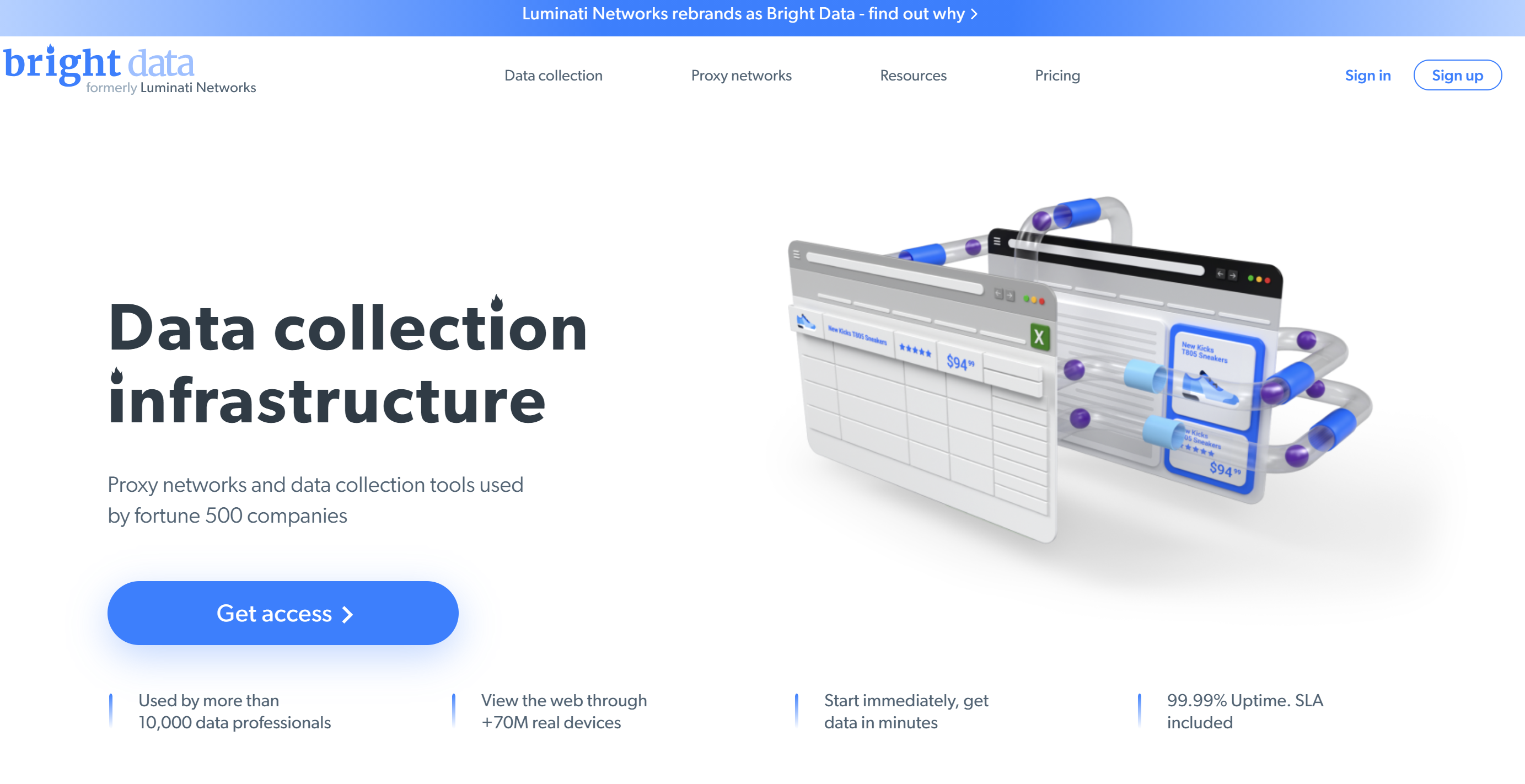
In its most basic form, using Bright Data is as simple as installing its Chrome extension. It doesn’t require any coding, and it’s only slightly more difficult than using a professional VPN.
Bright Data’s open-source Proxy Manager also eliminates the need for coding.
Still, he adds strong, advanced capabilities, including SSL decryption, intelligent routing, configurable bandwidth-saving policies, and even built-in site scraping.
Bright Data isn’t the cheapest proxy service out there, but serious customers should try it because of its large network, flexible billing, and very sophisticated and configurable tools.
2) Storm Proxies
Storm Proxies has been around for nearly five years, entering the proxy market in 2016. Given its young age, it will likely take some time to gain the confidence other suppliers have.
While it cannot be considered a premium service, it has carved out a niche for itself and is regarded as one of the best among its peers.
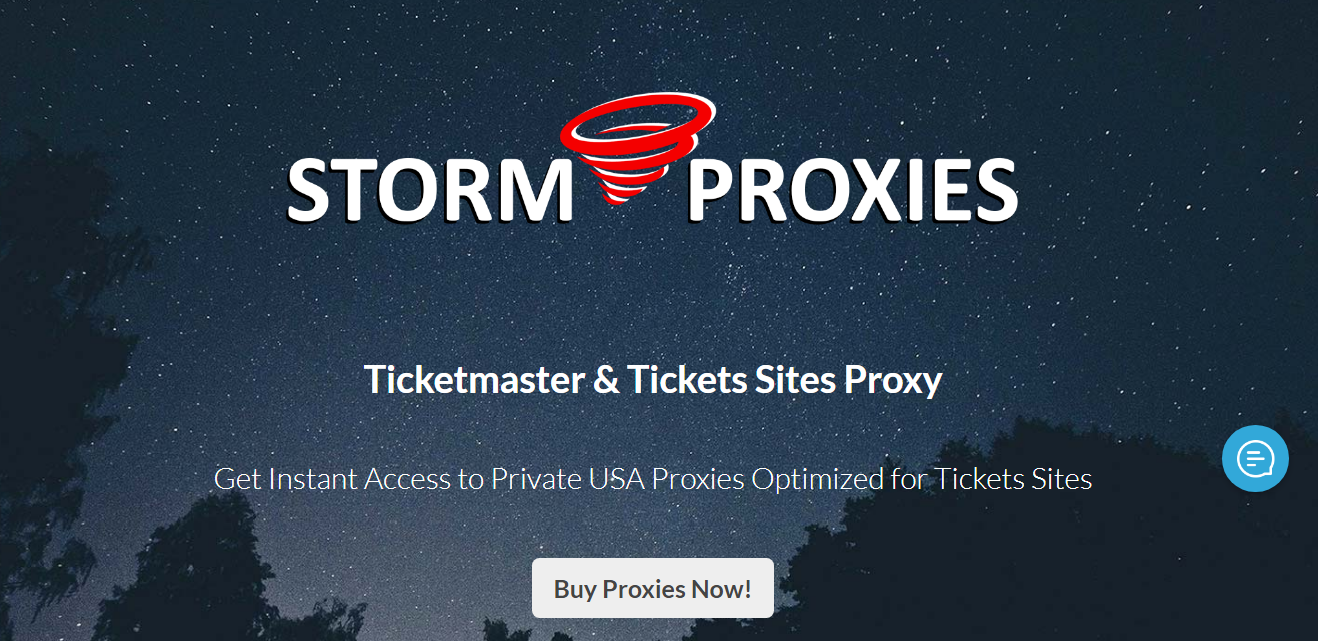
Its proxies are quite fast in comparison to residential proxies, and they are incredibly cheap and light on the wallet.
They provide excellent customer service and are efficient and effective for web scraping operations. However, their coverage across regions, geo-targeting options, and authentication techniques, among other things, are severely limited.
Storm Proxies has to be the cheapest residential proxy service among those that perform.
Premium providers argue that residential proxies are inherently expensive because of the reliability and confidence they have earned. Residential proxies can be obtained without emptying your cash, thanks to Storm Proxies.
Storm Proxies, unlike other major competitors in the sector, does not have complex mechanisms to make things easier for its clients, such as browser extensions and APIs that developers may use.
It has to be one of the few providers that take a straightforward approach. However, simplicity also means ease of use.
Storm Proxies undoubtedly falls short of the high standards that premium suppliers set.
It is, nevertheless, usable in its own right due to its cost and scraping performance. If the disadvantages aren’t a major worry, you can purchase their plan.
3) Oxylabs
Oxylabs is a web data extraction platform that offers dedicated proxy services for email protection, market research, product page intelligence, SEO monitoring, pricing intelligence, ad verification, and travel fare aggregation, among other things.
Users benefit from data center proxies’ capabilities, such as private IP authentication, speed, and anonymity.
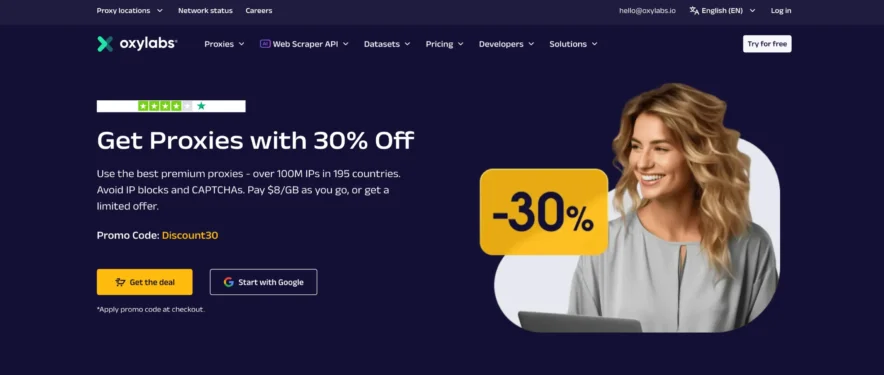
Residential proxies are completely anonymous and help users retrieve accurate, localized information from search engines.
A real-time crawler facilitates data extraction from search engines and e-commerce websites, as well as heavy-duty data retrieval tasks.
It has a track record of delivering 100% of data and offers scalable solutions for businesses of all sizes.
Oxylabs can process tens of millions of inquiries daily, including gathering and analyzing competitor data, defending websites against malware and counterfeiting, anonymously reviewing advertiser pages, and tracking price changes across the internet.
Simply select the proxy sites and the number of IPs. The price per proxy starts at $1.78. You can choose from a list of 100 IPs to begin with.
Oxylabs also has a proxy management Chrome add-on that works with any proxy service. Oxylabs Proxy Manager is a free utility available in the Chrome Store, which you can install on your browser.
Regarding customer service, Oxylabs provides live chat assistance 24 hours a day, 7 days a week, if you need to speak with a live person immediately.
You can also contact their sales personnel via email or look through their documentation and FAQs for any questions.
4) SOAX
SOAX is known for its highly curated and clean proxy infrastructure, offering over 155 million residential and mobile IPs with a focus on reliability and precise geo-targeting.
This provider excels at offering granular control over locations—right down to the city or ISP level—allowing for ultra-targeted data extraction.
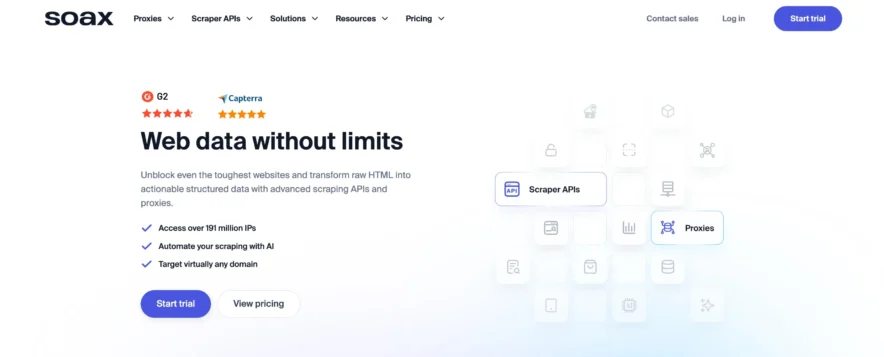
SOAX takes pride in maintaining a clean IP reputation, which reduces the risk of blacklisting and improves long-term performance for users.
This makes it an excellent fit for web scraping, SEO tracking, affiliate testing, and competitive intelligence where IP integrity matters.
Compared to Decodo, SOAX’s dashboard is more intuitive, offering detailed traffic stats, session controls, and usage tracking.
While it doesn’t have as many pre-built tools as Bright Data, its ease of integration with popular scraping frameworks (like Python, Puppeteer, and Selenium) makes it popular among developers and data teams.
Its trial offer also lets you test its services with minimal investment, which is great for small- to medium-sized businesses.
5) IPRoyal
IPRoyal positions itself as one of the most affordable proxy providers while still maintaining a decent level of service and reliability.
It offers a broad range of proxy types, including residential, datacenter, sneaker, and mobile proxies, which caters to a wide audience—from casual users and sneakerheads to small businesses and marketers.
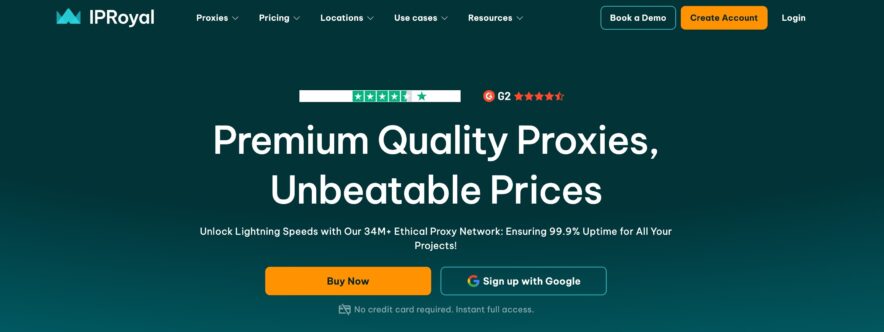
One of IPRoyal’s standout features is its pay-as-you-go pricing, which offers greater flexibility than providers like Decodo, which typically operate on monthly subscriptions.
Although its proxy pool isn’t as large as Bright Data’s or Oxylabs, the quality is surprisingly good for the price point, and the IPs are ethically sourced.
IPRoyal’s Royal Residential Proxies are particularly praised for low latency and high anonymity.
The dashboard is easy to navigate, and support is responsive for a budget provider. For freelancers, start-ups, or users new to proxy technology, IPRoyal is a solid Decodo alternative that won’t break the bank.
6) NetNut
NetNut offers a unique architecture in the proxy space by leveraging direct ISP connections, significantly increasing connection speeds and reducing the latency often experienced with traditional residential proxies.
This infrastructure allows users to access real-time data more efficiently, making NetNut an excellent option for SEO monitoring, e-commerce intelligence, and ad verification.
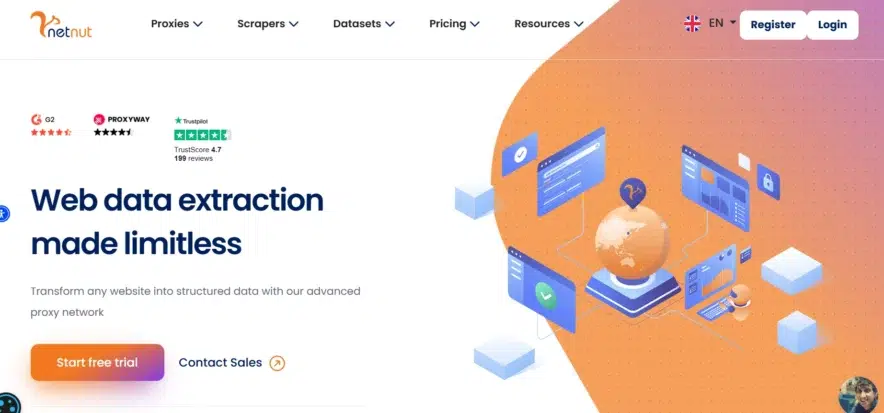
With support for static and rotating residential proxies, plus mobile and datacenter options, NetNut is flexible enough for both small and enterprise clients.
Unlike providers who rely on peer-to-peer networks, NetNut’s proxies are hosted directly through ISPs, reducing the risk of proxy bans and improving session stability.
Their 7-day free trial is tailored for businesses, giving you enough time to evaluate their performance across a range of use cases.
While NetNut may not have as large a pool as Bright Data, its unique infrastructure, high reliability, and fast performance make it a smart choice for users who want speed and stealth over volume.
7) LunaProxy
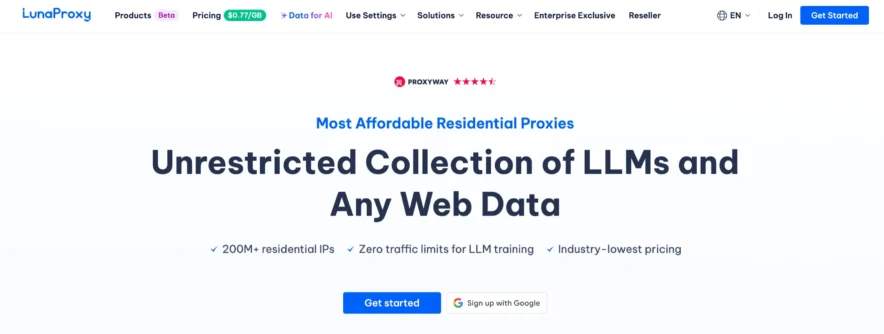
LunaProxy has quickly emerged as a top choice for users seeking a balance between affordability and performance.
With over 200 million residential IPs, it rivals even the largest players in terms of scale.
What makes LunaProxy particularly attractive is its flexible pricing plans, including options to pay per GB or choose from high-volume packages.
It also supports sticky sessions for up to 90 minutes, allowing for more consistent scraping operations.
LunaProxy is great for tasks such as market research, social media automation, and ad intelligence, especially when operating at scale but within a tight budget.
Their proxy dashboard is beginner-friendly, offering fast setup and access to usage analytics, making it appealing for those new to proxies.
While it may not have the same enterprise polish or support systems as Oxylabs or Bright Data, LunaProxy still delivers high success rates and reliable service, making it a compelling Decodo alternative for small businesses and growth-stage startups.
Quick Links:
- Decodo Review
- Decodo Pricing Plans
- Decodo Coupon Code
- Best Germany Proxies
- Top Oxylabs Proxies Alternatives
Conclusion: Decodo Alternatives 2026
In conclusion, Decodo offers a reliable and secure solution for those seeking a professional proxy service that is both safe and efficient.
However, various alternatives are available to suit different needs and budgets.
From free tools to dedicated services, users should weigh their options carefully before selecting a proxy provider. Ultimately, the goal should be to find a solution that meets the user’s security and budget requirements.
Regardless of which provider is chosen, ensure the service offers a high level of security and privacy.
Additionally, researching the company’s policies and support services can help users decide on their proxy solution.
By considering these factors, users can select a reliable, secure, and cost-effective proxy provider that meets their needs.