TikTok For Business pricing is set through a real-time auction rather than a fixed monthly subscription. You only pay for the delivery that actually happens.
The platform sets a floor of more than $50 per day at the campaign level and more than $20 per day at the ad group level. Recent 2026 industry benchmarks commonly show costs in the range of $4 to $12 per thousand impressions and $0.30 to $1.50 per click.
These numbers shift with the campaign goal, geographic market, time of year, and how competitive the auction is at that moment. First-time advertisers may receive matching or percentage-based credits that reduce the net cash outlay on early campaigns.
There are no tiered subscription plans. The final amount you spend is controlled by the budget you enter and by how efficiently your ads perform.
In practice, most businesses find that a usable first test falls somewhere between several hundred and a few thousand dollars before clear patterns appear. A free organic profile can still be used at the same time as any paid activity.
Understanding the TikTok Advertising Platform
TikTok For Business is the official self-serve system for placing paid ads inside the TikTok app. Companies can run vertical video ads, boost organic posts as Spark Ads, or use collection-style formats.
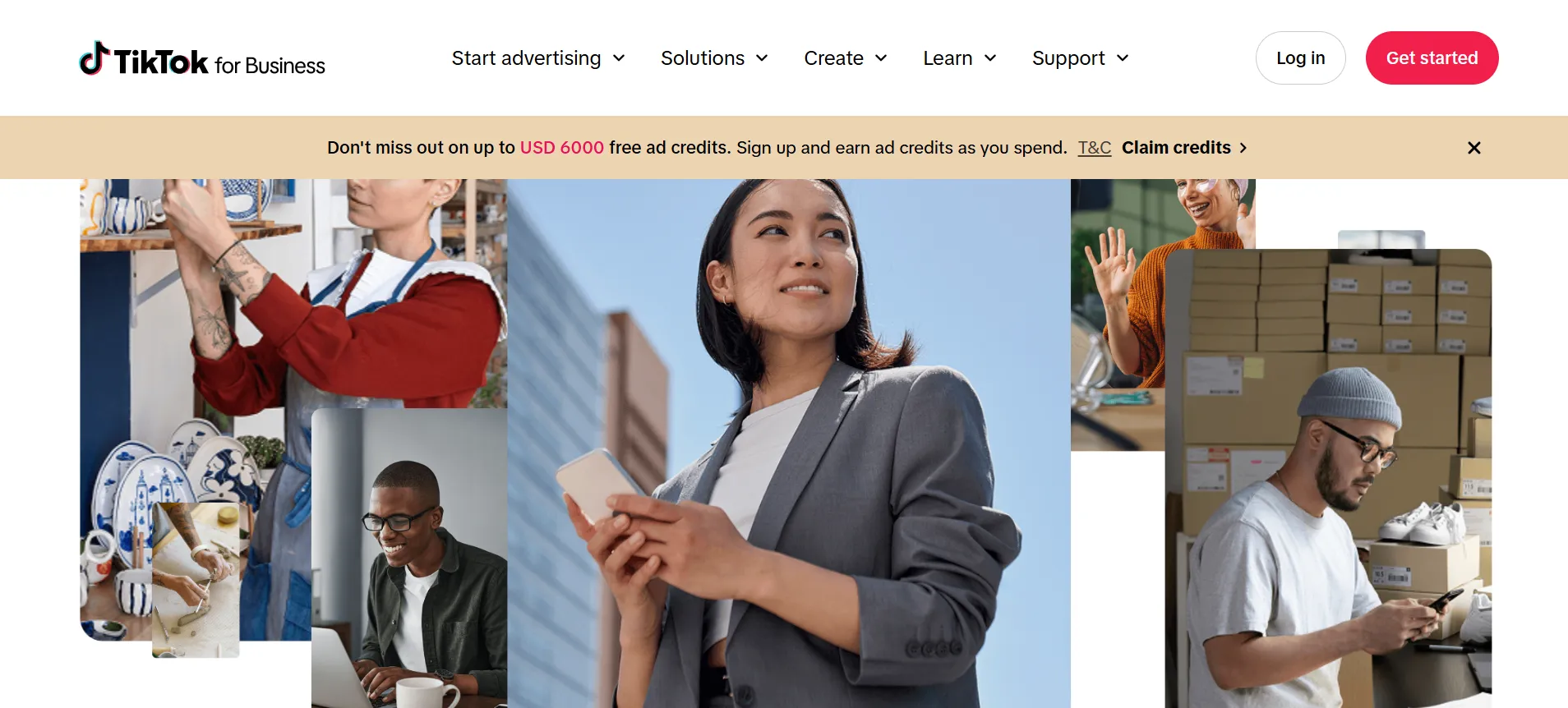
Audience controls include age, location, interests, behaviors, custom lists, and lookalike audiences. Live reporting shows views, clicks, and conversions as they happen. An ordinary free TikTok account continues to work for organic posts.
Paid campaigns are managed inside Ads Manager, where daily or total budgets can be changed or paused whenever needed. Most people begin with a limited test so they can see how the audience responds before raising the spend.
There is no recurring platform charge—only the cost of the ads that are shown. The system improves its delivery as it collects more data from the campaigns you run.
TikTok For Business Pricing Table 2026
TikTok for Business does not sell a fixed plan. You pay for ads based on your budget and bidding choices. The table below shows the main pricing factors side by side. Check TikTok’s business site for current rates before you set a budget.
Element | Common Figure | Details | Suitable Use |
|---|---|---|---|
Account setup | $0 | No charge | All users |
Campaign daily floor | Above $50 | Required minimum | Any campaign |
Ad group daily floor | Above $20 | Required minimum | Single ad set |
Typical CPM | $4–$12 | Auction-based | Awareness through conversion |
Typical CPC | $0.30–$1.50 | Auction-based | Traffic and clicks |
New-account credits | Matching or % based | First-time only | Initial campaigns |
30-day ad group example | ~$600+ | $20 × days | Standard test length |
Practical first-month range | $1,000–$3,000 | Depends on goal | Reliable learning |
Always verify the latest minimums and any current credit offers directly in Ads Manager. Prices tend to rise during high-demand periods and in more competitive countries.
Budget Floor Breakdown: TikTok For Business Pricing 2026
Every TikTok ad campaign has a minimum spend, called the budget floor. The breakdown below shows how that floor applies to each campaign type and ad account. Check TikTok’s business site for the current minimums, since they can change by region and over time.
Level | Daily Floor | Lifetime Rule | 30-Day Illustration | Comment |
|---|---|---|---|---|
Campaign | Above $50 | Above $50 total | Above $1,500 | When a campaign budget is used |
Ad group | Above $20 | $20 × days scheduled | Above $600 | Applied to each ad group |
Learning-friendly | Above the floor | — | $1,000–$3,000+ | Varies by target CPA |
Two ad groups | Above $40 combined | — | Above $1,200 | Frequent testing approach |
Three ad groups | Above $60 combined | — | Above $1,800 | Wider creative comparison |
These minimums exist so the system can collect enough data. Staying exactly at the floor often lengthens the period before stable results appear. Many advertisers therefore choose higher amounts to move through the learning stage faster.
Cost Ranges by Campaign Goal: TikTok For Business Pricing
Ad costs on TikTok depend on the goal you pick. Awareness campaigns usually cost less per result than sales campaigns. The ranges below show what to expect for each goal. Check TikTok’s business site for current figures, since prices shift with demand and season.
Goal | Common CPM Band | Common CPC Band | Rough 30-Day Minimum Test | Remarks |
|---|---|---|---|---|
Reach / Awareness | $4–$8 | Secondary metric | $600–$1,500 | Lowest cost impressions |
Traffic | $6–$10 | $0.30–$1.20 | $600–$2,000 | Site or profile visits |
Video Views | Low per view | — | $600–$1,500 | Focus on watch time |
Purchases / Conversions | $8–$14+ | $0.50–$1.50 | $1,000–$3,000+ | Action-optimized |
App Installs | $10–$16+ | Higher | $1,000–$3,000+ | Competitive category |
Lead Generation | Higher | Higher | $1,500–$4,000+ | Usually the highest |
These ranges come from 2026 benchmark collections and change with country, creative strength, and auction pressure. Markets such as the United States and United Kingdom generally sit at the higher end.
Campaigns optimized for conversions typically cost more per result because the system prioritizes users more likely to complete the desired action.
How the Auction Sets the Price
Enter a daily or lifetime budget and select a bidding approach.
The auction ranks ads using bid amount, relevance, and predicted action rate.
Charges apply only to the impressions, views, or clicks that are delivered.
Stronger creative and tighter targeting commonly produce lower effective costs.
The learning period requires steady spend before costs settle.
Campaigns can be paused at any moment to halt further charges.
Options such as lowest-cost or cost-cap bidding shape how the budget is used.
High relevance can reduce the price even in competitive auctions.
No published rate card exists. The total bill is simply the sum of auction charges up to the budget limit you entered. Ads that hold attention tend to receive more delivery at a better rate.
Tools Available at Every Budget Level
Once the minimums are met, every core tool is accessible. Larger budgets mainly increase delivery volume and speed up learning.
Vertical in-feed video ads placed among organic content.
Spark Ads that promote existing organic posts and attribute engagement back to them.
Collection and carousel formats for product displays.
Targeting by age, location, interests, and behaviors.
Custom and lookalike audiences built from pixel or engagement data.
Optimization for traffic, conversions, or app installs.
Live reporting on views, clicks, and conversions.
TikTok Pixel for tracking and retargeting.
Full ability to pause, raise, lower, or stop budgets.
Built-in creative tools and templates.
Frequency and placement controls.
Automated creative variations on supported campaigns.
Multiple ad groups inside one campaign for testing.
Scheduling and dayparting controls.
A smaller budget still unlocks every feature. The main difference is how much data is collected and how quickly the system learns. Raising the budget does not add new tools.
Impact of New-Advertiser Credits
First-time accounts that register through official entry points and meet a spend requirement inside a set window (commonly 30 days) can receive matching or percentage-based credits.
These credits lower the net cash cost of the media shown during that early period. The credit is usually applied after the window closes and expires after a limited time. No permanent free budget exists.
The underlying auction rates stay the same; the credit simply offsets part of the charges. On matched tiers the available media can nearly double while the credit is active. Most advertisers use this window to compare several creative approaches before regular rates apply.
Factors That Move the Final Cost
The daily or lifetime budget entered.
Length and consistency of delivery.
Chosen objective and bidding method.
Creative quality and relevance.
Audience size and level of competition.
Geographic market and seasonal demand.
Use of any new-advertiser credit.
Number of ad groups and creative variations tested.
Length of the learning period.
Pausing or adjusting campaigns.
Volume of results collected per ad group.
Quality of the landing page or app experience.
Time of day and day of the week.
How often creative is refreshed.
Pros & Cons: TikTok For Business Pricing 2026
Pros
- No recurring subscription charge.
- Budgets can be adjusted or paused freely.
- Competitive cost per impression and click in many verticals.
- Complete access to video formats, Spark Ads, and targeting.
- Total spend is capped by the budget you set.
Cons
- Steady spend is needed during learning.
- Daily minimums create a practical floor.
FAQs: TikTok For Business Pricing 2026
There is no fixed rate. 2026 benchmarks commonly show $4–$12 per thousand impressions and $0.30–$1.50 per click. Minimums are above $50 a day per campaign and above $20 a day per ad group. The actual amount depends on budget, goal, and performance.
No. Account creation and Ads Manager are free. Payment is only for the ad delivery that occurs up to the budget limit.
Meet or exceed the minimums, apply any available new-advertiser credit, and run long enough to collect data. Most useful tests spend above the absolute floor.
Yes. Eligible first-time accounts can receive matching or percentage-based credits when they meet the spend window. Check the official pages for current terms.
Quick Links:
Closing Summary: TikTok For Business Pricing 2026
TikTok advertising cost is determined by the auction and by the budget you choose. No monthly subscription exists. Minimums begin above $50 a day at campaign level and above $20 a day at ad group level.
Current benchmarks place typical costs in the $4–$12 CPM and $0.30–$1.50 CPC range. New-advertiser credits can reduce the cash cost of early campaigns. All main formats, targeting options, and reporting tools become available once the minimums are met.
Begin with a budget that supports steady delivery, use any available credit, and review results before raising spend. Verify the latest minimums and offers inside Ads Manager.
For most businesses the real cost is the amount required to gather usable data, offset by any credit that extends the media. Spending stays inside the daily budget you set and can be stopped at any time.
Creative strength and targeting remain the largest influences on efficiency. Larger budgets speed learning but do not add features beyond those already available above the platform floors.
Preparing several creative options ahead of time usually improves the value obtained from the first weeks of spend because the system can compare results more quickly.