Are you also confused between Residential Proxies Vs Datacenter Proxies 2026
Struggling to know which one is better and why?
As we all know, your IP address is your online identity, and the websites you visit learn about you based on your IP address.
Thus, when working on tasks that require you not to disclose your information, you utilize a proxy server or VPN that displays a different IP address from a different location.
There are several reasons why you may need a proxy.
Occasionally, this is because you prefer not to be readily identifiable when using online resources, or because you do not want to raise any red flags from websites such as Craigslist, Ticketmaster, StubHub, or Nike, among others.
You have a variety of options when it comes to selecting a proxy IP address to use.
Whatever the reason, when utilizing a proxy server, you must use one of two types: datacenter proxies or web proxies or backconnect proxies for residential use.
In the previous piece, I discussed the distinction between IPv4 and IPv6 addresses, which categorize IP addresses according to their technical standards.
Today, I’ll compare residential IP addresses to data center IP addresses, which are classified according to the type of internet connection they use.
Before we delve into the details of the distinction between the two, let’s examine what they are.
What Are Residential Proxies and Why Do You Need Them?
Residential proxies allow you to browse the web as a genuine user from a specific location (country, city, or cell carrier). Proxies are middlemen that shield users from unfiltered online traffic.
They operate as a buffer and hide your IP address simultaneously. Proxies are temporary IP addresses issued by the supplier to users.
All user search queries are sent via the proxy IP to the proxy server, which then routes them to the resource server.
This conceals the user’s behavior and maintains the user’s anonymity.
In essence, residential proxies transport your internet traffic via an intermediate server.

The proxy server provides you with a secondary IP address via which all server queries are routed.
Please note that the alternative IP address provided is a valid IP address for a genuine device.
When you submit a search request, it is sent via your residential proxy to the resource server.
This masks your true IP address, and websites treat your behavior as if it were that of any other normal user.
Depending on the provider, an ideal residential proxy package should have the ability to target specific countries and regions, and all requests should be encrypted using HTTPS for additional protection.
So, what are some of the applications for residential proxies?
Residential IP addresses are more authentic and trustworthy than other forms of proxies.
Residential proxies can be used for various purposes, depending on your browsing needs. Consider the following applications of residential proxies.
1. Management of Social Media:
There is no denying social media’s importance in current digital marketing.
It is now feasible to establish and maintain many social media accounts effortlessly using residential proxies.
3. Marketing Using The Internet:
This is a robust platform. Site owners are always looking for ways to stay one step ahead of their competition.
In such competitive environments, the only way to survive is to research your rivals’ strategies.
Maximize your marketing potential by using the power and promise of residential proxies.
4. Access To Ticketing Websites:
There is no better method for scraping ticket websites than using residential proxies.
They will offer you the necessary access to compare ticket rates across many sources effortlessly.
Numerous ticket proxies are accessible; however, the majority of them are data center proxies.
Datacenter IP addresses are clearly identifiable, and ticketing systems quickly detect and prohibit individuals from using them.
The majority of websites, including ticket websites, rely on residential proxies.
Utilize them to get all the information you want from various ticket sources.
5. Obtaining Access To Sneaker Websites:
Shoe locations are often closely tracked due to the prevalence of identity theft, design duplication, and buying restrictions in the sector.
Nonetheless, these sites provide access to all the information you may desire.
Residential proxies are an effective approach for verifying advertisements and gaining access to sneaker websites. Proxies for sneakers are overrated.
In reality, sneaker proxies may be used as IP proxies for data centers.
However, even with your shoe bots, Nike, EastBay, and Supreme Shoes continue to ban sneaker proxies.
Residential proxies are a workaround for this issue. They are more trustworthy and less likely to be blacklisted by famous shoe websites.
6. Market Price Surveillance:
To retain customers, it is crucial to monitor and stay informed about market price trends.
You do not want to overprice your items and frighten away prospective consumers, nor do you want to underprice your products and cause people to question their quality.
You will be able to utilize sales intelligence technologies to obtain rapid market pricing updates while using residential proxies.
Your sales intelligence software’s data collection should be properly examined.
If this is not done correctly, you are likely to wind up with incorrect price information, which may be very detrimental to your business’s sales efforts.
Generally, residential proxies allow you to utilize a range of sales intelligence tools.
With this information, you can conduct price monitoring, comparison, and research to determine the appropriate pricing for your items.
8. Verification Of Advertisements:
This is a highly typical application of residential proxies, as they enable you to monitor and verify advertisements shown on your sites, allowing you to identify and prevent questionable advertisements.
Without sufficient AD verification, your rivals may employ deceptive tactics to harm your brand’s image.
It is essential to select a residential proxy supplier that is straightforward to use.
The proper platform should allow you to pick between residential and mobile IP addresses for reliable ad tracking, media monitoring, and compliance with content standards.
All of these are valid reasons to use residential IP addresses for ad verification.
What Are Datacenter Proxies and Why Do You Need Them?
Proxy servers in data centers are distant servers to which you may connect if you need to conceal your IP address for any purpose.
These are shared servers, which means that other users will connect to the same proxy at the same time as you.
This results in some issues — but let’s start with the benefits of datacenter proxies.
To begin, you must determine the number of IP addresses you need and from which countries they should originate.
If you’re having difficulty understanding your requirements, you may contact us, and we’ll examine your situation to determine the best course of action.
Then, you may choose the price plan that is most appropriate for you.
Informatica offers various programs that enable you to obtain as many IP addresses as needed while staying within your budget.
After selecting a plan, you’ll have access to data center proxies.
Then, you can choose the needed location, connect to a proxy, and enjoy an unrestricted internet experience.
If you encounter any issues when using Infatica’s datacenter proxies, we are always here to assist you.
You may submit a ticket outlining your issue, and we will respond promptly. We would be happy to assist you and answer any questions you may have.
The applications for data center proxies are almost limitless. The following are the most popular:
2. Resolve An IP Ban:
If a certain website has blocked your IP address, datacenter proxies will allow you to evade the limitation.
When you connect to a proxy server, you will get its IP address and use it to conceal your actual one.
As a result, the destination site will be unaware that you, the prohibited user, are viewing the material.
3. Advertisements Confirmation:
You can ensure that the advertisements you’ve created to target consumers in various areas are shown appropriately.
To do this, you can utilize data center proxies to spoof your location and view ads through the eyes of your target audience.
In this manner, you can naturally prevent ad fraud.
4. Academic Investigations:
Numerous websites restrict access to users from certain countries.
If you run across such a restriction while doing research, you may simply connect to a data center proxy in the relevant country to obtain access to the material.
Additionally, data scientists may use data center proxies to do online scraping, particularly on academic data.
Although residential proxies are preferable for this task, data center proxies may be more appealing due to their reduced pricing.
5. Marketing Research on a Large Scale:
By switching between data center proxies in various countries, you may do more thorough market and competition research and better understand the overall picture.
The information you collect will enable you to develop a more sustainable marketing plan.
6. Examine Your Competitors’ Advertisements:
By using data center proxies, you may monitor your rivals’ advertisements for various target populations.
Simply switch between countries to observe where your competitors attempt to establish a foothold in the industry.
This technique may provide several beneficial insights.
7. Geo-Restricted Content Access:
Datacenter proxies enable you to spoof your location by using the proxy server’s IP address.
If you need access to material that is restricted in your country, you can simply connect to a data center proxy located in the required region.
After that, you’ll be able to visit the website for which you’ve been searching.

Difference Between Residential Proxies Vs Datacenter Proxies 2026
When you need to use a large number of proxies, you’ll almost certainly need to use a bot to do the majority of the work for you.
You’ll likely conduct a bulk search, gathering data from multiple websites or similar sources.
You may have progressed to a large, automated application that requires a significant amount of web crawling.
Still, this application is unlikely to be effective unless you understand how to stay a strategic distance from the bits you’ll keep running into while slithering.
This is why understanding the distinction between back-connect and private proxies is critical.
The point is that you’d rather not have your proxies constrained when they’re slaving away for you at the risk of their own lives.
If they are limited, your data collection will not be completed, and if your data fluctuates from minute to minute, your table will become worthless.
Do you know how perplexing it is when you are attempting to download something and someone either disables the Wi-Fi or your PC shuts down automatically?
It’s comparable—for your projects to use it, the majority of the material must be downloaded in its entirety.
Almost certainly, you’ll discover the error at the time of your due date.
You’ll need to crazily configure new proxies to complete the data collection, at which time your initial gathering will have altered, and you’ll have wasted an entire day’s labor.
While the scenario outlined above may not occur, it is clear that it is quite discouraging to discover that your proxy’s IP address has been blocked just as you are about to do some task.
In the best-case scenario, it will waste your opportunity, require you to devote more resources than necessary to remediate the damage, and hinder your task from being readily directed.
That is why it is crucial to ensure that you can function without your IPs being limited.
Backconnect proxies operate in a manner similar to that of standard proxies.
The designs are indistinguishable, and the benefits and drawbacks are, for the most part, identical.
The primary distinction between a regular proxy and a back-connect proxy lies in the technology itself.
Unlike conventional proxies, backconnect proxies are not comprised of a single unit that advances information and provides it with numerous referrers and headers but rather a slew of diverse arrangements and separate computers coupled together.
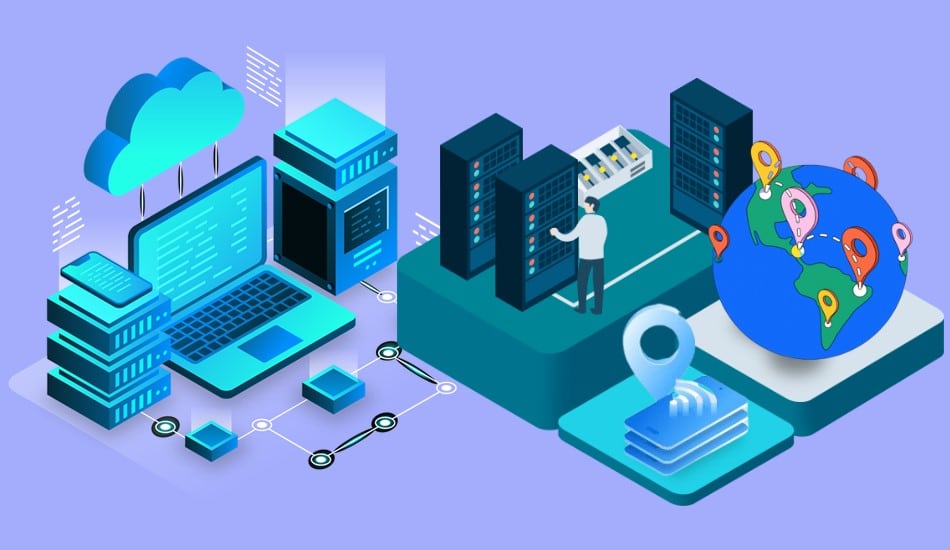
You may have 50, 500, or 50,000 proxies that are all linked and accessible via a single entry point or “back connect proxy.”
A backconnect proxy is required to adjust your IP and referrer information, exactly as you would with a conventional proxy server.
The major contrast between the two types of proxies is often difficult to perceive, which is why an example has been provided below.
With a standard proxy server, you will transfer data from point A to point B.
Each relationship established using the proxy will result in the value B.
Whether you determine that you need a list of rotating proxies or not, it will be an unflinching example of B, then C, then D, and finally back to B.
These instances, cycles, and perceptions are far from difficult to follow.
There are back-connect proxy companies that claim to have databases comprised of hundreds of thousands of proxies, with upwards of 100,000 available on any given day.
Several vendors restrict access to proxies for certain regions, such as the United States, and influence the use of different protocols, including HTTP, SOCKS, and HTTPS.
The primary benefit of employing a backconnect proxy pool is that you will be able to make many more requests per second than you would with a single association.
If Bing determines that several affiliations originate from server A without interruption, the site may naturally require a “CAPTCHA” for all activities involved.
Whether you are able to transfer it via your proxies or not, certain organizations will impose a rate restriction.
If you’re using a backconnect proxy, each connection will be routed through a different IP address and will arrive at the site via a distinct connection point.
There are two significant downsides to using a backconnect proxy pool.
The first consideration is financial. Obtaining a list of back-connect proxies is often quite expensive since you get access to a large number of IPs.
The second disadvantage is that the proxies you collect are subject to fluctuation.
When you get back to connecting proxies from a reputable vendor, you will be able to scrape data from web indexes and the internet without fear of your IP address being blacklisted.
This is made possible by the advanced innovations available today, which provide you with a vast number of completely private IP addresses that can be redirected whenever you initiate a request.
Backconnect proxies from reputable businesses will remain anonymous and include programmed IP transformation in each record.
The rotating proxies allow you to get far more pursuit requests each summons than you would with a single proxy.
To put it another way, the web index or website page you are scratching will see solicitations as coming from a variety of locations rather than a single IP port, thus reducing your chances of being banned.
Quick Links:
- Private Residential Proxy Providers(Residential Proxies )
- Best Datacenter Proxy Services: (Top Datacenter Proxies Providers)
- Residential Proxies Vs ISP Proxies: Key Differences Explained
Conclusion: Residential Proxies Vs Datacenter Proxies 2026
After reading this, the primary distinction between the two kinds of proxies should be evident.
Depending on the nature of your proxy need, you may choose any form of proxy.
If you’re looking for a fast and dependable proxy connection for online business, data center proxies should be your first choice.
On the other hand, if you want to appear more natural and utilize other IP addresses or jobs for your projects, such as account creation, web scraping, and more, you may consider using residential proxies.
To conclude, proxies are your greatest friend if you wish to conceal your IP address from the online world for any reason.
Generally, data center proxies perform well.
However, on certain websites, IP filtering may result in datacenter IPs being red-flagged, necessitating the usage of residential proxies.