Apple’s iPhone has been a game-changer since its debut in 2007, blending cutting-edge technology with sleek design to captivate millions.
In 2025, the iPhone 16 series continues to dominate, while rumors about the upcoming iPhone 17 series, including the ultra-thin iPhone 17 Air, spark excitement.
Alongside, Apple’s latest MacBooks and AirPods strengthen its ecosystem, offering seamless integration and innovation.
This article explores the latest iPhone 16 statistics, previews the iPhone 17 lineup, and dives into the newest MacBook and AirPods developments, comparing iPhone with Android for a full picture.
Packed with detailed data, tables, and insights, let’s see why Apple’s products keep fans hooked.
iPhone 16 Key Stats: Powering the Present
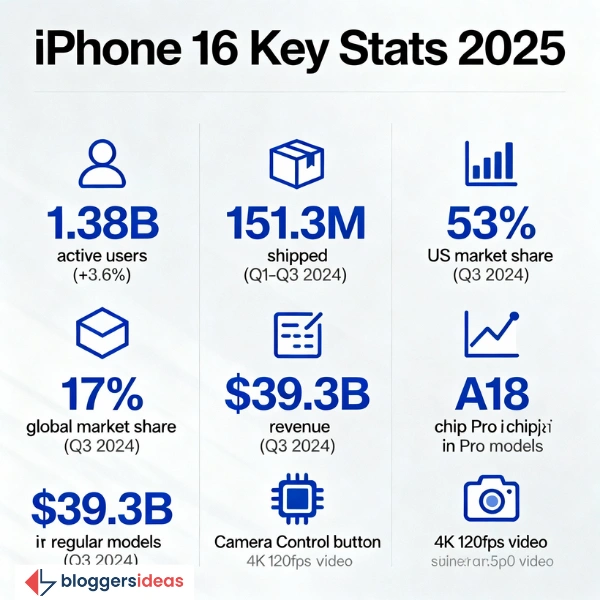
The iPhone 16 series, launched in September 2024, builds on Apple’s legacy with impressive upgrades. Here’s a snapshot of its 2025 performance:
- 1.38 billion active iPhone users worldwide, up 3.6% from 2023.
- 151.3 million iPhones shipped in Q1–Q3 2024, matching 2023’s pace.
- 53% market share of US smartphone sales in Q3 2024.
- 17% global smartphone market share in Q3 2024.
- $39.3 billion in revenue from iPhone sales in Q3 2024.
- A18 chip powers the iPhone 16 and 16 Plus, with the A18 Pro in Pro models, boosting Apple Intelligence.
The iPhone 16 series shines with features like the Camera Control button, 4K 120fps video, and longer battery life, making it a favorite for tech enthusiasts.
iPhone Users Worldwide: A Growing Empire
Apple’s global iPhone user base stands at 1.38 billion in 2023, a 3.6% increase from 1.33 billion in 2022. Since 2008, when just 10 million people used iPhones, Apple has grown its reach exponentially, driven by the iPhone 16’s AI-powered features and robust ecosystem.
| Year | iPhone Users Worldwide |
| 2008 | 10 million |
| 2012 | 206 million |
| 2016 | 710 million |
| 2020 | 1.042 billion |
| 2023 | 1.382 billion |
Source: Statista
The iPhone 16’s A18 chip, 48MP Fusion camera, and Apple Intelligence features (like Visual Intelligence via the Camera Control button) keep users engaged. Posts on X highlight the iPhone 16 Pro’s larger displays (6.3” and 6.9”) and 48MP Ultra Wide camera, cementing its appeal.
Also read about: Smartwatches Statistics
iPhone Users in the US: Dominating the Market
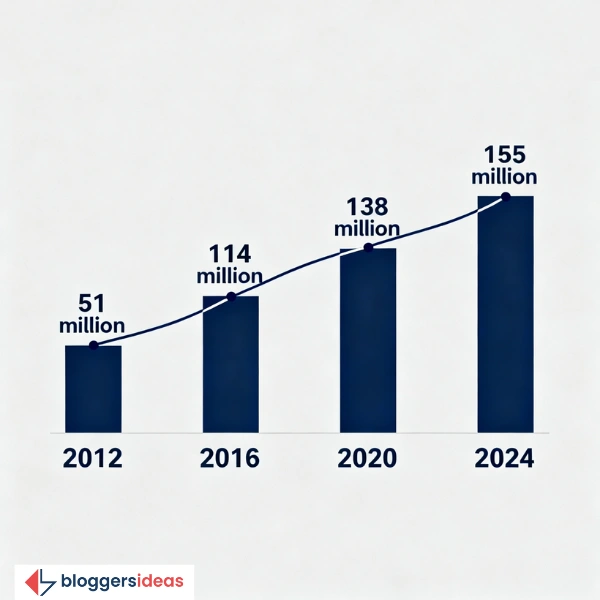
In the US, 155 million people use iPhones in 2024, up 1.3% from 153 million in 2023. This reflects a 76.13% growth since 2014, when 88 million Americans were iPhone users. The iPhone 16’s premium features, like Spatial Audio and faster charging, drive its 61.3% share of the US smartphone market.
| Year | iPhone Users in the US |
| 2012 | 51 million |
| 2016 | 114 million |
| 2020 | 138 million |
| 2024 | 155 million |
Source: StatCounter
The iPhone 16’s Action button, 25W MagSafe charging, and IP68 water resistance make it a top choice for US consumers, especially younger users who value its status and ecosystem.
iPhone 16 vs. Android: The Smartphone Showdown
The iPhone 16 faces stiff competition from Android, which dominates globally. Here’s how they stack up:
Global Market Share
- iOS: 27.73% in 2024, down from 29.02% in 2023.
- Android: 71.67% in 2024, up from 70.26% in 2023.
Android’s lead comes from its wide range of devices, from budget-friendly options to flagships like the Samsung Galaxy S25. The iPhone 16, starting at $799, targets the premium market with its polished iOS experience.
| Year | iOS Market Share | Android Market Share |
| 2016 | 19.29% | 69.11% |
| 2020 | 26.28% | 73.06% |
| 2024 | 27.73% | 71.67% |
US Market Share
In the US, iOS holds 57.09% of the mobile OS market in 2024, while Android has 42.62%. The iPhone 16’s ecosystem, including AirPods and Apple Watch integration, drives its dominance.
| Year | iOS Market Share (US) | Android Market Share (US) |
| 2018 | 54.82% | 44.73% |
| 2020 | 59.54% | 40.2% |
| 2024 | 57.09% | 42.62% |
Source: StatCounter
iPhone 16 Strengths
- Ecosystem: Syncs seamlessly with AirPods, Apple Watch, and MacBooks.
- Performance: The A18 chip is up to 80% faster than the A13 Bionic, excelling in gaming and AI tasks.
- Camera: 48MP Fusion camera and 4K 120fps video with Spatial Audio.
- Updates: iOS updates for 5–6 years, unlike many Android devices.
Android Advantages
- Affordability: Devices like the Galaxy A15 cost as little as $100.
- Customization: Android’s flexibility appeals to tech enthusiasts.
- Variety: Brands like Samsung, Xiaomi, and Google offer diverse options.
The iPhone 16’s premium appeal gives it an edge in the US, but Android’s global dominance persists due to its accessibility.
iPhone 16 Shipment Volumes: Steady Demand
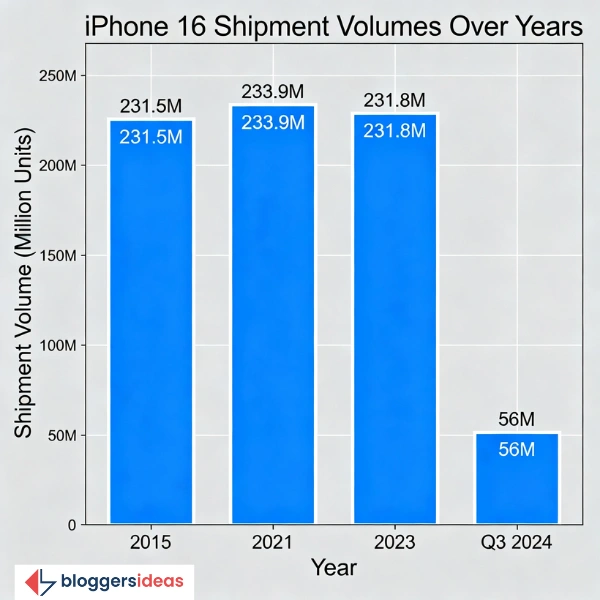
Apple shipped 151.3 million iPhones in Q1–Q3 2024, with 56 million in Q3 alone, driven by the iPhone 16 launch. The peak year was 2021, with 233.9 million units shipped. Posts on X suggest iPhone 16 shipments could hit 90 million by year-end, up double digits year-over-year, fueled by Apple Intelligence hype.
| Year | iPhone Shipments |
| 2015 | 231.5 million |
| 2021 | 233.9 million |
| 2023 | 231.8 million |
| Q3 2024 | 56 million |
Source: Statista, IDC
The iPhone 16’s 6.1” and 6.7” displays, A18 chip, and Camera Control button keep demand strong, especially during holiday seasons.
iPhone 16 Market Share: Regional Breakdown
Worldwide
The iPhone 16 helped Apple secure a 17% share of global smartphone shipments in Q3 2024, up from 16% in Q2.
| Date | iPhone Worldwide Market Share |
| Q3 2022 | 16% |
| Q3 2023 | 16% |
| Q3 2024 | 17% |
Source: Counterpoint Research
United States
In the US, iPhones hold a 53% market share in Q3 2024, peaking at 62% in Q4 2023 due to holiday sales.
| Date | iPhone US Market Share |
| Q4 2020 | 65% |
| Q3 2023 | 53% |
| Q3 2024 | 53% |
China
In China, iPhones have a 14% market share in Q3 2024, down from 17.3% in 2023, facing competition from Huawei and Xiaomi.
| Date | iPhone China Market Share |
| 2020 | 11.1% |
| 2023 | 17.3% |
| Q3 2024 | 14% |
iPhone 17: What’s Coming in 2026
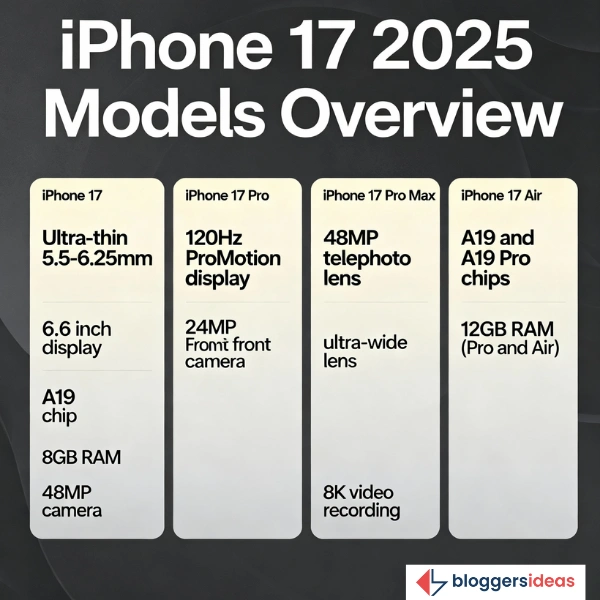
Set to launch in September 2025, the iPhone 17 lineup promises big changes, including the iPhone 17 Air, a sleek replacement for the Plus model. Here’s what rumors suggest:
- Models: iPhone 17, iPhone 17 Pro, iPhone 17 Pro Max, iPhone 17 Air.
- iPhone 17 Air: Ultra-thin (5.5–6.25mm), 6.6” display, A19 chip, 8GB RAM, single 48MP camera.
- Display: All models get 120Hz ProMotion, a first for non-Pro iPhones.
- Camera: 24MP front camera across all models; Pro models get 48MP Telephoto and Ultra Wide lenses, possibly with 8K video.
- Performance: A19 (standard) and A19 Pro chips, with 12GB RAM for Pro and Air models.
- Design: iPhone 17 Air and Pro models feature a rectangular camera bar; standard iPhone 17 keeps the vertical dual-camera setup.
- Connectivity: Apple’s C1 modem in iPhone 17 Air, Wi-Fi 7 chip across all models.
- Price: iPhone 17 Air may start at $899, Pro Max at $1,299.
The iPhone 17 Air’s slim design and 2,800mAh battery raise concerns about battery life, but Apple’s focus on efficiency could offset this. Posts on X highlight excitement for the iPhone 17’s 35W charging and Wi-Fi 7 support.
Latest MacBook Stats: M4 Powerhouse
Apple refreshed the MacBook Air in March 2025 with the M4 chip, offering a performance boost and better Apple Intelligence support. Available in 13” and 15” models, it’s deep in mass production, with no major design changes.
- Performance: M4 chip delivers up to 1.8x faster CPU performance than M1, excelling in AI tasks.
- Battery Life: Up to 18 hours, improved by M4’s efficiency.
- Sales: MacBooks contributed $7.6 billion to Apple’s Q3 2024 revenue.
- Market Share: Apple holds 10.8% of the global PC market in 2024, trailing Lenovo and HP.
| Year | Mac Revenue | Apple’s PC Market Share |
| 2020 | $25.6 billion | 8.7% |
| 2023 | $29.4 billion | 10.1% |
| 2024 Q3 | $7.6 billion | 10.8% |
Source: Statista
The MacBook Air’s lightweight design and M4 chip make it a favorite for professionals and students, rivaling Windows laptops with Intel and AMD chips.
AirPods Stats: Sound Innovation
Apple updated the AirPods Max with USB-C and a firmware update in 2024, adding lossless audio and ultra-low latency. Rumors suggest AirPods Pro 3 in 2025 with a slimmer design, new H-series chip, and potential health features like heart rate monitoring.
- Sales: AirPods generated $5.2 billion in Q3 2024.
- Market Share: Apple holds 35.4% of the global true wireless earbuds market in 2024.
- Features: AirPods Max supports Spatial Audio; AirPods Pro 3 may add IR cameras by 2026.
| Year | AirPods Revenue | Market Share |
| 2020 | $12.8 billion | 31.2% |
| 2023 | $19.3 billion | 34.9% |
| 2024 Q3 | $5.2 billion | 35.4% |
Source: Counterpoint Research
AirPods dominate over competitors like Sony and Bose, thanks to seamless iPhone integration and features like Audio Mix.
Why Apple’s Ecosystem Wins
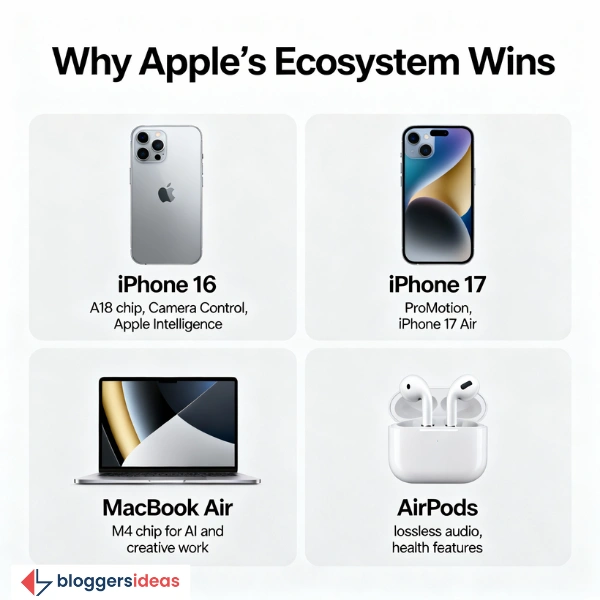
Apple’s strength lies in its ecosystem:
- iPhone 16: A18 chip, Camera Control, and Apple Intelligence make it a powerhouse.
- iPhone 17: Promises ProMotion for all models and a sleek iPhone 17 Air.
- MacBook Air: M4 chip boosts performance for AI and creative tasks.
- AirPods: Lossless audio and potential health features keep them ahead.
The iPhone 16’s 4K 120fps video, MacBook’s M4 efficiency, and AirPods’ Spatial Audio create a cohesive experience that Android, Windows, and rival earbuds struggle to match.
Challenges and Competition
- iPhone: High prices and incremental upgrades face criticism; Huawei challenges in China.
- MacBook: Competes with Windows laptops offering similar performance at lower prices.
- AirPods: Sony and Bose offer strong noise cancellation, but lack Apple’s ecosystem.
iPhone vs. Android: A Deeper Comparison
Let’s dive deeper into what sets iPhone and Android apart, beyond market share:
Performance and Hardware
- iPhone: Apple’s A-series chips (like the A17 Pro in the iPhone 15 Pro) consistently outperform most Android chips in speed and efficiency. The iPhone’s optimized hardware-software integration ensures smooth performance, even on older models.
- Android: Flagships like the Samsung Galaxy S24 (with Snapdragon 8 Gen 3) are powerful, but mid-range and budget Android devices often lag. Performance varies widely across brands.
Software Experience
- iPhone: iOS is polished, intuitive, and uniform across devices. Updates roll out simultaneously to all supported models, often for 5–6 years.
- Android: Offers more customization but can feel fragmented due to manufacturer skins (e.g., Samsung’s One UI, Xiaomi’s MIUI). Updates depend on the brand, with many devices stuck on older versions.
Camera Quality
- iPhone: Known for consistent, high-quality photos and videos, especially in low light. The iPhone 15 Pro Max’s 5x telephoto lens is a standout.
- Android: Top Android phones (e.g., Google Pixel 9, Samsung Galaxy S24 Ultra) rival or surpass iPhones in specific scenarios, like computational photography or zoom. Budget Androids, however, can’t compete.
Price and Value
- iPhone: Starts at $799 for the iPhone 15, with Pro models exceeding $1,000. You pay a premium for the brand and ecosystem.
- Android: Offers options for every budget, from $100 to $1,800. Brands like Xiaomi and OnePlus provide flagship-level features at lower prices.
User Loyalty
- iPhone: Apple’s ecosystem creates a “lock-in” effect. Once you’re invested in iCloud, Apple Music, or an Apple Watch, switching to Android feels like a hassle.
- Android: Users have more freedom to switch brands, but loyalty to specific manufacturers (e.g., Samsung) is strong in some markets.
The choice between iPhone and Android often comes down to priorities: iPhone for simplicity and status, Android for flexibility and affordability.
Why the iPhone Remains Irresistible
The iPhone’s allure goes beyond specs. Here’s why it captivates users:
- Design: From the iPhone 4’s glass-and-metal elegance to the iPhone 15’s titanium frame, Apple’s design sets trends. The flat edges, vibrant displays, and premium materials scream luxury.
- Ecosystem: The seamless connection between iPhone, Apple Watch, AirPods, and Mac makes daily tasks effortless. Features like AirDrop and Continuity are game-changers.
- Brand Appeal: Owning an iPhone signals success and tech-savviness, especially among younger users. It’s a status symbol in many cultures.
- Longevity: iPhones age gracefully, with software updates keeping older models relevant. A 5-year-old iPhone 11 still runs iOS 18 smoothly.
- Privacy: Apple’s focus on user privacy, with features like App Tracking Transparency, resonates with security-conscious consumers.
FAQs About Apple User Statistics
1. How many iPhone users are there worldwide in 2025?
In 2025, 1.38 billion people use iPhones globally, representing a 3.6% increase from 2023. This number continues to grow as Apple introduces new features.
2. What is the iPhone’s market share in the U.S. in 2025?
In 2025, iPhone holds 53% of the U.S. smartphone market, driven by the popularity of the iPhone 16 and its seamless ecosystem with other Apple products.
3. How many iPhones were shipped in 2024?
Apple shipped 151.3 million iPhones between Q1 and Q3 of 2024, with 56 million units shipped in Q3 alone, reflecting continued strong demand for the iPhone 16.
4. How does the iPhone compare to Android in terms of market share?
Globally, iOS has a 27.73% market share in 2024, while Android leads with 71.67%. However, iPhone remains dominant in premium markets, particularly in the U.S.
5. What are the key features of the iPhone 16 in 2025?
The iPhone 16 boasts the A18 chip, a 48MP Fusion camera, 4K 120fps video, and Spatial Audio, making it a powerful device for both personal and professional use.
Also Read:
- Instagram Statistics
- Video Marketing Statistics
- Semrush Statistics
- Email Marketing Statistics
- Social Media Statistics
Conclusion: Apple’s 2026 Vision
With 1.38 billion iPhone users, 53% US market share, and $39.3 billion in Q3 2024 iPhone revenue, Apple’s dominance is clear. The iPhone 16’s A18 chip and AI features keep it ahead, while the iPhone 17 promises a revolutionary Air model.
MacBooks and AirPods, with $7.6 billion and $5.2 billion in Q3 revenue, respectively, strengthen Apple’s ecosystem. Despite Android’s 71.67% global share, Apple’s premium appeal and integration keep it unmatched.
Whether you’re eyeing an iPhone 16, awaiting the iPhone 17, or pairing a MacBook with AirPods, Apple’s 2025 lineup is set to thrill.