The Channel That Just Became Two-Thirds of Google Traffic
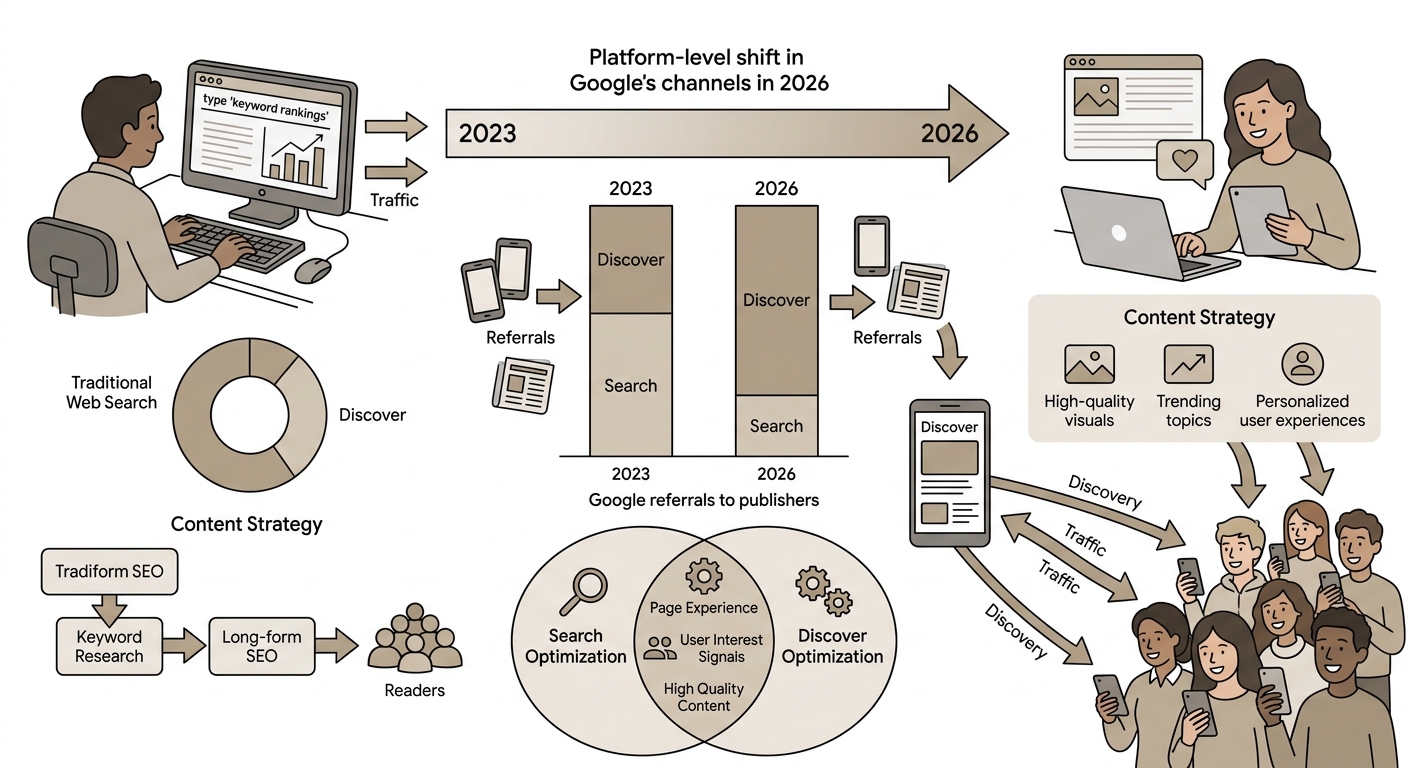
Every blogger focused exclusively on keyword rankings and search traffic is optimising for the wrong Google channel in 2026. The data is now unambiguous. Google Discover’s share of Google referrals to publishers has nearly doubled in two years, climbing from 37.03% in 2023 to 67.51% today, while traditional web search has plummeted from 51.10% to just 27.42% over the same period.
This is not a media publisher phenomenon that does not apply to bloggers. It is a platform-level shift in how Google distributes content discovery.
If Google is sending two-thirds of its referral traffic through Discover rather than traditional search, and your entire content strategy is built around search rankings, you are fishing in the smaller pond by a factor of roughly two to one.
The encouraging reality is that Discover optimisation and search optimisation are not opposites — they use some of the same underlying signals. But they differ meaningfully in what they prioritise, and understanding those differences is the strategic shift that bloggers need to make right now.
How Discover Decides What to Show
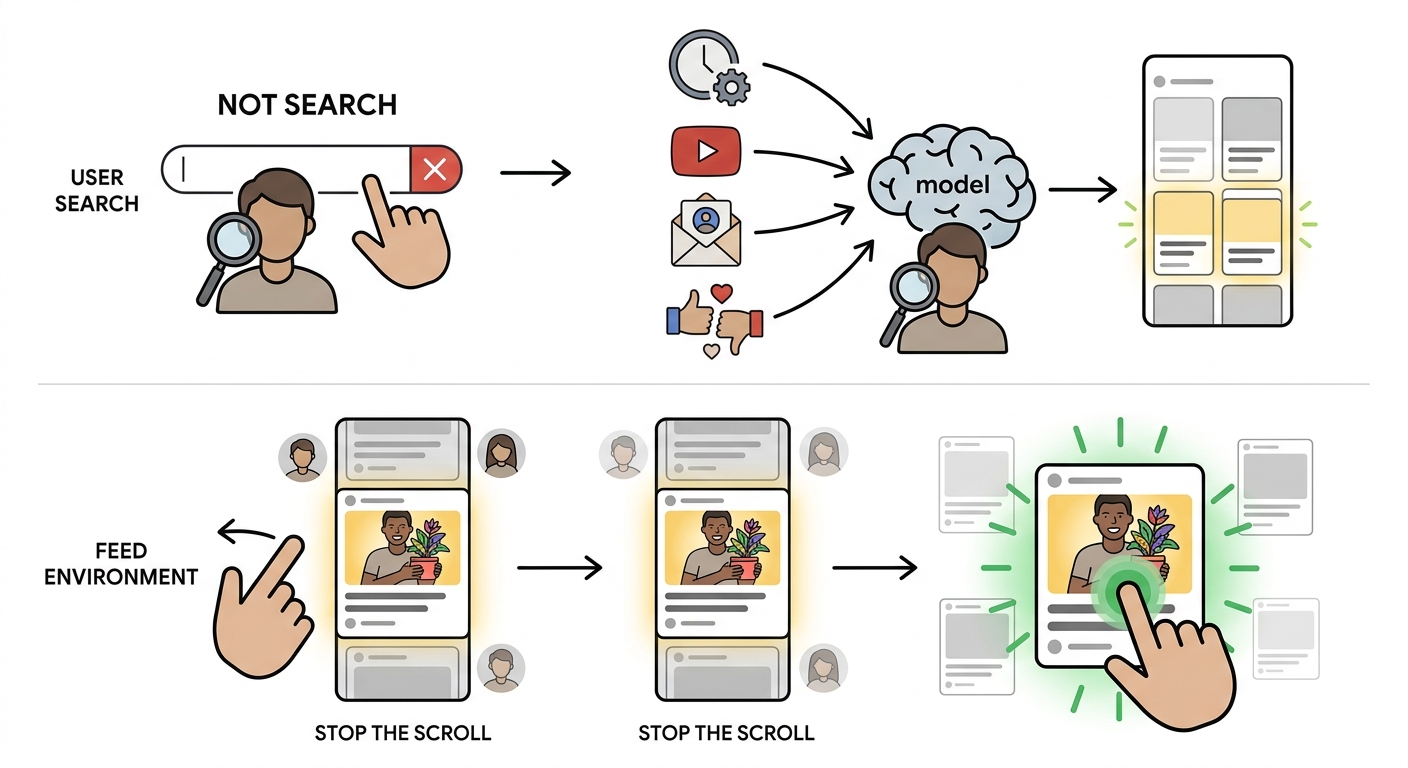
Discover does not work from queries. There is no search box, no keyword match, no intent to satisfy. Instead, Discover’s algorithm builds a model of each user’s interests from their search history, YouTube viewing, Gmail content (for those who have opted into Personal Intelligence), and past Discover engagement — then serves content it predicts will be interesting to that specific user at that specific moment.
The signals Discover rewards are fundamentally different from what search rewards. The differences between SEO and Discover content are significant.
In Discover, you have to “stop the scroll” — the content must demand attention in a feed environment. You have to prioritise what your audience wants rather than what a search query demands.
High click-through rate from the Discover card is the primary engagement signal. A Discover card is essentially a mobile-formatted headline and thumbnail image.
If users stop scrolling and tap your card at a high rate, Discover distributes your content more broadly. If they scroll past it, distribution shrinks. Your headline and thumbnail image are doing almost all of the work — more than keyword placement, more than schema markup, more than domain authority.
The Practical Discover Strategy for Bloggers
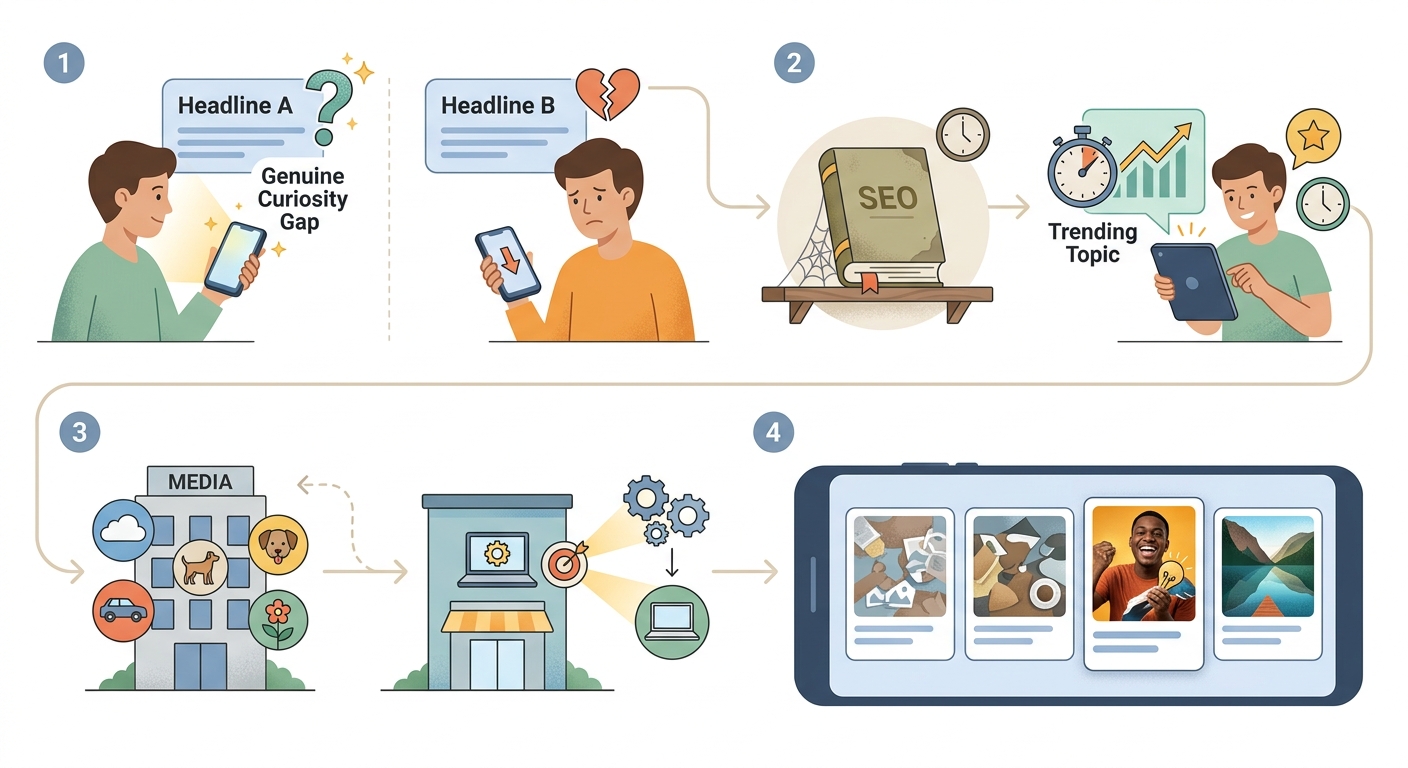
Four things drive Discover performance consistently. First, headlines that provoke curiosity or emotional response without misleading the reader. The distinction between clickbait and a genuine curiosity gap is whether the article delivers what the headline implies.
Discover rewards genuine curiosity gaps and punishes disappointment by suppressing future content from the same source.
Second, topic freshness on subjects your audience cares about. Discover favours recent content on topics where there is active user interest. Your evergreen SEO content is unlikely to perform well in Discover. Your take on a trending topic in your niche, published within hours of the trend emerging, is a Discover candidate.
Third, a clear editorial identity. Discover’s personalisation system needs to be able to classify your content reliably so it can match it to users whose interests align with your niche. A blog that covers twenty unrelated topics is harder for Discover to classify than a blog that consistently covers one topic deeply.
Fourth, thumbnail images that work in a mobile card format — high contrast, clear focal point, minimal text overlay, emotionally resonant rather than purely informational. Your thumbnail is competing with every other card in the user’s Discover feed for a half-second of attention.
The Data Bug Affecting May Discover Analysis
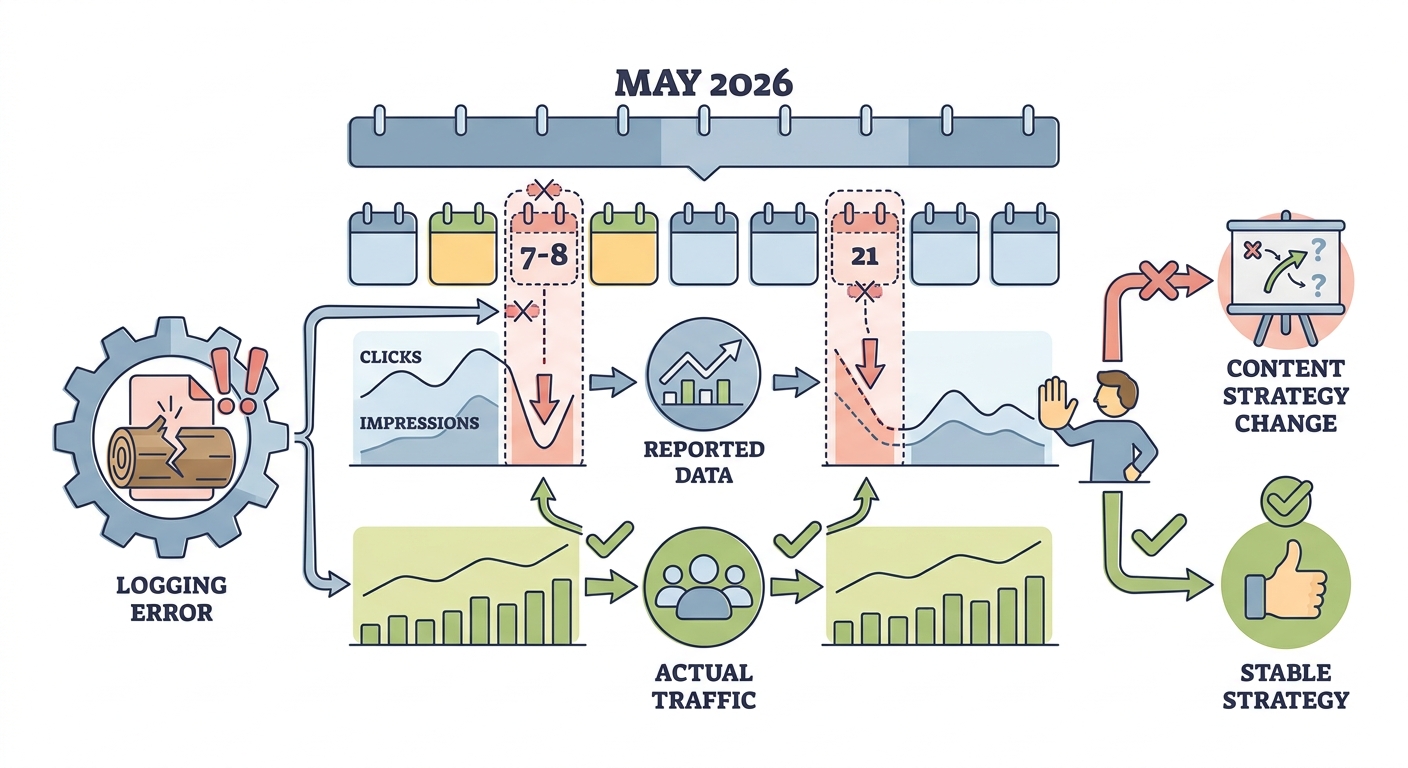
A logging error caused a decrease in clicks and impressions on the Discover performance report for data on May 21, 2026. Google clarified this affects data logging only and the underlying traffic was not affected.
A similar logging error occurred on May 7 and 8, 2026. If you are analysing your May Discover performance this week, treat May 21 and May 7–8 as data gaps, not real drops. Do not make content strategy changes based on artificial dips from logging errors.
💬 Reddit — r/blogging dedicated Discover optimisation discussions: 🔗 https://www.reddit.com/r/blogging/search/?q=Google+Discover+optimization+strategy+bloggers
🐦 X/Twitter — bloggers sharing Discover traffic wins and headline strategies: 🔗https://x.com/search?q=Google+Discover+blogger+strategy+traffic+2026&f=live
💬 Quora — how do bloggers get traffic from Google Discover: 🔗https://www.quora.com/search?q=how+to+get+Google+Discover+traffic+blog+2026
Quick Links: