
|
Best For |
Best for immersive, real-life conversation learning with AR/VR and career-specific courses. |
Best for free, gamified language learning with strong grammar lessons and daily practice. |
|
Price |
$9.9 |
$0 |
|
Features |
Real-life conversations |
100% free version |
|
Pros |
Multiple language options |
|
|
Cons |
Limited free content |
Repetitive lesson structure |

Learning a new language is exciting, but picking the right app can be challenging. Two popular options are Mondly and Duolingo.
I’ve used both, and while they aim for the same goal, they take very different approaches. Duolingo makes learning feel like a fun game, while Mondly focuses more on real-life conversations with speech recognition.
So, which one helps you learn quicker? Which one is really worth your time?
In this comparison of Mondly vs Duolingo, I’ll explain why you might choose each one!
Mondly Vs Duolingo 2026 – An Overview
 Both Duolingo and Mondly are apps that make learning a language enjoyable through gamification, giving users the experience of playing a game rather than studying.
What Features Does Mondly Offer?
1. Real-Life Conversations First
Mondly teaches you how to speak like real people do in everyday life.
Instead of giving you boring textbook phrases, it jumps straight into useful dialogues like asking for directions, greeting someone at a hotel, or having a basic phone conversation. This helps you build practical language skills fast.
You’re not just learning words, you’re learning how to use them in real conversations. Perfect for travelers, expats, or professionals preparing for meetings abroad.
2. Augmented Reality (AR) and Virtual Reality (VR)
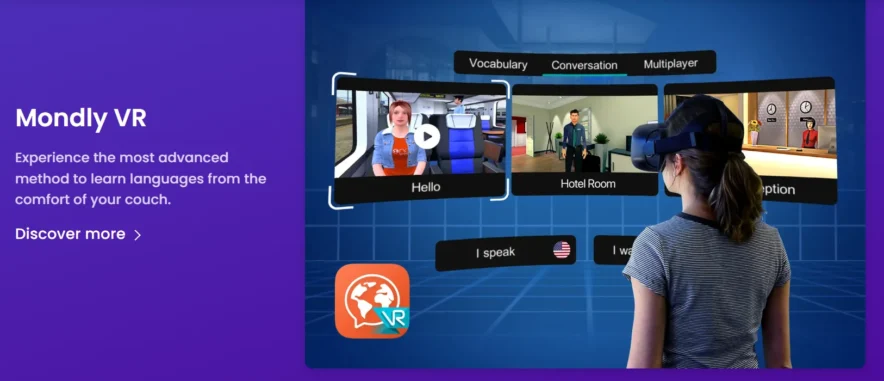
This is one of Mondly’s most unique features. With AR, you can open the app and have a virtual character appear in your room (through your phone camera).
You can practice conversations with this 3D avatar, which makes learning feel fun, futuristic, and interactive.
If you have a VR headset, it gets even cooler. You can step into a virtual world like a hotel lobby, airport, or restaurant, and practice speaking in real-time scenarios.
This is a huge win for visual and hands-on learners who like to experience learning rather than just memorize.
3. Speech Recognition that Actually Works
Mondly listens to your voice when you speak during lessons. Its speech recognition tool checks your pronunciation and gives you instant feedback.
It tells you if you’re close to the correct sound or if you need to try again kind of like having a mini pronunciation coach.
This is super helpful if you’re nervous about speaking in a new language or want to sound more natural when talking to native speakers.
4. Grammar That Doesn’t Get in the Way
Grammar in Mondly is built into the learning, not dumped on you all at once. When you’re doing lessons, Mondly will gently show you grammar rules and verb conjugations at the right moment when it actually makes sense.
No long explanations, no memorizing long charts upfront. This keeps your focus on using the language naturally, while still helping you understand how the grammar works in the background.
5. 40+ Languages to Choose From
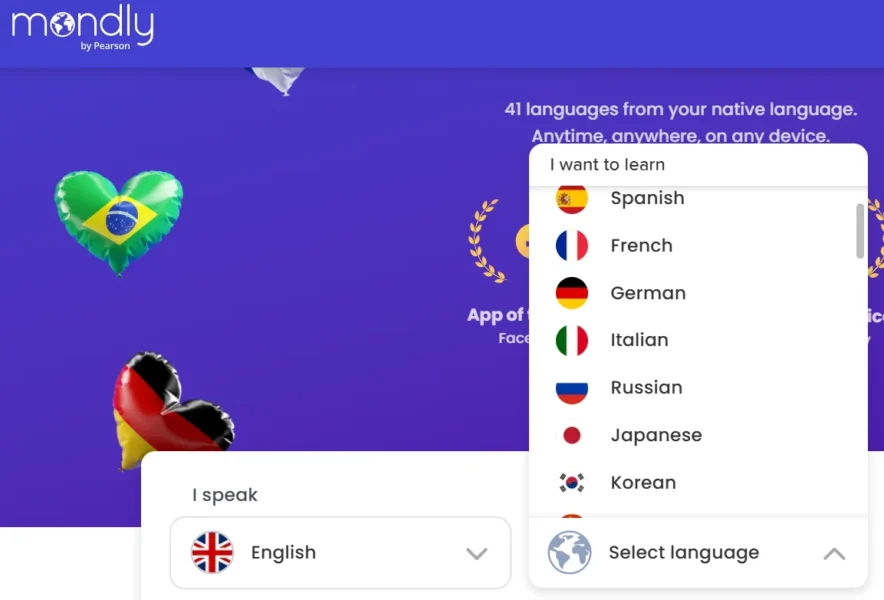
Mondly offers a huge variety of more than 40 languages and not just the popular ones.
Yes, you’ll find Spanish, French, and German. But you’ll also find less common options like Latvian, Afrikaans, Persian, and Urdu.
Even better? You can learn a language from your native language, not just from English.
For example, if you’re a Spanish speaker, you can learn German from Spanish. This feature is rare and super valuable for non-English speakers.
6. Daily Lessons + Weekly Progress Reports
Every day, Mondly gives you a short, personalized lesson. It’s based on your skill level, so you’re always learning just the right amount, not too easy, not too hard.
You also get a weekly report showing how much you’ve practiced, how many new words you’ve learned, and where you need improvement.
It helps you stay motivated and track your success over time without feeling pressured.
7. Career-Focused Language Courses
One of Mondly’s hidden gems is its specialized courses for professionals.
If you’re learning a language for work like customer service, medicine, IT, or travel, Mondly has lessons just for you. You’ll learn job-specific phrases, industry vocabulary, and real-world scenarios you’d actually use at work.
Duolingo doesn’t really offer this, so it’s a huge plus if you’re learning for career growth.
What Features Does Duolingo Offer?
1. Gamified Learning That’s Addictive
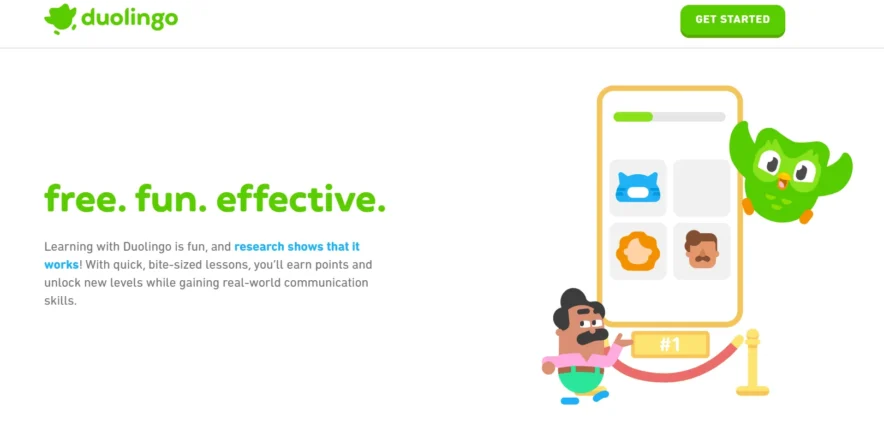
Duolingo turns learning into a game you actually want to play. You earn points (called XP), level up, collect gems, and unlock new challenges.
There are leaderboards where you can see how you stack up against other learners. It’s all about keeping things fun, exciting, and motivating like a video game, but instead of scoring goals, you’re building your vocabulary.
2. Short, Bite-Sized Lessons
Each lesson takes only 5 to 10 minutes. They’re perfect for busy people who want to learn a little bit each day on the bus, during lunch, or right before bed.
You don’t need to set aside a big chunk of time; just a few minutes daily adds up fast. That’s why it’s easy to stick with.
3. 40+ Languages: Including Fictional Ones
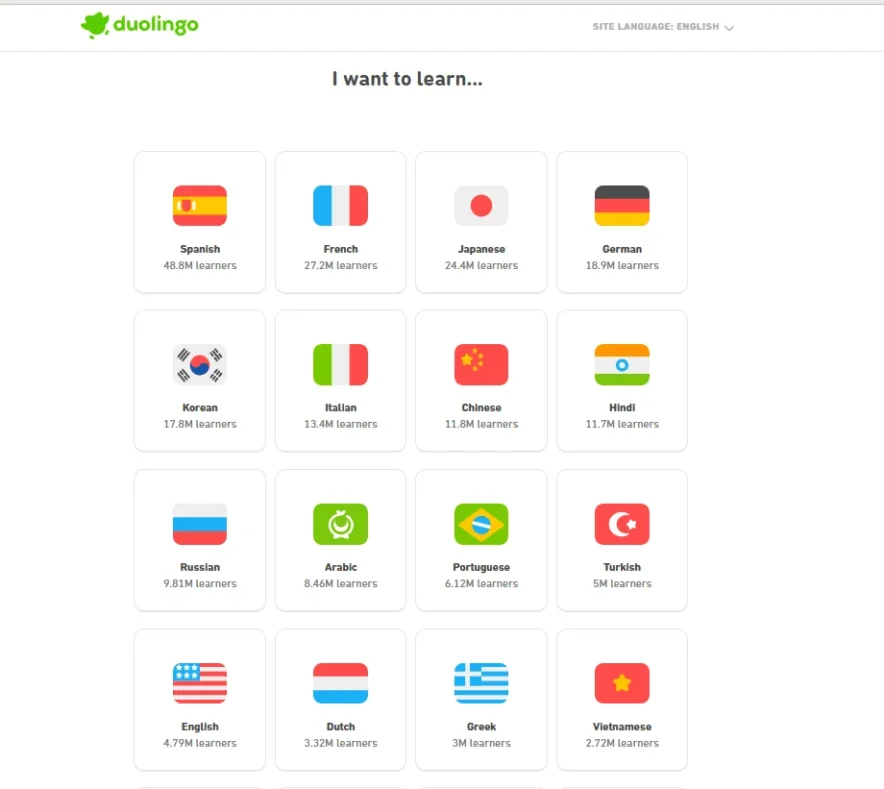
Duolingo gives you access to over 40 different languages. You’ll find popular ones like Spanish, French, and Japanese, but also unique options like Hawaiian, Navajo, and Welsh.
And for fans of fantasy? You can learn Klingon (Star Trek) or High Valyrian (Game of Thrones) just for fun. No other major app offers that kind of variety.
4. Learning by Repetition That Works
Duolingo uses a method called spaced repetition. That means it shows you words again and again over time, so they stick in your brain long-term.
It may seem a little repetitive, but it’s based on science and it really works. The more often you see and use the words, the better you’ll remember them.
5. Community and Leaderboards
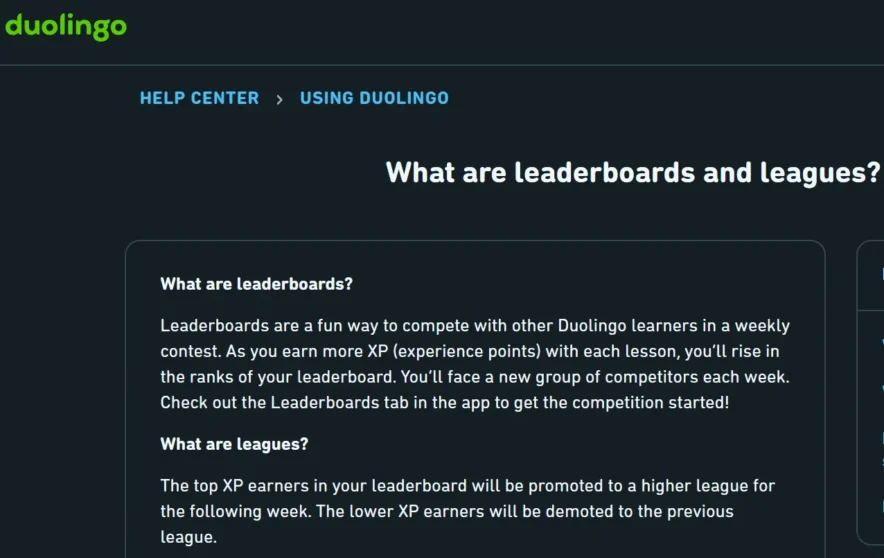
You’re not learning alone. Duolingo has a community feel, where you can see other learners in your “league.”
You can compete for XP points, move up to higher levels, and even follow friends. It’s a fun way to stay motivated, especially if you’re the kind of person who likes a little challenge.
6. Streaks, Crowns, and Achievements
Duolingo rewards consistency with daily streaks, for which you get credit for showing up every day. You also earn crowns by mastering topics, and unlock badges and achievements as you go.
These rewards make it exciting to keep learning, and they help turn studying into a daily habit. It’s a smart way to stay committed without feeling stressed.
7. Free to Use, with an Optional Premium
Duolingo is completely free for everyone. You can do most things on the app without paying anything.
If you want extra features like no ads, offline mode, and extra progress tools, you can upgrade to Super Duolingo (formerly Duolingo Plus).
But the free version gives you everything you need to learn a language, especially if you’re just starting out.
Mondly vs. Duolingo: Ultimate Comparisons
| Feature | Mondly | Duolingo | Better Option |
|---|---|---|---|
| User Interface | Visually appealing, interactive, structured learning path | Gamified, colorful, engaging but less structured | Mondly |
| Teaching Method | Focuses on real-life conversations and practical phrases | Grammar-based, teaches sentence structure first | Mondly |
| Languages Offered | 41 languages | 40+ languages, including fictional ones | Tie |
| Speaking Practice | Voice recognition, chatbot, immersive AR/VR practice | Tests pronunciation and speaking from the start | Mondly |
| Grammar Focus | Less grammar-focused | Strong grammar foundation | Duolingo |
| AR & VR Features | Yes, includes interactive AR/VR learning | No AR/VR features | Mondly |
| Career-Specific Courses | Yes, tailored for business professionals | No career-specific lessons | Mondly |
| Offline Learning | Available in the paid version | Available in Super Duolingo | Tie |
| Free Version | Limited access, frequent payment prompts | Full access to ads | Duolingo |
| Premium Pricing | Cheaper monthly cost, lifetime plan available | Higher monthly cost, family plan available | Mondly for affordability |
Mondly vs Duolingo: User Interface Comparison
Mondly User Interface
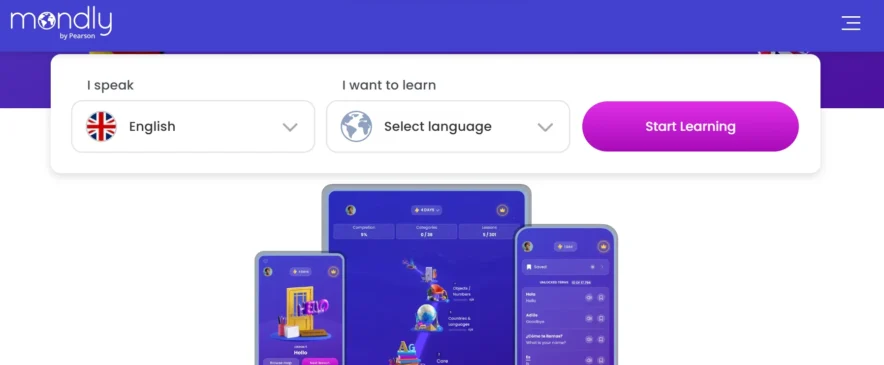
Mondly has a sleek, modern, and professional design that feels calming and organized.
The first thing you notice is its interactive world map layout. You see topics like “Family,” “Travel,” or “Business” arranged on the screen as part of your learning journey.
This makes it feel like you’re progressing through real-life themes, rather than random vocabulary lists.
Key UI Highlights:
- Colorful but not cluttered – The colors are soft and sophisticated, with smooth transitions between lessons.
- 3D graphics and AR/VR options – If you activate AR mode, the interface changes to include a virtual character you can interact with in your space.
- Dialog-based layout – You often see speech bubbles in lesson screens, making the lessons feel like mini text conversations.
- Clear progress indicators – It shows what lessons you’ve completed, how far you are in each topic, and how you’re doing each week.
Overall, Mondly’s interface feels grown-up and immersive, great for learners who want something that looks serious but still feels fresh and engaging.
Duolingo User Interface
Duolingo, on the other hand, has a fun, cartoon-style interface that’s bright, bubbly, and super easy to navigate.
Everything is gamified from the icons to the sound effects so it feels more like you’re playing a game than studying.
The home screen shows your language path as a series of skill “units” or “checkpoints” arranged in a vertical flow.
You tap on each skill to complete bite-sized lessons.
Key UI Highlights:
- Very colorful and animated – Think bright greens, yellows, and blues with quirky characters cheering you on.
- Cute mascot (Duo the owl) – Duo pops up to remind, motivate, and sometimes guilt-trip you into practicing. It adds humor and personality.
- Simple, big buttons – Perfect for beginners or kids, the interface never overwhelms you with too many options.
- Clear rewards system – You see your streaks, XP points, crowns, and leaderboards on the main screen.
Duolingo’s interface is designed to make you smile and stay consistent.
It’s light-hearted and super intuitive, even for total beginners or younger users.
Mondly vs Duolingo: How They Teach You Differently
Mondly’s Learning Method: Real-World First
Mondly uses a conversation-first approach.
Instead of starting with basic words and grammar rules, it drops you right into useful, everyday dialogues—like ordering food, checking into a hotel, or asking for help on the street.
You learn words and phrases in context, which helps you remember them better and use them more naturally.
Here’s how Mondly teaches:
- Dialogues before drills – You learn phrases in the form of short conversations.
- Speech recognition – You say things out loud and get feedback on your pronunciation.
- Grammar on demand – Grammar is gently introduced as you go—only when it’s needed.
- Visual learning – With AR and VR options, it lets you see and interact with scenarios, not just read or tap words.
- Career-focused content – You can pick topics based on real-life jobs or industries (like healthcare, travel, or business).
In short, Mondly wants you to speak like a local fast. It’s built for people who need practical language skills for travel, work, or relocation.
Duolingo’s Learning Method: Habit First, Fluency Later
Duolingo takes a very different path.
It uses a gamified, habit-building model that focuses on repetition, rewards, and short sessions.
Instead of jumping into full conversations, you start with tiny building blocks: single words, short phrases, and sentence structure.
Then you slowly piece them together.
Here’s how Duolingo teaches:
- Spaced repetition – You review words and concepts regularly to lock them into memory.
- Mini games – Lessons feel like puzzles or trivia games, which keep them engaging.
- Crowns system – You can repeat topics at harder levels to go deeper into each one.
- Listening, reading, writing, and speaking – All skills are included, but not always in full conversation form.
- Daily streaks and XP – The method is more about consistency and habit than deep dives.
Duolingo is perfect if you’re just starting out, want to build a strong habit, or prefer a light, fun learning routine.
Which Learning Method Is Right for You?
- Choose Mondly if you want to learn by doing with real-life conversations and speech practice.
- Choose Duolingo if you want to build a daily habit and grow your skills slowly through game-style learning.
Mondly Vs Duolingo: Pros and Cons
Mondly vs Duolingo: Which One Should You Choose?
Choosing between Mondly and Duolingo depends on what you need from a language app. Each one shines in its own way.
Let’s figure out which one fits you better.
Choose Mondly if you want…
- To learn real-world conversations quickly
- A more professional or serious learning feel
- Speaking practice with accurate pronunciation feedback
- Immersive experiences like AR or VR lessons
- Language skills for travel, work, or relocation
- Access to career-focused vocabulary
- Support for less common languages or non-English learners
Mondly is perfect if you’re learning with a purpose, whether it’s a trip, a new job, or moving abroad. It’s built for practical use and helping you speak confidently in the real world.
Choose Duolingo if you want…
- A fun, free, and gamified way to build a daily habit
- Short, easy lessons you can do anytime
- A light, playful app that feels like a game, not a textbook
- To learn as a complete beginner or just for fun
- To try many different languages, including fantasy ones
- A tool to keep your language skills sharp daily
Duolingo is ideal if you’re just starting out or want to make learning part of your daily routine without pressure. It’s best for habit-building, not fast fluency.
FAQs
Can you say that Mondly is better than Duolingo?
In my opinion, it won't be correct to say one of them is better than the other. I think in this way because they independently may lack 1 or 2 features but they collectively give a very good result.
Which one of them is a better option for a casual user?
As Duolingo educates you on the most basic level with a very game-like interface, I think you should go for it if you are a casual user. It is also free of cost so you don't need to think much before giving it a shot.
Which of them is more suitable to learn with a more practical approach?
Actually, both of them quite have a practical approach towards teaching but if I am asked, I would suggest Mondly over Duolingo for learning relevant and useful content.
Do they have any provision of conducting tests?
Yes, they definitely have this provision. While Mondly offers weekly quizzes and monthly challenges, Duolingo comes with a leaderboard feature wherein you can compete with other language learners.
Quick Links
- Udemy Vs Udacity
- Udemy vs Coursera
- Udemy vs Pluralsight
- SoloLearn vs Codecademy
- Codecademy vs Treehouse
- Simpliv Learning Vs Udemy
- Lynda vs Coursera
- Lingvist vs Duolingo
Conclusion: Mondly Vs Duolingo 2026 | Should You Go For It?
Duolingo and Mondly are both excellent language-learning apps.
Mondly features a more mature and modern user interface, while Duolingo offers a playful and creative learning experience. Together, they create an enjoyable environment for learners.
Both apps are suitable for users of all age groups, from children to adults, making language learning accessible for everyone.
When it comes to pricing, Duolingo may be a more affordable option for some users. However, if you seek a deeper understanding of the language, Mondly would be the better choice for you.

Mondly Vs Duolingo is a perfect comparison and it is debatable when it comes to choose one of them. I got to know about Mondly by this comparison so thanks for this.
Thanks Shubs for this Mondly Vs Duolingo comparison. I wanted to learn French but couldn’t decide from where to learn it now its clear to me which one I should choose.