Online advertising stands as an indispensable force in today’s business world, continuously reshaping how brands connect with their audiences and achieve growth.
As we move through 2026, the digital advertising market exhibits remarkable expansion, highlighting its crucial role in enhancing brand visibility, driving customer acquisition, and fostering strong engagement.
Businesses are strategically directing substantial investments into diverse online channels, from dynamic social media campaigns to sophisticated programmatic advertising, aiming to capture consumers’ attention precisely where they spend most of their time: online.
This detailed guide explores the pivotal online advertising statistics for 2026, providing marketers and businesses with the essential insights needed to maintain a competitive edge and optimize their digital strategies for maximum benefit.
Global Online Advertising in 2026
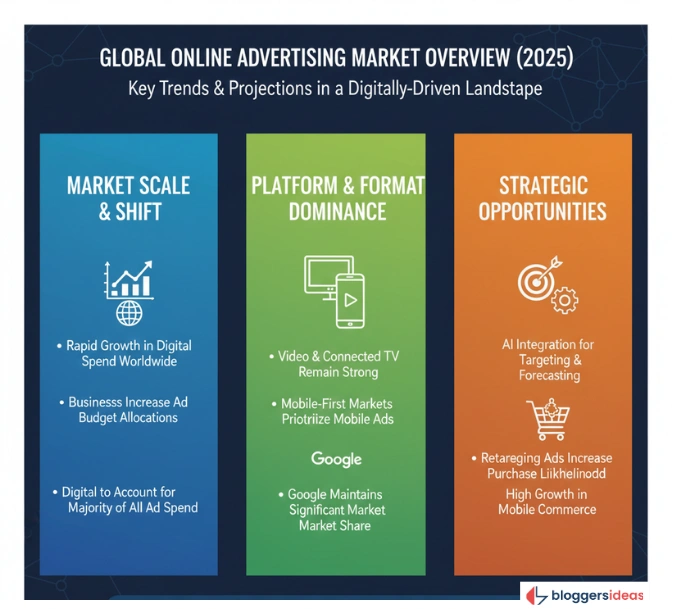
The sheer volume of investment flowing into online advertising underscores its dominance.
In 2025, the global online advertising market commands an impressive valuation of $294.28 billion, a clear indicator of its pervasive influence across industries worldwide.
This financial commitment reflects a strategic shift, with businesses increasingly recognizing digital platforms as the most effective avenues for reaching and engaging target consumers.
The landscape is not static; rather, it is in a constant state of evolution, driven by technological advancements and shifting consumer behaviors.
Also read about: Marketing Automation Statistics
Projected Growth and Market Dominance
The broader advertising market is experiencing significant growth, with global ad spending expected to reach a staggering 455.93 billion in 2025.
This makes the U.S. market a bellwether for global digital advertising trends and innovations.
| Metric | Projection for 2025 | Further Projections |
| Global Online Advertising Market Value | $294.28 billion | |
| Total Global Ad Spending | $1.16 trillion | |
| US Ad Spending (Global Leader) | $455.93 billion | |
| Digital Share of Total Ad Spending | 80% by 2029 | |
| In-app Ad Spend Per Person | $49.93 |
The Rise of Programmatic Advertising
Programmatic advertising is revolutionizing how ads are bought and sold, leveraging automated technologies to optimize efficiency and targeting.
This sophisticated approach is poised for substantial growth, with forecasts suggesting it will generate an astounding 85% of total advertising revenue by 2029.
Programmatic platforms enable real-time bidding, precise audience segmentation, and dynamic ad delivery, allowing marketers to achieve unparalleled efficiency and effectiveness in their campaigns.
This shift towards automation signifies a maturation of the digital advertising ecosystem, emphasizing data-driven strategies over manual processes.
Also read about: Video Marketing Statistics
Mobile Advertising: Engaging Users Anywhere, Anytime
Mobile advertising has emerged as a cornerstone of digital marketing, designed to engage users through various formats optimized for smaller screens.
This includes in-app advertisements, social media ads, mobile web banners, and short-form video ads.
Mobile platforms offer brands the unique ability to connect with users instantaneously, regardless of their location, facilitating highly targeted campaigns based on an individual’s location, behavioral patterns, and personal preferences.
The following statistics underscore the growing importance and effectiveness of mobile advertising.
Also read about: Smartphone Usage Statistics
Ubiquitous Mobile Access and Usage
The widespread adoption of mobile devices fundamentally underpins the success of mobile advertising.
An astonishing 95.9% of global internet users access the web via mobile phones at least occasionally, with mobile devices now accounting for a substantial 63% of worldwide web traffic.
This omnipresence makes mobile platforms an unavoidable channel for advertisers seeking to reach vast audiences. The consistent growth in mobile user numbers further reinforces this trend.
| Year | Mobile Users (in billions) |
| 2020 | 6.95 |
| 2021 | 7.10 |
| 2022* | 7.26 |
| 2023* | 7.33 |
| 2024* | 7.41 |
| 2025* | 7.49 |
The continuous increase in mobile users underscores the need for mobile-first advertising strategies.
Soaring In-App Advertising Spend
In-app advertising, a specific segment of mobile advertising, is experiencing explosive growth. Global in-app advertising spending is projected to reach 533.92 billion by 2029.
This demonstrates the efficacy of integrating advertisements directly into mobile applications, where users are often highly engaged. The average in-app advertising spend per mobile internet user is also on the rise, anticipated to reach
233 billion, closely followed by China with $163.5 billion, reflecting robust market activity in these regions.
Social Media Advertising: The Power of Engagement and Discovery
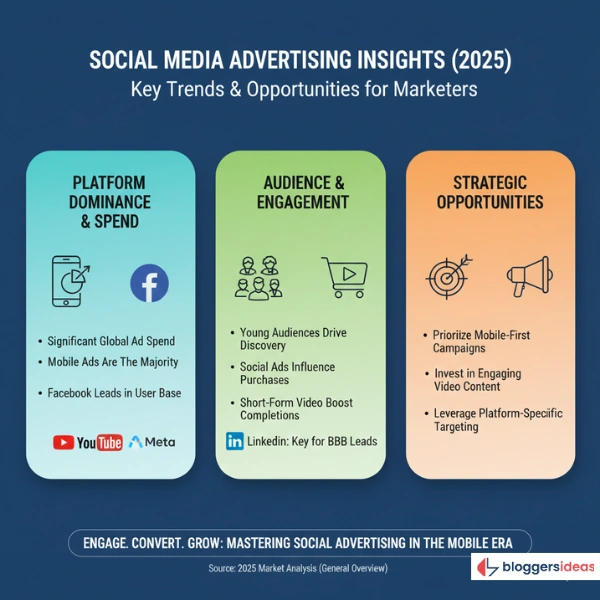
Social media advertising offers a dynamic and interactive way for brands to connect with consumers.
Advertisements on platforms like Facebook, Instagram, TikTok, and LinkedIn come in various formats, including images, videos, carousels, and sponsored content, making them highly adaptable for diverse marketing objectives such as brand awareness, lead generation, and direct conversions.
Interactive Nature and Brand Discovery
A significant advantage of social media advertising lies in its interactive nature. Unlike traditional advertising, social media campaigns actively encourage likes, shares, and comments, fostering two-way engagement that builds trust and loyalty between brands and their audiences.
Furthermore, social media ads are particularly effective for reaching younger demographics (ages 16 to 24), serving as the leading channel for brand discovery among this crucial segment.
The constant evolution of features and formats on social platforms ensures that social media advertising remains a preferred choice for brands aiming to maximize their reach and impact.
Massive Growth in Social Media Ad Spending
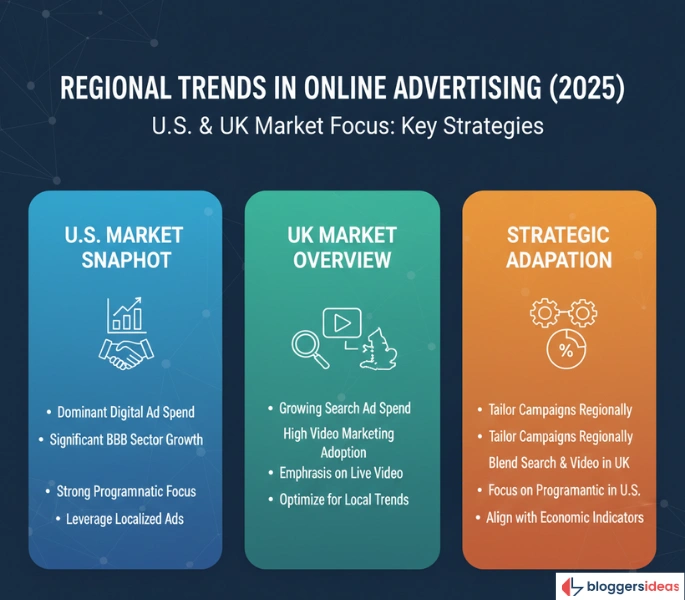
The investment in social media advertising continues its upward trajectory. Ad spending in the social media advertising market worldwide is projected to reach 406.45 billion by 2029.
Mobile devices will dominate this spend, with 83% of total social media ad spend coming from mobile by 2029. The number of social media users is also expected to hit 6.5 billion, presenting an enormous audience for advertisers.
The average spending by U.S. social media buyers is also forecasted to increase from $937 in 2025.
| Country | Ad Spend as % of GDP |
| U.K. | 1.66% |
| U.S.A. | 1.46% |
| Japan | 1.33% |
| China | 1.28% |
| Australia | 1.10% |
These figures illustrate the significant role advertising plays in the economies of leading nations.
Platform Dominance and Influence
These platforms offer extensive reach and sophisticated targeting capabilities, making them indispensable for comprehensive online advertising strategies. TikTok is also making significant strides, projected to generate $33.1 billion from ads in 2025.
Conversion & ROI Statistics
Conversion rates and Return on Investment (ROI) are critical metrics for evaluating the efficacy of online advertising campaigns, particularly in e-commerce.
High conversion rates signal that advertisements are successfully transforming clicks into purchases, while a robust ROI demonstrates that ad spending is yielding profitable returns.
By diligently tracking these metrics, e-commerce brands can refine their strategies, optimize ad expenditure, and concentrate on the platforms and audiences that generate the most value.
Google Ads Performance
Google Ads remains a powerhouse for driving conversions. The typical conversion rate for Google Ads stands at 4.40% for search campaigns, indicating strong performance in capturing user intent.
Display campaigns, while offering broader reach, generally achieve a lower conversion rate of approximately 0.57%.
However, the average cost per conversion across Google Ads is 90.80 on the display network, with Google Shopping averaging $38.87.
The mobile conversion rate for Google Ads is 3.48% on the search network and 0.72% on the display network, underscoring the importance of mobile optimization.
Industries experiencing the highest average cost per conversion on Google Ads include Computers & Electronics (
85.29), and Business & Industrial ($77.48), reflecting competitive bidding in these sectors. The Return on Investment of Google Ads is estimated at an impressive 2:1 ratio, meaning advertisers typically receive $2 for every $1 spent, highlighting its profitability.
Facebook Ads and Bing Ads Effectiveness
Facebook Ads also deliver strong results, with an average conversion rate of 9.21% and an average cost per conversion of 43.84).
Bing Ads, while smaller in scale, also provide valuable conversion opportunities, with an average conversion rate of 2.94% and an average cost per conversion of 56.99) face higher conversion costs.
The Phenomenal ROI of Email Marketing
While not strictly online advertising, email marketing often complements digital campaigns and boasts an exceptional ROI.
The return on investment of Email marketing has a remarkable ratio of 36:1, translating to a phenomenal revenue of $36 for every dollar spent. This highlights the enduring power of direct communication and relationship building through email.
Consumer Behavior & Ad Interaction
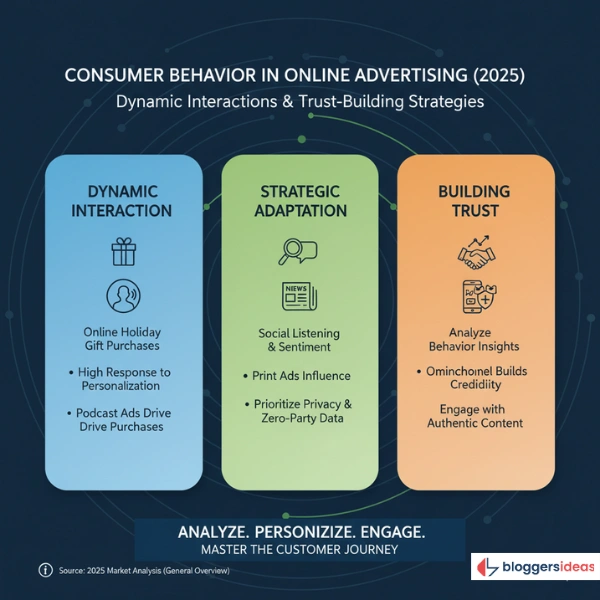
Consumer behavior and ad interaction are fundamental in shaping the effectiveness of online advertising strategies.
In increasingly crowded and competitive digital spaces, comprehending how consumers respond to various types of content, messaging, and platforms is essential for brands aiming to differentiate themselves.
By meticulously analyzing these behaviors, marketers can make data-driven decisions to optimize their campaigns, enhance user engagement, and ultimately achieve superior business outcomes.
Purchasing Habits and Personalization
The influence of online advertising on purchasing decisions is undeniable. A significant 70% of American retail consumers are likely to purchase holiday gifts from online-only retailers, demonstrating a strong preference for digital shopping channels.
Furthermore, 46% of people agreed that they purchased at least one product after listening to a podcast, indicating the growing impact of audio advertising.
Personalization plays a crucial role in enhancing ad effectiveness, with 96% of consumers likely to purchase in at least one common personalization scenario.
This underscores the importance of tailoring ad content to individual preferences and behaviors to maximize relevance and engagement.
The Future of AI in Online Advertising
The future of online advertising is poised to become more immersive, intelligent, and profoundly user-centric. As technological advancements continue at a rapid pace, we can anticipate a greater emphasis on hyper-personalization, powered by artificial intelligence (AI).
This will enable ads to be meticulously tailored to individual preferences, past behaviors, and real-time contextual factors, creating highly relevant and impactful experiences.
AI’s Growing Influence on Traffic and Market Value
The integration of AI is already yielding tangible benefits for businesses. With the rise of AI usage among consumers for search, B2B companies have observed a 47% increase in traffic, closely followed by a 45% increase for B2C companies.
This clearly demonstrates AI’s capacity to enhance visibility and drive user engagement.
The AI market size is valued at a substantial 47 billion. This significant investment highlights the strategic importance of AI in optimizing marketing efforts.
Approximately 30% of organizations have already implemented initial generative AI (GenAI) solutions, while another 27% are actively assessing their effectiveness, indicating a strong trend towards AI adoption in advertising.
Consumer Comfort and Trust in AI
Despite the rapid technological advancements, consumer comfort with brands using AI has seen a slight decline.
A 2024 survey indicated that only 46% of consumers expressed comfort with brands utilizing AI, a decrease from 57% in 2023. However, the future of AI still appears promising, as consumer faith in AI remains largely intact.
This is evident in the annual spending on AI by consumers, which amounts to approximately $1.4 billion, with about 26% of them trusting brands generally to use AI responsibly.
This suggests that while concerns exist, a significant portion of the consumer base is open to AI-driven interactions, especially when trust is established.
New Insights from Quora and Reddit
To provide the most current and actionable information, we must consider the emerging questions and discussions actively taking place on platforms like Quora and Reddit. These forums often reveal pressing concerns and innovative approaches that are not yet widely covered in traditional reports.
One recurring theme on these platforms revolves around “privacy-preserving advertising strategies” in a cookieless future. Users are increasingly asking about alternative tracking methods, contextual advertising effectiveness, and the best ways to leverage first-party data without infringing on user privacy. This indicates a strong demand for solutions that balance personalization with ethical data practices.
Another prominent discussion centers on “micro-influencer marketing ROI” and how smaller brands can effectively compete with larger entities using highly niche, authentic creators. Questions often focus on finding the right influencers, negotiating fair compensation, and accurately measuring the impact of these campaigns, particularly for specific conversion goals rather than just brand awareness. This reflects a desire for more democratized and accessible advertising strategies that deliver measurable returns.
Furthermore, there is a growing curiosity about “leveraging AI for hyper-segmentation beyond basic demographics.” Marketers are seeking advanced AI tools that can identify nuanced behavioral patterns, predict future purchasing intent with greater accuracy, and create truly dynamic, personalized ad experiences that adapt in real-time. This goes beyond simple retargeting and delves into proactive content delivery based on predicted needs.
Finally, the impact of “immersive advertising in the metaverse and AR/VR environments” is a hot topic. While still nascent, users are actively discussing how brands can create engaging, interactive ad experiences in these emerging digital spaces, moving beyond traditional banner ads to truly experiential marketing.
This points to a futuristic outlook where advertising is an integral part of virtual interactions. These insights underscore the need for marketers to explore advanced data privacy solutions, embrace authentic influencer collaborations, utilize sophisticated AI for deeper audience understanding, and begin experimenting with immersive ad formats.
FAQs About Online Advertising Statistics
1. What is the projected size of the global online advertising market in 2025, and what does this signify for businesses?
The global online advertising market is projected to reach $294.28 billion in 2025, highlighting its critical role in business strategies. Companies must prioritize digital channels to stay competitive.
2. How is mobile advertising influencing the overall digital marketing landscape, and what are the key statistics driving its growth?
With 95.9% of global internet users accessing the web via mobile and mobile devices driving 63% of web traffic, optimizing ads for mobile screens and in-app experiences is essential.
3. What role does social media advertising play in brand discovery and consumer engagement in 2025?
Social media ads are vital for brand discovery, particularly among younger audiences (16-24), and foster deeper engagement through likes, shares, and comments, building trust.
4. How are conversion rates and ROI measured in online advertising, and which platforms offer the best returns?
Conversion rates measure how ads turn clicks into purchases, while ROI tracks ad spend profitability. Google Ads has a 2:1 ROI, and email marketing offers a 36:1 ROI.
5. How is Artificial Intelligence (AI) shaping the future of online advertising, and what are its potential impacts on personalization and efficiency?
AI is revolutionizing online advertising by enabling hyper-personalization, automating ad processes, and boosting efficiency, though brands must consider consumer comfort with AI.
Also Read:
- Character AI Statistics
- Email Marketing Statistics
- Content Marketing Statistics
- Google Ads Statistics
- Perplexity AI Statistics
Conclusion
The online advertising landscape in 2025 is undergoing rapid transformation, profoundly shaped by evolving consumer expectations, groundbreaking technologies, and dynamic platform shifts.
The internet advertising statistics presented throughout this guide consistently highlight the escalating importance of personalization, comprehensive omnichannel strategies, and the creation of authentic content to effectively capture audience attention and drive conversions.
As competition intensifies across all digital fronts, brands that adeptly leverage data-driven insights and proactively adapt to emerging consumer behavior trends will undoubtedly find themselves in a stronger position to distinguish their offerings and achieve sustained success in 2025 and beyond.
Remaining informed, agile, and strategically responsive is not merely an advantage; it has become an absolute necessity for e-commerce marketers striving to thrive in the complex and fast-paced digital age.
Investing in understanding these trends and applying them to your strategy will unlock significant growth opportunities.
Source: Statista, Sender.net