
You might be curious about how residential and ISP proxies compare, whether you’re a novice or a seasoned proxy user. After all, both kinds of proxies can mask your IP address.
What makes a difference, then? Why should you pick one over the other, exactly?
Continue reading to understand the basic aspects and details you need to know, as well as the key differences between Residential Proxies and ISP Proxies, and more!
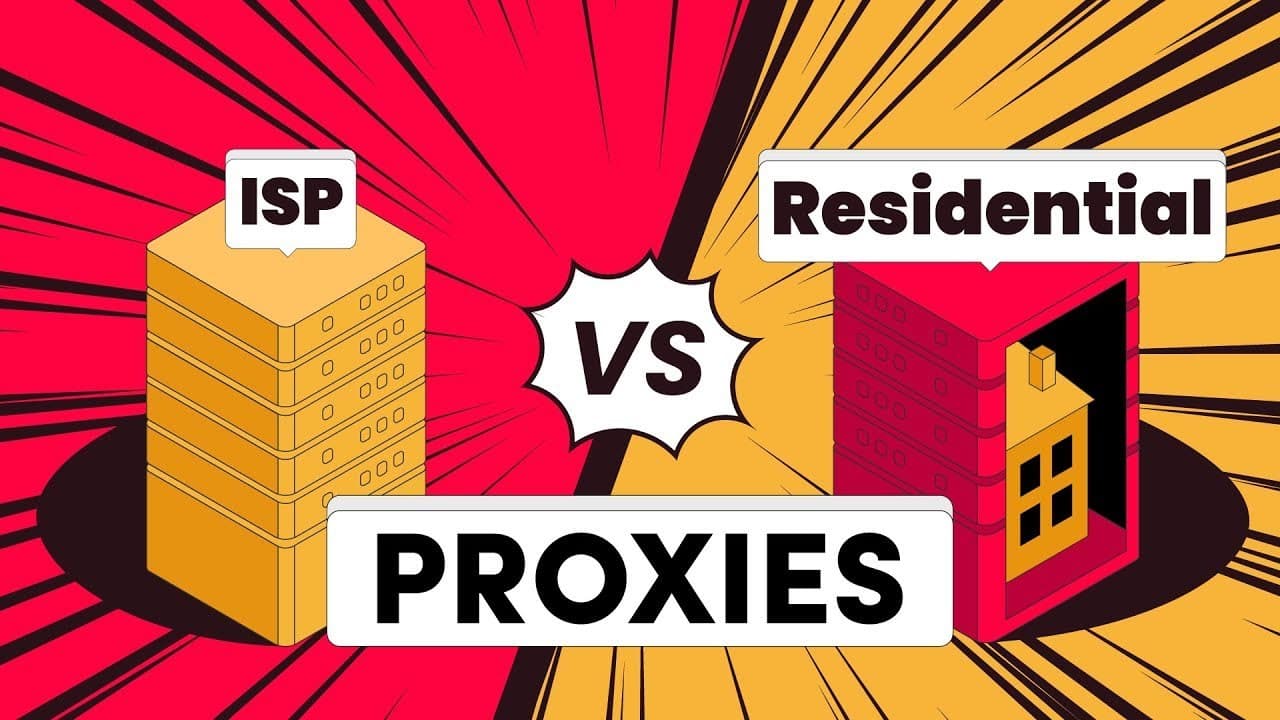

Benefits Of Residential Proxies
With residential proxies, individuals or businesses can masquerade as regular local internet users.
Large organizations may use this as a gateway to manage many accounts if they have digital assets above the platform’s account limits.
Residential proxies come in a wide variety of regions and IP ranges because they are sourced from peer devices. Residential proxies are used by intelligence agencies to complete big data projects and validate data.
Who Should Use Residential Proxies?
1. Websites with stringent security measures
Include websites like Wayfair, which are heavily scraped, shoe stores, and social media networks.
2. Location-sensitive tasks
When working with multiple locations simultaneously or viewing localized content (such as city-level), residential proxies come in quite handy.
Ideal Use Cases of Residential Proxies
1. Ad verification
Advertisers examine whether their ads are displayed to the intended audience and in the appropriate context.
The most popular choice is residential proxies, as they are difficult for fraudsters to ban and can be used in multiple countries for targeted advertising.
2. SEO Monitoring

To monitor local keyword rankings, investigate subjects, and assess competition, marketing agencies use tools that scrape Google and other search engines.
3. Travel fare aggregation
By scraping numerous sites, proxy-powered aggregators offer the best rates on hotels, flights, and other deals. Residential proxies are quite anonymous; thus, it can be difficult for websites to tell if someone is gathering data on them.
4. E-commerce intelligence
Residential proxies help businesses gather insights from secure e-commerce sites, such as Amazon, regarding product trends, positioning, and pricing adjustments.
You may also read
Benefits Of ISP Proxies
You can experience increased speeds while making requests with ISP proxies that you might not experience with peer-sourced proxies, because ISP proxies are disguised as data center IP addresses.
Individuals responsible for managing sensitive accounts and who want their IP address to remain static would value this feature.
However, that does not guarantee that the proxies won’t change. Even stationary residential proxies will eventually alter. ISP proxies could be an option if your use case requires the fastest possible connection.
Who Should Use ISP Proxies?
- Secure websites that call for a dependable identity
Include websites such as Facebook and Instagram.
- Traffic-intensive tasks
ISP proxies can be purchased using an IP address. This implies that you won’t be charged extra for unused bandwidth.
Ideal Use Cases of ISP Proxies
Multiple account management
Internet proxies are used by marketers to get around social media account restrictions and access sites without problems from various regions.
Several e-commerce accounts on websites like Amazon are managed by merchants. Because they provide stable access to the same IP address, ISP proxies are excellent for this use case.
Large purchases of limited-edition items
Since many retailers experience bot issues, they have implemented sophisticated defense measures.
Internet proxies are frequently used for purchasing sneakers and other rare things because they are difficult to detect and have no traffic restrictions.
Residential Proxies vs. ISP Proxies: Which Should You Prefer?
Before choosing a proxy type, consider your specific use case. ISP proxies can be useful for your project if you want the fastest available connection and do not care about IP diversity, but residential proxies can be unpredictable.
Rotating residential proxies are the best choice in this situation, as you need IP diversity to scale your data by making numerous requests.
Residential proxies offer unlimited, reliable access to practically any website.
Home proxies utilize data plans and are slower than those provided by ISPs. ISP proxies are ideal in certain instances when a static connection is absolutely necessary; however, dynamic residential proxies are better suited for many use cases.
ISP proxies offer higher consistency and faster speeds than residential proxies. ISPs, however, are more likely to be prohibited from most websites (except Yeezy Supply, Shopify, Footsite, etc.)
Moreover, ISPs are more expensive than Resis because they must be purchased in bulk rather than by GB, and they can be used for any duration (until they expire).
Quick Links
- Bright Data Alternatives
- Smartproxy Review
- ProxyRack Review
- Top Best Discord Proxies
- Red Dirt Proxies Alternatives
- Oculus Proxies Alternatives
Bottomline: Residential Proxies Vs ISP Proxies 2026
To answer the question “Which proxy network should I use?” review the comparison table provided above and identify which features align best with your needs for a proxy server.
Both individual users and organizations need to understand the characteristics and functionalities of a proxy server.
You should now have a clear understanding of the purposes of rotating home proxies and ISP proxies.
With this information, you are equipped to determine which option is most suitable for your project.
