WordPress continues to reign as the world’s leading content management system (CMS) in 2025, powering an impressive 43.5% of all websites globally and holding a commanding 62.5% share of the CMS market.
With over 478 million websites using WordPress, its influence spans blogs, e-commerce stores, corporate sites, and more. This comprehensive guide dives into the latest WordPress statistics for 2025, exploring its market dominance, user trends, plugins, themes, and emerging features.
Whether you’re a blogger, business owner, or developer, this article provides actionable insights to help you leverage WordPress for success. We also address trending questions from platforms like Quora and Reddit to ensure you have the most current information.
WordPress’s Unmatched Market Dominance
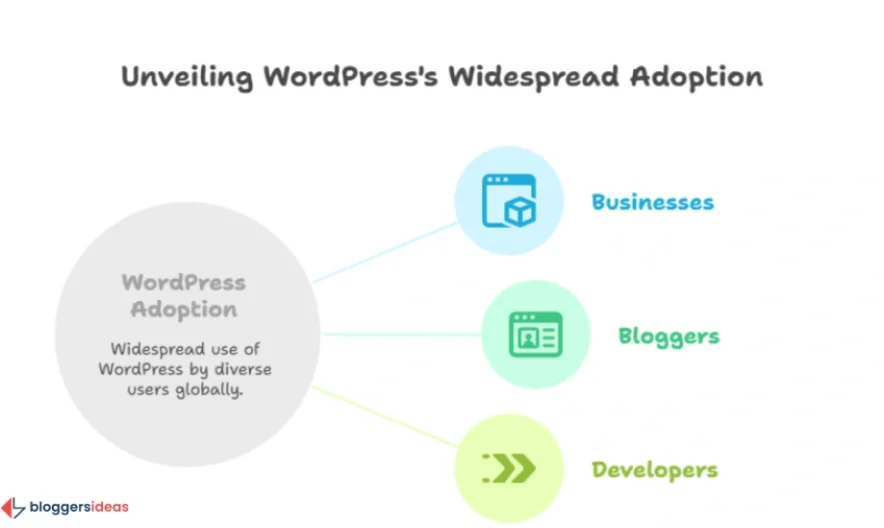
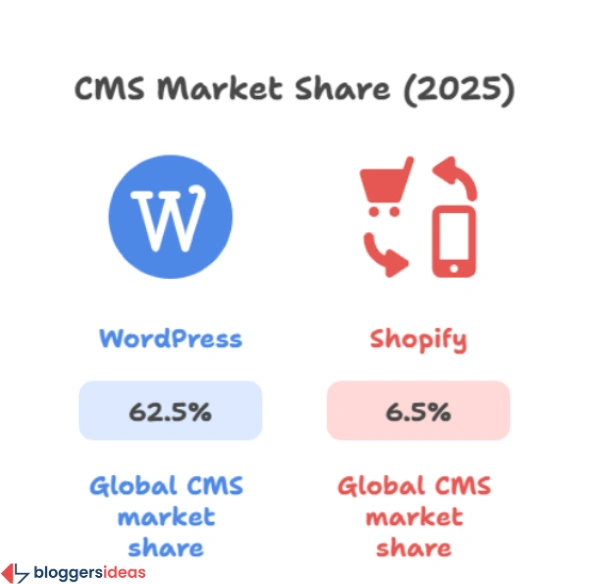
WordPress powers 43.5% of all websites on the internet, making it the most widely used CMS globally. Its closest competitors, Shopify (6.5%), Wix (4.4%), and Squarespace (3.1%), trail far behind.
Within the CMS market, WordPress holds a 62.5% share, outpacing all other platforms combined. This dominance stems from its open-source nature, user-friendly interface, and vast ecosystem of plugins and themes.
| CMS Platform | Market Share |
| WordPress | 62.5% |
| Shopify | 6.5% |
| Wix | 4.4% |
| Squarespace | 3.1% |
| Joomla | 1.5% |
| Drupal | 0.8% |
WordPress’s market share has more than doubled over the past decade, growing from 21% in 2014 to 43.5% in 2025.
This growth reflects the platform’s adaptability, as it has transitioned from a blogging tool to a versatile CMS capable of supporting diverse website types.
| Year | WordPress Market Share of All Websites |
| 2014 | 21.0% |
| 2018 | 29.2% |
| 2021 | 39.5% |
| 2025 | 43.5% |
Also read about: WordPress.com Coupon Codes November 2025: Up To 60% Off [Verified]
How Many Websites Use WordPress?
Over 478 million websites worldwide run on WordPress, according to recent estimates. This figure is derived from sources like Netcraft, which reported 1.2 billion total websites in March 2025.
Applying WordPress’s 43.5% market share suggests approximately 518 million WordPress sites. However, BuiltWith tracks a smaller pool of 70 million websites, estimating around 30 million WordPress sites. Regardless of the exact number, WordPress powers tens to hundreds of millions of websites, showcasing its global reach.
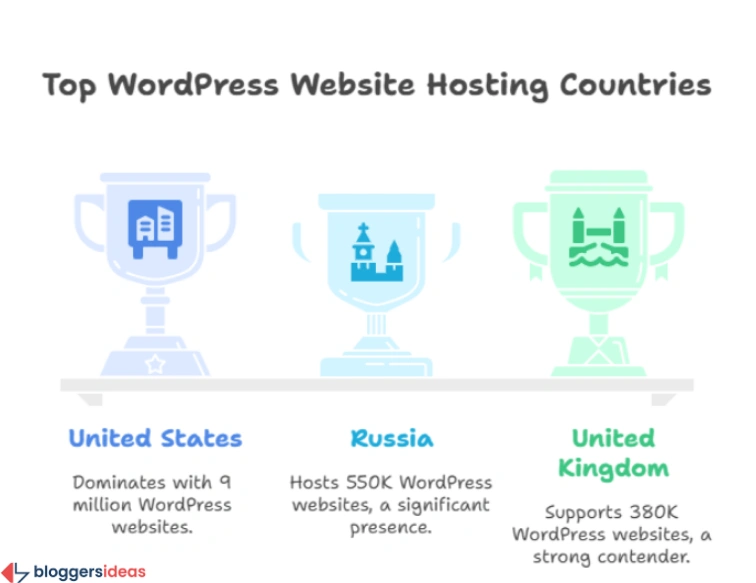
The United States leads in WordPress adoption, hosting approximately 9 million WordPress sites, including 3.78 million active websites. Other countries with significant WordPress usage include Russia (550,000 sites), the United Kingdom (380,000 sites), and India (275,000 sites).
| Country | WordPress Websites | Active Websites |
| United States | 9,000,000 | 3,777,615 |
| Russia | 550,000 | 739,255 |
| United Kingdom | 380,000 | 1,346,012 |
| India | 275,000 | 724,223 |
| Brazil | 123,000 | 1,048,503 |
Also read about: Top 15 WordPress Affiliate Programs
Who Uses WordPress?
WordPress serves a diverse audience, from individual bloggers to global brands. Notable websites powered by WordPress include Time Magazine, Salesforce, Harvard University, and Taylor Swift’s official site.
Its versatility allows it to support personal blogs, e-commerce platforms, news outlets, and educational websites.
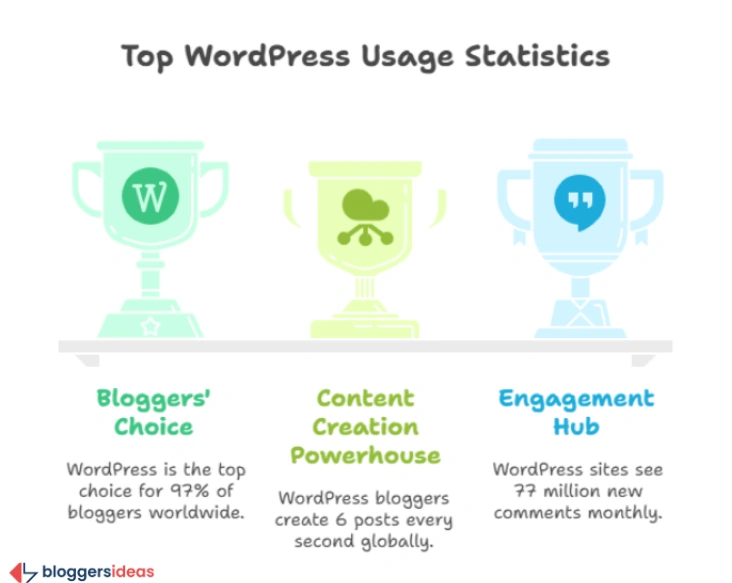
Approximately 97% of bloggers use WordPress, and 30.3% of the top 1,000 websites rely on the platform. Among the top 10,000 sites, WordPress holds a 38.03% market share, underscoring its appeal to high-traffic platforms.
| Use Case | Percentage of Users |
| CMS Only | 69% |
| Blog Only | 6% |
| Both CMS and Blog | 20% |
WordPress is available in over 60 languages and fully translated into 56, with 208 locales supported.
This multilingual capability makes it accessible globally, with non-English installations now outnumbering English ones. In Japan, WordPress powers 58.5% of all websites, boasting an 83% CMS market share.
WordPress Traffic and Engagement
WordPress sites attract massive traffic, with 409 million unique visitors viewing over 20 billion pages monthly.
Users publish 70 million new posts and 77 million new comments each month, averaging six posts per second. This high engagement reflects WordPress’s role as a dynamic platform for content creation and interaction.
| Metric | Value |
| Monthly Unique Visitors | 409 million |
| Monthly Page Views | 20 billion |
| Monthly New Posts | 70 million |
| Monthly New Comments | 77 million |
| Posts Per Second | 6 |
WordPress Versions and Updates
WordPress has released 52 major versions since its inception in 2003, with over 760 total releases, including security patches and bug fixes.
The latest version, WordPress 6.8, is used by 3.6% of sites, while version 6.7 powers 66%. Version 6.1 remains the most popular, used by 54.3% of WordPress websites.
Major updates occur 2–3 times per year, introducing features like the block editor (WordPress 5.0) and Full Site Editing.
| Version | Percentage of WordPress Websites | Release Date |
| 6.1 | 54.3% | November 1, 2022 |
| 6.0 | 9.9% | May 24, 2022 |
| 5.9 | 4.8% | January 25, 2022 |
| 5.8 | 5.0% | July 20, 2021 |
| 5.7 | 3.1% | March 9, 2021 |
Also read about: Most Google Searched Things Statistics
The Power of WordPress Plugins
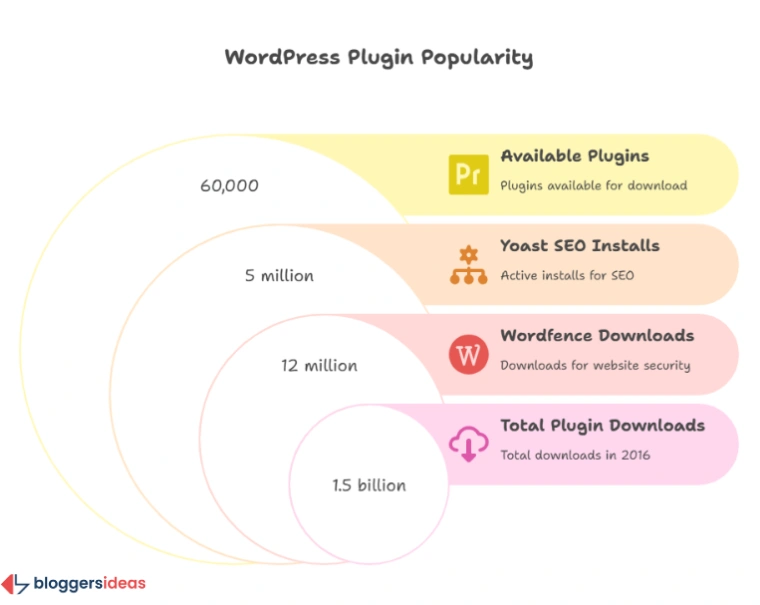
WordPress offers over 60,000 free plugins on WordPress.org, with additional premium options available. These plugins enhance functionality for SEO, security, e-commerce, and more.
In 2016, WordPress.org recorded 1.5 billion plugin downloads. Popular plugins include Yoast SEO (over 463 million downloads, 5 million active installs), Wordfence Security (12 million downloads), and Jetpack (120 million downloads).
| Plugin Category | Top Plugin | Active Installations |
| SEO | Yoast SEO | 5 million+ |
| Speed Optimization | Jetpack | 5 million+ |
| Page Builder | Elementor | 10 million+ |
| Contact Form | Contact Form 7 | 10 million+ |
| Security | Wordfence Security | 4 million+ |
| Backup | UpdraftPlus | 3 million+ |
WooCommerce, the leading e-commerce plugin, powers one-third of all online stores and 20.4% of WordPress sites. Other popular plugins include Elementor (16%) and WPBakery (15.3%), which dominate the page builder category.
WordPress Themes: Customization at Its Best
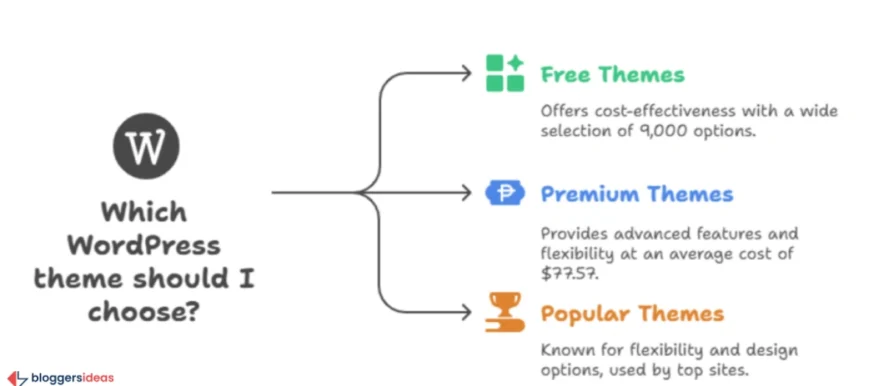
WordPress provides over 31,000 themes, including 9,000 free themes on WordPress.org and 12,000 on ThemeForest. The average price of a premium theme is $77.57.
Popular themes include Hello Elementor, Astra (7 million downloads), and Divi, with the Choices theme used by 13% of WordPress sites.
| Theme | Percentage of WordPress Sites |
| Choices | 13% |
| Divi | 7% |
| Astra | 5% |
| Popper | 5% |
| Avada | 3% |
| GeneratePress | 3% |
WordPress Security: A Critical Focus
Security remains a top concern for WordPress users. In the first half of 2021, Wordfence blocked 18.5 billion password attack requests and 4 billion requests from malicious IPs.
Approximately 90,000 attacks target WordPress sites every minute, with 90% of vulnerabilities tied to plugins. Cross-site scripting (XSS) accounts for 52% of plugin vulnerabilities, followed by CSRF (16%) and SQL injection (13%).
| Vulnerability Type | Percentage of Vulnerabilities |
| XSS | 52% |
| CSRF | 16% |
| SQL Injection | 13% |
| Access Controls | 12% |
| File Upload | 7% |
To mitigate risks, 39% of hacked WordPress sites in 2017 were running outdated software, and 8% had weak passwords. Using security plugins like Wordfence and keeping software updated are critical for protection.
WordPress as a Revenue Source
WordPress offers lucrative opportunities for freelancers and developers. In the U.S., freelance WordPress developers charge an average of $70–$90 per hour, while global rates average $35–$75.
Entry-level WordPress developers earn around $40,000 annually, with experienced developers (5+ years) earning up to $150,000.
| Source | Minimum Salary | Average Salary | Maximum Salary |
| Talent.com | $55,000 | $70,167 | $105,000 |
| Glassdoor | $39,000 | $67,837 | $118,000 |
| ZipRecruiter | $24,000 | $64,308 | $106,500 |
WordPress Community and Events
WordPress’s open-source nature fosters a vibrant global community. The platform is translated into 56 languages, with partial translations in dozens more.
In 2017, 128 WordCamp events across 48 countries sold 40,000 tickets, connecting developers, designers, and users. Facebook groups dedicated to WordPress boast thousands of members, offering support and resources.
Trending Questions from Quora and Reddit
Recent discussions on Quora and Reddit highlight user interest in WordPress’s latest features and monetization strategies.
Users frequently ask about optimizing WooCommerce stores for mobile, leveraging AI for content creation, and using Gutenberg’s Full Site Editing (FSE) for faster design.
On Reddit, developers are excited about WordPress’s planned real-time collaboration features, expected in future releases, which will allow teams to edit pages simultaneously.
Additionally, users on Quora inquire about the profitability of niche blogs, with many reporting monthly earnings of $1,000–$5,000 by targeting specific audiences and using SEO plugins like Yoast.
How to Leverage WordPress for Your Benefit

For Bloggers and Content Creators
WordPress is the go-to platform for bloggers, with 97% using it due to its ease of use and SEO capabilities. To maximize your success:
- Choose a Popular Theme: Use themes like Astra or Divi for responsive, customizable designs. These themes support mobile-friendly layouts, crucial as mobile usage grows.
- Optimize with Plugins: Install Yoast SEO or RankMath to improve search engine rankings. These plugins help optimize content for keywords like “WordPress statistics 2025.”
- Monetize Your Blog: Create niche content and monetize through affiliate marketing, ads, or sponsored posts. Many bloggers earn $1,000–$5,000 monthly by targeting specific audiences.
- Engage Your Audience: Leverage WordPress’s comment system to foster interaction, with 77 million comments posted monthly.
For Businesses and E-Commerce
WooCommerce powers one-third of online stores, making WordPress ideal for e-commerce. Here’s how businesses can benefit:
- Build an Online Store: Use WooCommerce to integrate payment gateways and manage inventory. Its 20.4% adoption rate among WordPress sites reflects its reliability.
- Enhance User Experience: Install Elementor or WPBakery for drag-and-drop page building, creating professional storefronts without coding.
- Improve Site Speed: Use speed plugins like LiteSpeed Cache or NitroPack to reduce load times, as mobile-friendly sites are increasingly important.
- Secure Your Store: Protect customer data with Wordfence Security or Sucuri to prevent the 90,000 daily attacks on WordPress sites.
For Developers and Freelancers
WordPress offers significant earning potential for developers. Here are strategies to succeed:
- Offer Freelance Services: Charge $70–$90 per hour in the U.S. for custom development, such as building WooCommerce stores or optimizing sites.
- Develop Plugins or Themes: Create and sell premium plugins or themes on marketplaces like ThemeForest, where premium themes average $77.57.
- Join the Community: Attend WordCamps or join Facebook groups to network and stay updated on trends like Headless WordPress for modern web development.
- Stay Updated: Use the latest WordPress version (6.8) and PHP 8 to ensure compatibility and security for client projects.
WordPress Trends for 2026
WordPress continues to evolve, with several trends shaping its future:
- AI Integration: AI tools for content creation, SEO optimization, and website building are gaining traction. WordPress’s free AI website builder simplifies site creation for beginners.
- Mobile Optimization: With increasing mobile traffic, WordPress themes and plugins prioritize responsive design.
- Full Site Editing (FSE): Gutenberg’s FSE features allow users to design entire sites using blocks, streamlining the process.
- Real-Time Collaboration: Future updates will introduce real-time editing, enabling teams to collaborate on content simultaneously.
- Headless WordPress: Developers are using WordPress as a backend with modern front-end frameworks like React, ideal for SaaS platforms and mobile apps.
Why WordPress Remains the Top Choice
WordPress’s success stems from its open-source model, cost-effectiveness, and flexibility. It requires no licensing fees, only hosting and domain costs, making it accessible for startups and individuals.
The platform’s user-friendly dashboard allows beginners to create content easily, while its scalability supports high-traffic sites like Time Magazine.
With tens of thousands of themes and plugins, users can customize sites for any purpose, from portfolios to e-commerce stores. The global community, with events like WordCamps, provides ongoing support and innovation.
FAQs About WordPress Statistics
1. How can bloggers monetize their WordPress sites effectively?
Bloggers earn through affiliate marketing, ads, and sponsored posts. SEO plugins like Yoast boost traffic, while WooCommerce helps sell digital products.
2. What makes WooCommerce a good choice for e-commerce businesses?
WooCommerce powers one-third of online stores, offering payment integration, inventory control, and easy customization with tools like Elementor.
3. How can I secure my WordPress site from attacks?
Use Wordfence or Sucuri for protection, keep WordPress updated, and enable strong passwords and two-factor authentication to prevent breaches.
4. Why should developers consider WordPress for freelance work?
Freelancers earn $70–$90 per hour creating custom sites, plugins, and themes. WordPress’s scalability and community support make it ideal for developers.
5. How does WordPress’s AI integration benefit users?
AI tools generate content, optimize SEO, and speed up site creation, helping users save time and improve performance effortlessly.
Also Read:
- Android Usage Statistics
- Facebook Users Statistics
- Google Chrome Statistics
- Voice Search Statistics
- Google Gemini Statistics
Conclusion
WordPress remains the undisputed leader in content management, powering 43.5% of websites and 62.5% of the CMS market in 2025.
With over 478 million sites, 65,000 plugins, and 31,000 themes, it offers unmatched flexibility for bloggers, businesses, and developers. Its global reach, multilingual support, and vibrant community ensure its continued dominance.
By leveraging plugins like Yoast SEO, themes like Astra, and features like WooCommerce, users can create professional, profitable websites.
As WordPress evolves with AI, real-time collaboration, and mobile optimization, it remains the go-to platform for building the web.
Source: WordPress.org, Statista